

Ready & Packaged Foods
All →Vegetables & Legumes
All →Desserts & Confectionery
All →Meat & Protein
All →Grains & Bakery
All →Beverages
All →Milk & Dairy
All →

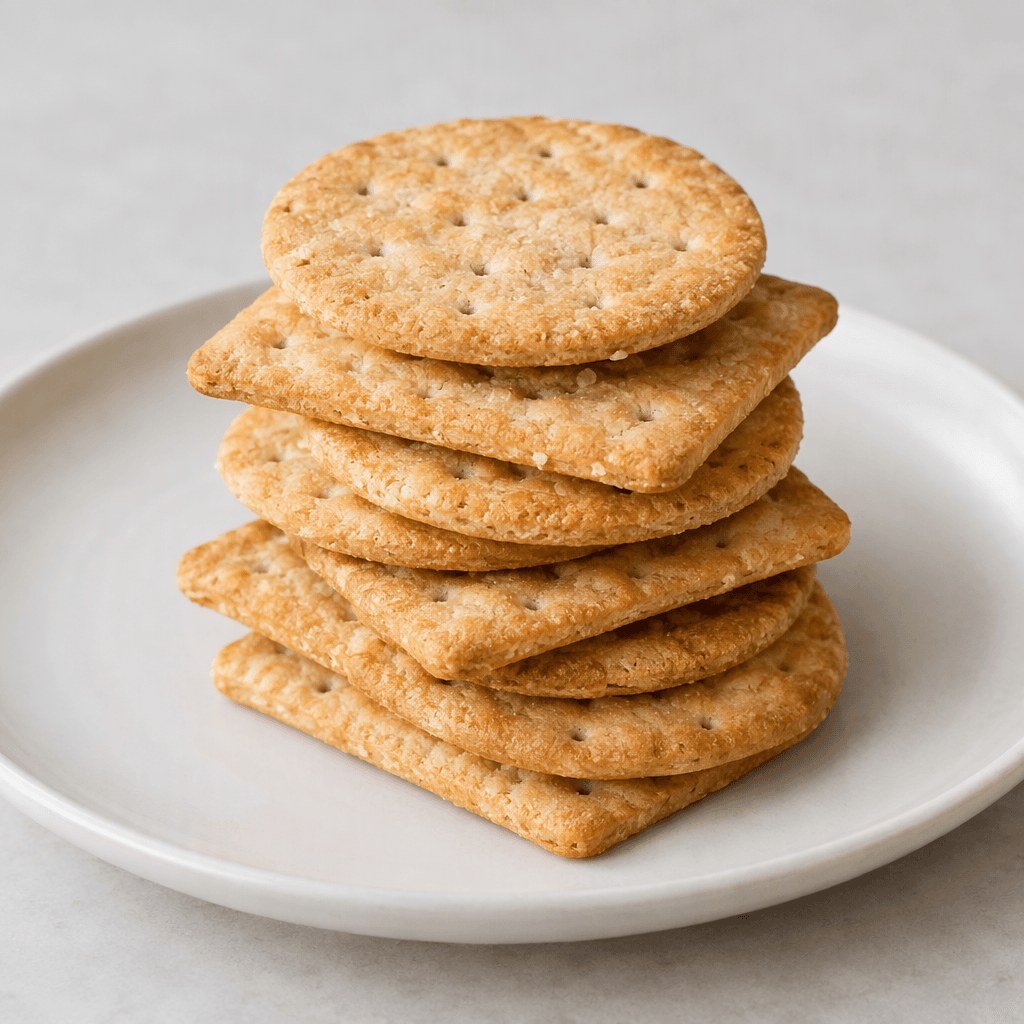
Diet biscuit Calories
Low calorie, high fiber, often whole grain
In season: Spring · Summer · Autumn · Winter
CALORIES
GI
POTASSIUM
FIBER
Quick answer
2 piece (medium) of Diet biscuit (24 g) has 98 calories. That works out to 410 calories per 100 g. It contains 17.3 g of carbs, 1.9 g of protein, 2.2 g of fat and 1.7 g of fiber. Its 0.1 mg of Manganese covers 5% of the Daily Value. Its glycemic index is 55 (medium), so it raises blood sugar at a moderate pace.
What is Diet biscuit?
Diet biscuits are crisp, usually lightly sweet biscuits sold as a snack, often alongside tea or coffee. Recipes vary: some use whole-grain flour or add fibre, while the name alone does not mean a biscuit is low in calories. They tend to have a dry, crunchy texture and a mild flavour, making them easy to eat plain or with a topping.
They can be served at breakfast or as an everyday snack, with fruit, yoghurt or a hot drink. In the UK and elsewhere, they may also be offered with tea; the exact style differs by brand and region. If you want more fibre, compare labels for whole-grain ingredients, and keep the portion modest—biscuits are still a concentrated source of carbohydrate.
Diet biscuit Nutrition Facts
Selected: 100 g
410
KCAL / 100G
Carbs
72g
· 26% DV
Protein
8g
· 16% DV
Fat
9g
· 12% DV
Fiber
7g
· 25% DV
DV is the share of the daily value covered, on a 2,000 kcal reference diet.
Calories come from: Carbs 72% · Protein 8% · Fat 20%

Log this food in EatBetter
100,000+ people use it
- Get your daily calorie target
- Snap your meal, log it in seconds
- See every vitamin and mineral

📸 Scan the code to get the app free.

Diet biscuit Vitamins & Minerals
Vitamins
B1
0.18mg · 15% DV
B2
0.12mg · 9% DV
B3
1.2mg · 8% DV
B5
0.3mg · 6% DV
Minerals
Manganese
1mg · 43% DV
Phosphorus
90mg · 13% DV
Selenium
7µg · 13% DV
Potassium ⭐
120mg · 4% DV
Copper
0mg · 0% DV
How Nutritious Is Diet biscuit?
Nutrient density
Medium
How many vitamins, minerals and how much fiber this food carries per calorie. A high score means a lot of nutrition for few calories.
Satiety score
Medium
An EatBetter score computed from fiber, protein and calorie density. A high score means staying full longer on the same calories.
Both scores are calculated per 100 g and do not change with the selected portion. The satiety score is EatBetter's own calculation, not a clinical measure.
Diet biscuit Glycemic Index
GLYCEMIC INDEX
GLYCEMIC LOAD
Accounts for portion size — a more realistic measure than GI alone.
How to Burn Off Diet biscuit
To burn the 410 calories in 100 g:
🚶
Walking (5 km/h)
🏃
Running (8 km/h)
🚴
Cycling
🏊
Swimming
Times are calculated with the MET equation for a 70 kg adult. Actual burn varies with your weight, age and pace.
Is Diet biscuit Processed?
NOVA 3
Processed
1. Unprocessed
2. Minimally Processed
3. Processed
4. Ultra-Processed
NOVA classifies foods into 4 groups by industrial processing. NOVA 1 (unprocessed) is the healthiest.
Does Diet biscuit Contain Allergens?
Contains these allergens:
Which Diets Is Diet biscuit Good For?
Vegan
— Not suitable
Vegetarian
✓ Suitable
Gluten-Free
— Not suitable
Dairy-Free
— Not suitable
Mediterranean
— Not suitable
Paleo
— Not suitable
Whole30
— Not suitable
DASH
— Not suitable
Keto
— Not suitable
Low FODMAP
— Not suitable
Diet biscuit Fat Profile
SATURATED
2.2g
MONOUNSATURATED
3.1g
POLYUNSATURATED
2.3g
Omega 6:3 ratio 35:1
Above the ideal 4:1 (35:1).
Compare Diet biscuit
Foods Similar to Diet biscuit
Frequently Asked Questions About Diet biscuit
Can diet biscuits help you lose weight?
Diet biscuits do not cause weight loss by themselves. They may fit a weight-loss plan when they replace a more energy-dense snack and you keep portions moderate; the word “diet” is not a reason to eat them freely.
Are diet biscuits healthier than regular biscuits?
Not automatically. Some diet biscuits use whole grains or contain more fibre, while others mainly differ in sweetener or marketing. Compare the ingredients and nutrition information with the regular biscuit you would otherwise choose.
Are diet biscuits sugar-free?
No, not necessarily. “Diet biscuit” is not a guarantee that a product contains no sugar; some varieties contain sugar, while others use sweeteners. Check the ingredients rather than relying on the name.
What are diet biscuits made of?
Diet biscuits are commonly made with flour or whole-grain flour, fat and raising agents; recipes may also include sweeteners, sugar, seeds or dried fruit. The ingredients vary by brand and variety.
Can people with diabetes eat diet biscuits?
Yes, people with diabetes can eat diet biscuits, but the name does not mean they have no effect on blood glucose. Consider the carbohydrate content and portion, and follow your individual diabetes meal plan.
Do diet biscuits keep you full?
They may provide some fullness, especially varieties made with whole grains, but a biscuit alone may not keep you satisfied for long. Pairing it with yogurt or another protein-rich food can make a snack more filling.
Can you eat diet biscuits for breakfast?
Yes, diet biscuits can be part of breakfast, but they are not a complete meal on their own. Pair them with a source of protein, such as yogurt or milk, and fruit for a more substantial breakfast.
Can diet biscuits replace regular biscuits in baking?
Sometimes, but diet biscuits may have a different sweetness, texture and fat content, so they do not always behave like regular biscuits in recipes. Crushed diet biscuits can work as a base, though you may need to adjust added sugar or fat.
How should you store diet biscuits after opening?
Keep diet biscuits in an airtight container in a cool, dry place after opening. This helps prevent them from absorbing moisture and going soft; follow the package directions if they specify different storage.
Are diet biscuits a good snack before exercise?
They can be a convenient source of carbohydrates before exercise, especially when you want a small, easy-to-carry snack. Have them far enough ahead to feel comfortable, since eating immediately before activity may not suit everyone.
Have another question about Diet biscuit?
Ask the AI nutrition coach — calories, portions, alternatives and more, answered in seconds in the app.

Scan calories with your camera
Instant AI nutrition analysis

Nutrition data compiled from USDA FoodData Central and scientific sources.