

Ready & Packaged Foods
All →Vegetables & Legumes
All →Desserts & Confectionery
All →Meat & Protein
All →Grains & Bakery
All →Beverages
All →Milk & Dairy
All →

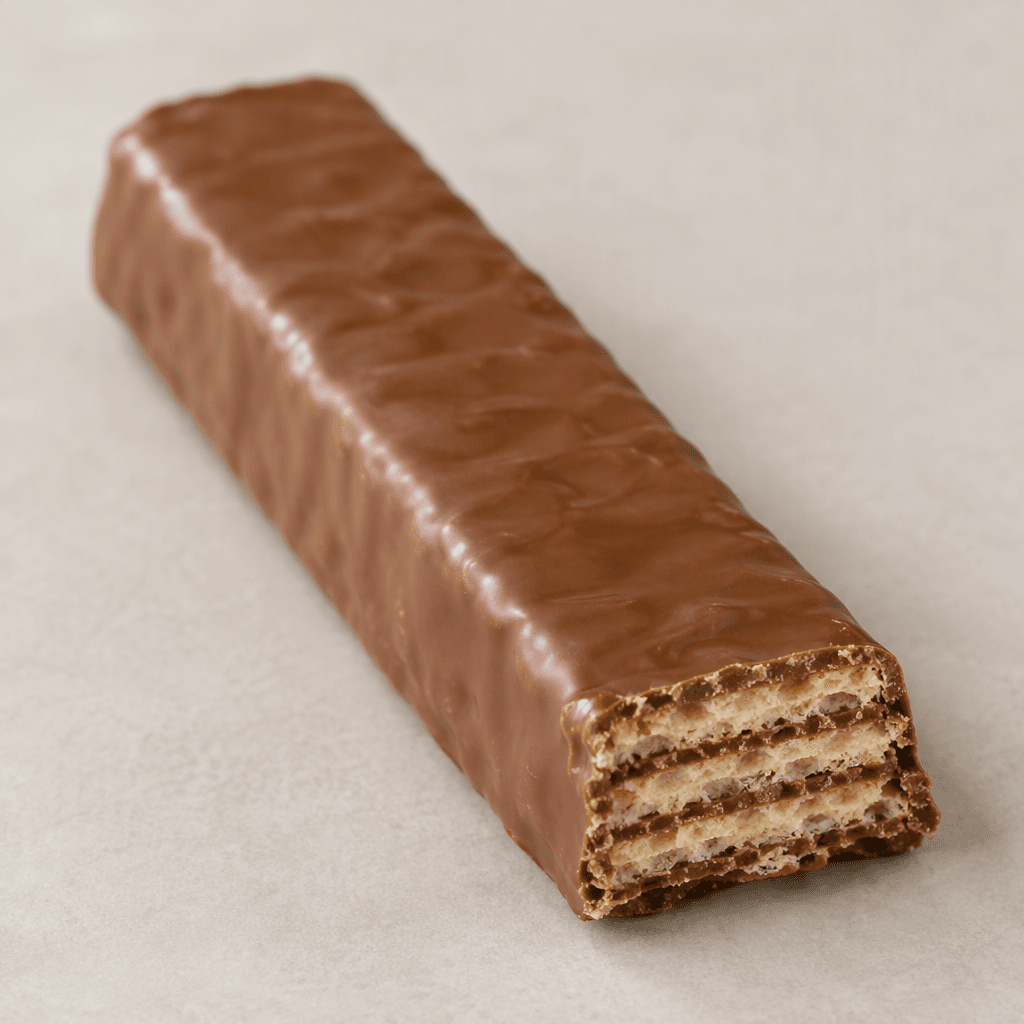
Dido Calories
Chocolate coated wafer bar
In season: Spring · Summer · Autumn · Winter
CALORIES
GI
POTASSIUM
FIBER
Quick answer
1 piece (medium) of Dido (35 g) has 182 calories. That works out to 520 calories per 100 g. It contains 21.7 g of carbs, 2.2 g of protein, 9.5 g of fat and 0.9 g of fiber. Its 0.1 mg of Copper covers 6% of the Daily Value. Its glycemic index is 70 (high), so it raises blood sugar quickly.
What is Dido?
Dido is a Turkish chocolate-coated wafer bar, made with crisp, pale wafer layers and a thin chocolate filling. Its smooth milk-chocolate coating gives way to a light crunch, with a sweet, distinctly chocolatey taste. In Turkey it is commonly enjoyed as a quick snack, often with tea or coffee, and it is easy to pack for a break on the go. Elsewhere, it works much the same way as a small treat between meals. Dido is energy-dense rather than a filling, nutrient-rich snack: 100 g provides 520 calories, with much of its energy coming from carbohydrates and fat. For a lighter snack, keep to one piece and pair it with fruit.
Dido Nutrition Facts
Selected: 100 g
520
KCAL / 100G
Carbs
62g
· 23% DV
Protein
6.2g
· 12% DV
Fat
27g
· 35% DV
Fiber
2.5g
· 9% DV
DV is the share of the daily value covered, on a 2,000 kcal reference diet.
Calories come from: Carbs 48% · Protein 5% · Fat 47%
Dido Vitamins & Minerals
Vitamins
B2
0.18mg · 14% DV
B12
0.2µg · 8% DV
B1
0.08mg · 7% DV
Biotin
2µg · 7% DV
Minerals
Phosphorus
110mg · 16% DV
Calcium
110mg · 11% DV
Iron
2mg · 11% DV
Zinc
1mg · 9% DV
How Nutritious Is Dido?
Nutrient density
Low
How many vitamins, minerals and how much fiber this food carries per calorie. A high score means a lot of nutrition for few calories.
Satiety score
Low
An EatBetter score computed from fiber, protein and calorie density. A high score means staying full longer on the same calories.
Both scores are calculated per 100 g and do not change with the selected portion. The satiety score is EatBetter's own calculation, not a clinical measure.
Dido Glycemic Index
GLYCEMIC INDEX
GLYCEMIC LOAD
Accounts for portion size — a more realistic measure than GI alone.
How to Burn Off Dido
To burn the 520 calories in 100 g:
🚶
Walking (5 km/h)
🏃
Running (8 km/h)
🚴
Cycling
🏊
Swimming
Times are calculated with the MET equation for a 70 kg adult. Actual burn varies with your weight, age and pace.
Is Dido Processed?
NOVA 4
Ultra-Processed
1. Unprocessed
2. Minimally Processed
3. Processed
4. Ultra-Processed
NOVA classifies foods into 4 groups by industrial processing. NOVA 1 (unprocessed) is the healthiest.
Does Dido Contain Allergens?
Contains these allergens:
Which Diets Is Dido Good For?
Vegan
— Not suitable
Vegetarian
— Not suitable
Gluten-Free
— Not suitable
Dairy-Free
— Not suitable
Mediterranean
— Not suitable
Paleo
— Not suitable
Whole30
— Not suitable
DASH
— Not suitable
Keto
— Not suitable
Low FODMAP
— Not suitable
Dido Fat Profile
SATURATED
15g
MONOUNSATURATED
7.5g
POLYUNSATURATED
2.3g
Omega 6:3 ratio 110:1
Above the ideal 4:1 (110:1).
Compare Dido
Foods Similar to Dido
Frequently Asked Questions About Dido
What is Dido chocolate?
Dido is a chocolate-coated wafer bar with chocolate filling between its wafer layers. It is an ultra-processed packaged sweet, rather than a simple chocolate bar, and is commonly eaten as a snack.
Who makes Dido?
Dido is a wafer product from Ülker, a Turkish food brand. You are most likely to find it in Turkey, although the range and availability can vary between shops and markets.
What is Dido made of?
Dido’s basic structure is layered wafer with chocolate filling and a milk-chocolate coating. Recipes can vary between versions, so the ingredient list on a particular pack is the best guide to that specific product.
Is Dido the same as KitKat?
No. Dido and KitKat are separate brands of chocolate-coated wafer bars, and their recipes, wafer textures, and coating proportions may differ. Dido is made by Ülker, while KitKat is a different product.
Does Dido come in different varieties?
Dido may be sold in different sizes or product varieties, depending on the market and what is currently available. A version sold in one country or shop may not be part of the range elsewhere.
Why does Dido go soft?
Dido can lose its crispness when the wafer absorbs moisture from the air. After opening, keep it in an airtight container and away from humid or warm places to help preserve its texture.
How should you store Dido?
Keep Dido in its sealed wrapper in a cool, dry place away from sunlight and heat. Once opened, put any remaining pieces in an airtight container and follow the best-before date printed on the package.
Should Dido be kept in the fridge?
Usually, Dido does not need refrigeration; a cool, dry cupboard is suitable. In a very hot room, chilling it can help prevent the coating from melting, though the bar may feel harder when cold.
Can you use Dido in desserts?
Yes. Crumble Dido over ice cream, pudding, or a cake for a wafer-and-chocolate topping. If you heat it, the coating melts and the wafer loses its crunch, so add it shortly before serving when texture matters.
Can you freeze Dido?
Yes, Dido can be frozen in an airtight container, although freezing may change its texture. Let it come back toward room temperature while still wrapped to reduce condensation on the chocolate coating.
Have another question about Dido?
Ask the AI nutrition coach — calories, portions, alternatives and more, answered in seconds in the app.

Scan calories with your camera
Instant AI nutrition analysis

Nutrition data compiled from USDA FoodData Central and scientific sources.