

Ready & Packaged Foods
All →Vegetables & Legumes
All →Desserts & Confectionery
All →Meat & Protein
All →Grains & Bakery
All →Beverages
All →Milk & Dairy
All →

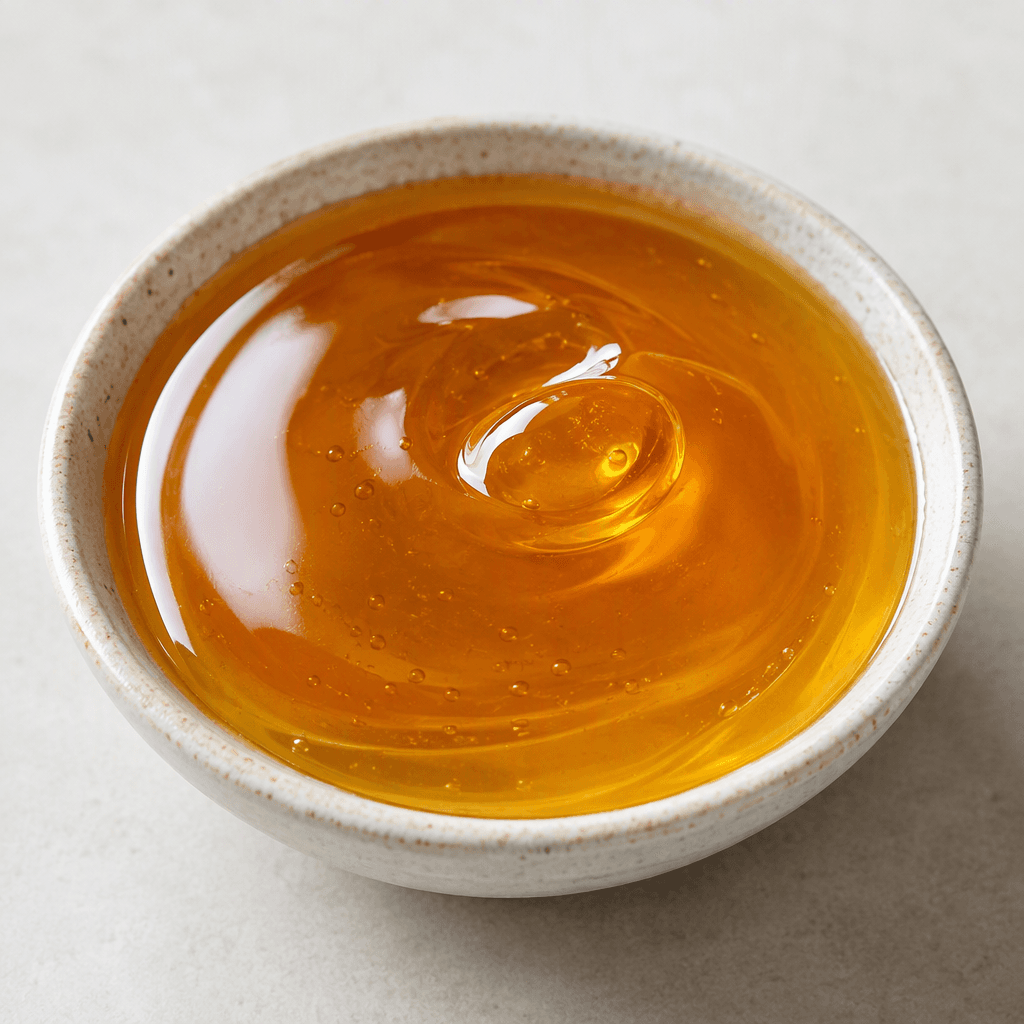
Dessert syrup Calories
High-sugar, energy-dense dessert syrup
CALORIES · 100 G
GI
POTASSIUM · 100 G
FIBER · 100 G
Quick answer
2 tablespoon (medium) of Dessert syrup (40 g) has 120 calories. That works out to 300 calories per 100 g. It contains 30 g of carbs, 0 g of protein, 0 g of fat and 0 g of fiber. Its glycemic index is 65 (high), so it raises blood sugar quickly.
Dessert syrup Nutrition Facts
Selected: 2 tablespoon (medium) · 40 g
120
KCAL / 40G
Carbs
30g
· 11% DV
Protein
0g
· 0% DV
Fat
0g
· 0% DV
Fiber
0g
· 0% DV
DV is the share of the daily value covered, on a 2,000 kcal reference diet.
Calories come from: Carbs 100% · Protein 0% · Fat 0%
Dessert syrup nutrition facts table · 2 tablespoon (medium) (40 g)
| Nutrient | Amount | % DV |
|---|---|---|
| Calories | 120 kcal | |
| Total fat | 0 g | 0% |
| Saturated fat | 0 g | 0% |
| Trans fat | 0 g | |
| Sodium | 4 mg | 0% |
| Total carbohydrate | 30 g | 11% |
| Fiber | 0 g | 0% |
| Protein | 0 g | 0% |
Calories: Calories measure energy. Average daily need is 2,000 kcal. Excess calories are stored as fat, too few cause weight loss.
Carbs: Your body's primary energy source. The brain runs exclusively on carbs. Daily need: 275g.
Protein: Essential for muscle repair and cell growth. Daily need: 50g. Keeps you full and boosts metabolism.
Fat: Needed for hormone production and vitamin absorption. Daily need: 78g. Limit saturated fats, choose unsaturated.
Fiber: Critical for digestive health and satiety. Daily need: 28g. Stabilizes blood sugar, lowers cholesterol.

Log this food in EatBetter
100,000+ people use it
- Get your daily calorie target
- Snap your meal, log it in seconds
- See every vitamin and mineral

📸 Scan the code to get the app free.

How Many Calories in 1 Tablespoon of Dessert syrup?
| Serving | Amount | Calories |
|---|---|---|
| 1 tablespoon (medium) | 20 g | 60 kcal |
| 1 teaspoon (small) | 7 g | 21 kcal |
| 1 serving (small) | 30 g | 90 kcal |
| 2 tablespoon (double) | 40 g | 120 kcal |
| 1 serving (medium) | 50 g | 150 kcal |
| 0.25 cup (quarter) | 60 g | 180 kcal |
| 100 g | 100 g | 300 kcal |
| ½ cup (half) | 120 g | 360 kcal |
| 1 cup (whole) | 240 g | 720 kcal |
Calculated from 300 calories per 100 g.
Frequently Asked Questions About Dessert syrup
What is Dessert syrup made of?
Dessert syrup is usually made by dissolving sugar in water and gently simmering the mixture. Lemon juice or aromatic ingredients such as citrus peel, cinnamon, or vanilla may be added, depending on the dessert it will accompany.
Is Dessert syrup the same as simple syrup?
Not always. Simple syrup is a basic sugar-and-water mixture, while Dessert syrup may be simmered longer for a thicker texture or flavored for a particular dessert. The names are sometimes used interchangeably, so the recipe’s intended consistency matters.
Can you use honey instead of sugar in Dessert syrup?
Yes, honey can sweeten Dessert syrup, but it brings its own flavor and makes the mixture taste different from a traditional sugar syrup. Add it gently and avoid prolonged high heat, which can dull its aroma.
How do you flavor Dessert syrup?
You can flavor Dessert syrup by briefly steeping citrus peel, cinnamon, cardamom, or vanilla in it, then removing solid ingredients before pouring. Choose an aroma that complements the dessert rather than adding several strong flavors at once.
Why does Dessert syrup crystallize?
Dessert syrup can crystallize when undissolved sugar remains on the pan’s sides or sugar crystals are introduced while it cooks. Dissolve the sugar thoroughly, avoid stirring once the mixture boils, and add a little lemon juice to help prevent crystals forming.
When should you pour Dessert syrup over baklava?
Pour Dessert syrup over baklava after baking, following the temperature pairing in your recipe; baklava is often hot while the syrup is cool. Spread it evenly so the layers absorb it without leaving some sections dry and others saturated.
How do you get Dessert syrup to soak into cake?
For cake, use a pourable Dessert syrup and apply it gradually to the cut or pierced surface so it can soak in. Let each addition absorb before adding more; pouring it all in one spot can leave the cake unevenly wet.
How can you thin thick Dessert syrup?
To thin thick Dessert syrup, warm it gently and stir in a little hot water until it pours easily. Add the water gradually, since too much can weaken its sweetness and leave the dessert wetter than intended.
How long does Dessert syrup last in the fridge?
Dessert syrup keeps best refrigerated in a clean, tightly sealed container, but its shelf life depends on how it was prepared and handled. Use a clean spoon each time and discard it if its smell, appearance, or texture changes.
Can Dessert syrup be used on pancakes instead of maple syrup?
Yes, Dessert syrup can be poured over pancakes, but it is usually sweeter and less complex in flavor than maple syrup. Use a small amount first, especially if the syrup was made for a very sweet pastry.
Dessert syrup Vitamins & Minerals
Vitamins
Vitamin A
0µg · 0% DV
B1
0mg · 0% DV
B2
0mg · 0% DV
B3
0mg · 0% DV
Minerals
Copper
0mg · 0% DV
Manganese
0.01mg · 0% DV
Iron
0.04mg · 0% DV
Calcium
2mg · 0% DV
Sodium
4mg · 0% DV
Potassium ⭐
0.8mg · 0% DV
Dessert syrup Glycemic Index
GLYCEMIC INDEX
GLYCEMIC LOAD
Accounts for portion size — a more realistic measure than GI alone.
How to Burn Off Dessert syrup
To burn the 120 calories in 2 tablespoon (medium) (40 g):
🚶
Walking (5 km/h)
🏃
Running (8 km/h)
🚴
Cycling
🏊
Swimming
Times are calculated with the MET equation for a 70 kg adult. Actual burn varies with your weight, age and pace.
What is Dessert syrup?
Dessert syrup is a sugar-and-water syrup used to soak or coat sweets, especially in Turkish and neighbouring cuisines. It is poured over desserts such as baklava, kadaif, lokma and tulumba; recipes may add lemon to balance the sweetness and help control the syrup’s texture. Once absorbed, it makes pastries moist and glossy, with a distinctly sweet, satisfying finish.
It is usually added after baking or frying, with the syrup and dessert often prepared at different temperatures according to the recipe. The syrup contributes little beyond sweetness and energy: 100 g provides 75 g of carbohydrate. If you prefer a less-sweet dessert, use a little less syrup or serve a smaller portion with fresh fruit and unsweetened tea.
How Nutritious Is Dessert syrup?
Nutrient density
Low
How many vitamins, minerals and how much fiber this food carries per calorie. A high score means a lot of nutrition for few calories.
Satiety score
Low
An EatBetter score computed from fiber, protein and calorie density. A high score means staying full longer on the same calories.
Both scores are calculated per 100 g and do not change with the selected portion. The satiety score is EatBetter's own calculation, not a clinical measure.
Is Dessert syrup Processed?
NOVA 3
Processed
1. Unprocessed
2. Minimally Processed
3. Processed
4. Ultra-Processed
NOVA classifies foods into 4 groups by industrial processing. NOVA 1 (unprocessed) is the healthiest.
Does Dessert syrup Contain Allergens?
No known major allergens
Which Diets Is Dessert syrup Good For?
Vegan
✓ Suitable
Vegetarian
✓ Suitable
Gluten-Free
✓ Suitable
Dairy-Free
— Not suitable
Mediterranean
— Not suitable
Paleo
— Not suitable
Whole30
— Not suitable
DASH
— Not suitable
Keto
— Not suitable
Low FODMAP
— Not suitable
Dessert syrup Fat Profile
SATURATED
0g
MONOUNSATURATED
0g
POLYUNSATURATED
0g
Compare Dessert syrup
Foods Similar to Dessert syrup
Have another question about Dessert syrup?
Ask the AI nutrition coach — calories, portions, alternatives and more, answered in seconds in the app.

Scan calories with your camera
Instant AI nutrition analysis

Nutrition data compiled from USDA FoodData Central and scientific sources.