

Ready & Packaged Foods
All →Vegetables & Legumes
All →Desserts & Confectionery
All →Meat & Protein
All →Grains & Bakery
All →Beverages
All →Milk & Dairy
All →

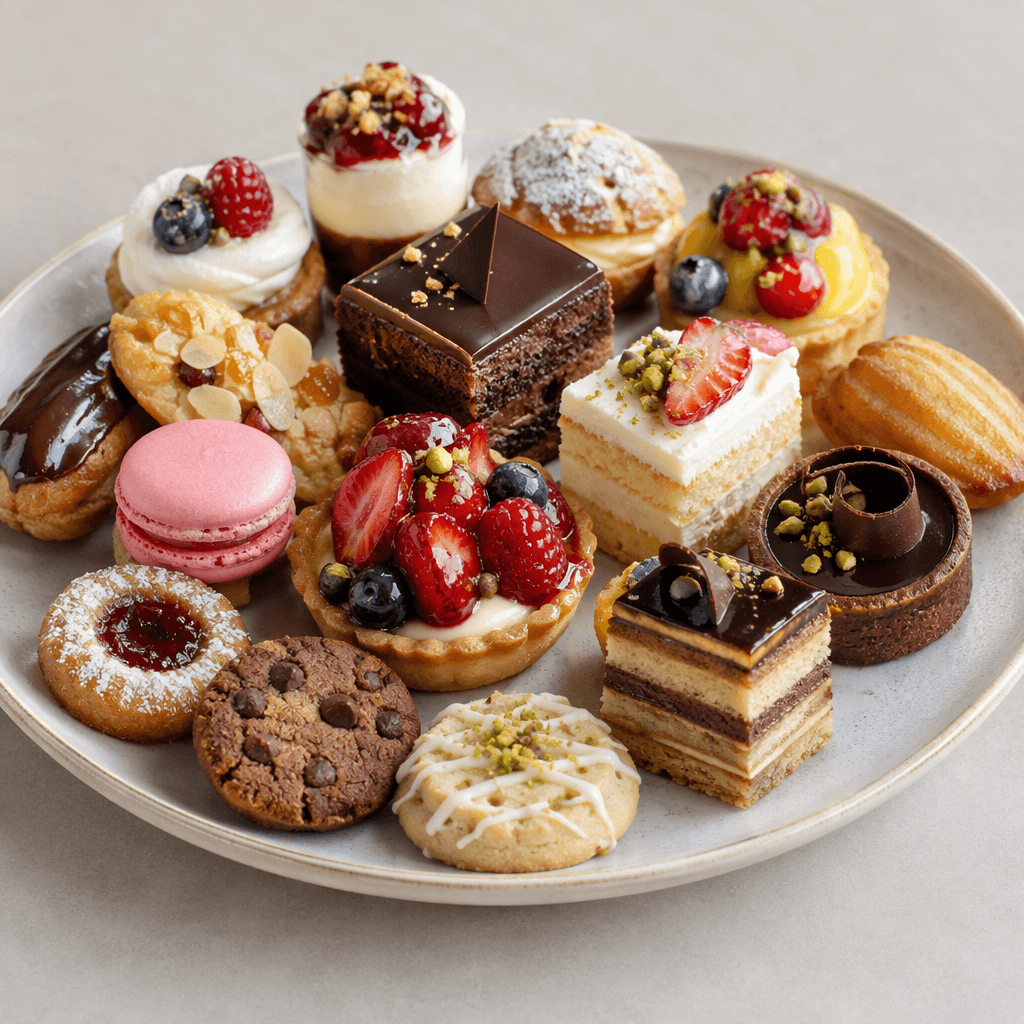
Dessert platter Calories
Mixed dessert assortment platter, typically high in sugar and energy
CALORIES · 100 G
GI
POTASSIUM · 100 G
FIBER · 100 G
Quick answer
1 serving (medium) of Dessert platter (180 g) has 576 calories. That works out to 320 calories per 100 g. It contains 75.6 g of carbs, 8.6 g of protein, 27 g of fat and 3.2 g of fiber. Its 165.6 mg of Phosphorus covers 24% of the Daily Value. Its glycemic index is 62 (medium), so it raises blood sugar at a moderate pace.
Dessert platter Nutrition Facts
Selected: 1 serving (medium) · 180 g
576
KCAL / 180G
Carbs
75.6g
· 27% DV
Protein
8.6g
· 17% DV
Fat
27g
· 35% DV
Fiber
3.2g
· 11% DV
DV is the share of the daily value covered, on a 2,000 kcal reference diet.
Calories come from: Carbs 52% · Protein 6% · Fat 42%
Dessert platter nutrition facts table · 1 serving (medium) (180 g)
| Nutrient | Amount | % DV |
|---|---|---|
| Calories | 576 kcal | |
| Total fat | 27 g | 35% |
| Saturated fat | 12.96 g | 65% |
| Trans fat | 0.36 g | |
| Sodium | 324 mg | 14% |
| Total carbohydrate | 75.6 g | 27% |
| Fiber | 3.2 g | 11% |
| Protein | 8.6 g | 17% |
Calories: Calories measure energy. Average daily need is 2,000 kcal. Excess calories are stored as fat, too few cause weight loss.
Carbs: Your body's primary energy source. The brain runs exclusively on carbs. Daily need: 275g.
Protein: Essential for muscle repair and cell growth. Daily need: 50g. Keeps you full and boosts metabolism.
Fat: Needed for hormone production and vitamin absorption. Daily need: 78g. Limit saturated fats, choose unsaturated.
Fiber: Critical for digestive health and satiety. Daily need: 28g. Stabilizes blood sugar, lowers cholesterol.

Log this food in EatBetter
100,000+ people use it
- Get your daily calorie target
- Snap your meal, log it in seconds
- See every vitamin and mineral

📸 Scan the code to get the app free.

How Many Calories in 1 Serving of Dessert platter?
| Serving | Amount | Calories |
|---|---|---|
| 1 serving (medium) | 180 g | 576 kcal |
| 1 piece (small) | 35 g | 112 kcal |
| 2 piece (medium) | 70 g | 224 kcal |
| 100 g | 100 g | 320 kcal |
| 1 serving (small) | 120 g | 384 kcal |
| 1 cup (diced) | 140 g | 448 kcal |
| 1 serving (large) | 260 g | 832 kcal |
| 1 pack (large) | 300 g | 960 kcal |
Calculated from 320 calories per 100 g.
Frequently Asked Questions About Dessert platter
What is a dessert platter?
A dessert platter is a shared or individually served assortment of several sweet foods arranged together. Unlike a single dessert with a set recipe, its contents can range from cake and cookies to fruit, chocolates, and small pastries.
What should go on a dessert platter?
A dessert platter works well with a mix of bite-sized cake, cookies, chocolates, fresh fruit, and small pastries. Choose contrasting flavors and textures, and include a few less-rich options alongside creamy or very sweet treats so guests have variety.
How do you arrange a dessert platter?
Arrange a dessert platter by placing the largest items first, then filling gaps with smaller treats and fruit. Separate moist items from crisp cookies to help them keep their texture, and leave enough space for guests to pick up pieces without disturbing the rest.
What fruit works best on a dessert platter?
Berries, grapes, and sliced citrus are good choices for a dessert platter because they add freshness and color alongside rich sweets. Dry fruit thoroughly before adding it, and place cut fruit near serving time so its juice does not soften cookies or pastries.
How much dessert platter should I plan per person?
Plan a dessert platter around the occasion and whether it is the only dessert or one of several choices. For a tasting-style spread, cut items into small portions and offer a range; for a single dessert course, allow more of each guest’s preferred type.
Can you make a dessert platter ahead of time?
Yes, you can prepare a dessert platter ahead by portioning sturdy, dry items and keeping them covered. Add cut fruit, cream-filled sweets, and anything that can melt or soften close to serving time to preserve freshness and texture.
How do you stop a dessert platter from getting soggy?
Keep wet and crisp items separate on a dessert platter. Add washed fruit only after it is completely dry, serve sauces in small bowls, and avoid placing juicy cut fruit directly against cookies or pastry until the platter is ready to serve.
What drinks go well with a dessert platter?
Coffee and tea pair well with a dessert platter, while milk or sparkling water can suit a sweeter, richer assortment. Offer unsweetened drinks when the platter includes frosted cake, chocolate, or other very sweet treats.
How should you store leftover dessert platter items?
Separate leftover dessert platter items by type and store them in covered containers. Refrigerate cream-filled sweets and cut fruit; keep dry cookies away from moisture. Since the items have different storage needs, eat the most perishable pieces first.
Is a dessert platter a healthy dessert choice?
A dessert platter can be high in sugar and energy, particularly when it combines frosted cake, chocolate, and pastries. It can still offer variety if you serve modest portions and include fresh fruit, but it is best treated as a sweet occasion food.
Dessert platter Vitamins & Minerals
Vitamins
Biotin
5.4µg · 18% DV
Vitamin A
153µg · 17% DV
B2
0.22mg · 17% DV
B12
0.4µg · 17% DV
Minerals
Phosphorus
166mg · 24% DV
Selenium
9.9µg · 18% DV
Copper
0.14mg · 16% DV
Sodium
324mg · 14% DV
Potassium ⭐
216mg · 6% DV
Dessert platter Glycemic Index
GLYCEMIC INDEX
GLYCEMIC LOAD
Accounts for portion size — a more realistic measure than GI alone.
How to Burn Off Dessert platter
To burn the 576 calories in 1 serving (medium) (180 g):
🚶
Walking (5 km/h)
🏃
Running (8 km/h)
🚴
Cycling
🏊
Swimming
Times are calculated with the MET equation for a 70 kg adult. Actual burn varies with your weight, age and pace.
What is Dessert platter?
A dessert platter is an assortment rather than a single recipe, bringing several sweets together on one plate. Depending on the occasion and where it is served, it might include small cakes, pastries, biscuits, fruit or regional specialties. The selection and portion sizes vary widely, from a shared table of bite-sized treats to a composed restaurant dessert.
It is commonly offered after a meal or at celebrations, with coffee or tea, and lets guests sample contrasting flavours and textures. A platter is usually rich in sugar and energy; it provides about 320 calories per 100 g. If you want a lighter serving, choose a few small pieces and add fresh fruit, rather than treating every item as a full portion.
How Nutritious Is Dessert platter?
Nutrient density
Low
How many vitamins, minerals and how much fiber this food carries per calorie. A high score means a lot of nutrition for few calories.
Satiety score
Low
An EatBetter score computed from fiber, protein and calorie density. A high score means staying full longer on the same calories.
Both scores are calculated per 100 g and do not change with the selected portion. The satiety score is EatBetter's own calculation, not a clinical measure.
Is Dessert platter Processed?
NOVA 3
Processed
1. Unprocessed
2. Minimally Processed
3. Processed
4. Ultra-Processed
NOVA classifies foods into 4 groups by industrial processing. NOVA 1 (unprocessed) is the healthiest.
Does Dessert platter Contain Allergens?
Contains these allergens:
Which Diets Is Dessert platter Good For?
Vegan
— Not suitable
Vegetarian
✓ Suitable
Gluten-Free
— Not suitable
Dairy-Free
— Not suitable
Mediterranean
— Not suitable
Paleo
— Not suitable
Whole30
— Not suitable
DASH
— Not suitable
Keto
— Not suitable
Low FODMAP
— Not suitable
Dessert platter Fat Profile
SATURATED
12.96g
MONOUNSATURATED
8.28g
POLYUNSATURATED
3.6g
Omega 6:3 ratio 46.3:1
Above the ideal 4:1 (46.3:1).
Compare Dessert platter
Foods Similar to Dessert platter
Have another question about Dessert platter?
Ask the AI nutrition coach — calories, portions, alternatives and more, answered in seconds in the app.

Scan calories with your camera
Instant AI nutrition analysis

Nutrition data compiled from USDA FoodData Central and scientific sources.