

Ready & Packaged Foods
All →Vegetables & Legumes
All →Desserts & Confectionery
All →Meat & Protein
All →Grains & Bakery
All →Beverages
All →Milk & Dairy
All →

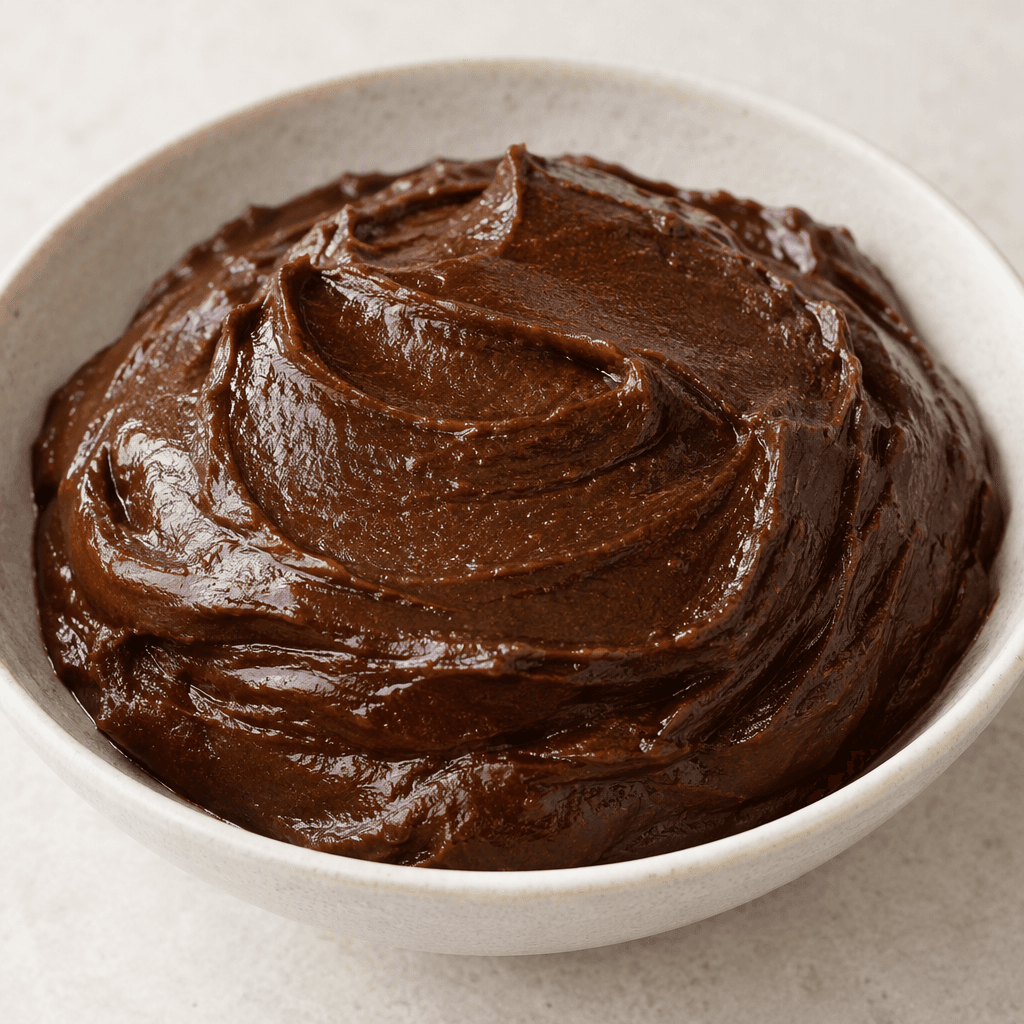
Date paste Calories
Natural sweetener, source of fiber and potassium
In season: Autumn · Winter
CALORIES
GI
POTASSIUM
FIBER
Quick answer
1 tablespoon (medium) of Date paste (20 g) has 55 calories. That works out to 277 calories per 100 g. It contains 14.8 g of carbs, 0.4 g of protein, 0 g of fat and 1.4 g of fiber. Its glycemic index is 42 (medium), so it raises blood sugar at a moderate pace.
What is Date paste?
Date paste is made by softening dates and blending them into a thick, smooth, naturally sweet paste. It is used in Middle Eastern and North African cooking, and has become a handy sweetener in kitchens worldwide, especially for baking and plant-based recipes.
Its dense, sticky texture works well stirred into porridge or yoghurt, spread on toast, or used to bind bars and fill pastries. The flavour is rich and caramel-like, so a little can sweeten a recipe noticeably. Date paste provides fibre—7 g per 100 g—but is mostly carbohydrate. Use it in place of some of the added sugar, or pair a small spoonful with tahini or nuts for a more sustaining snack.
Date paste Nutrition Facts
Selected: 100 g
277
KCAL / 100G
Carbs
74g
· 27% DV
Protein
2g
· 4% DV
Fat
0.2g
· 0% DV
Fiber
7g
· 25% DV
DV is the share of the daily value covered, on a 2,000 kcal reference diet.
Calories come from: Carbs 97% · Protein 3% · Fat 0%
Date paste Vitamins & Minerals
Vitamins
B5
0.8mg · 16% DV
B6
0.25mg · 15% DV
B3
1.6mg · 10% DV
B2
0.06mg · 5% DV
Minerals
Potassium ⭐
696mg · 20% DV
Magnesium
43mg · 10% DV
Phosphorus
62mg · 9% DV
Iron
1mg · 6% DV
How Nutritious Is Date paste?
Nutrient density
High
How many vitamins, minerals and how much fiber this food carries per calorie. A high score means a lot of nutrition for few calories.
Satiety score
Medium
An EatBetter score computed from fiber, protein and calorie density. A high score means staying full longer on the same calories.
Both scores are calculated per 100 g and do not change with the selected portion. The satiety score is EatBetter's own calculation, not a clinical measure.
Date paste Glycemic Index
GLYCEMIC INDEX
GLYCEMIC LOAD
Accounts for portion size — a more realistic measure than GI alone.
How to Burn Off Date paste
To burn the 277 calories in 100 g:
🚶
Walking (5 km/h)
🏃
Running (8 km/h)
🚴
Cycling
🏊
Swimming
Times are calculated with the MET equation for a 70 kg adult. Actual burn varies with your weight, age and pace.
Is Date paste Processed?
NOVA 2
Minimally Processed
1. Unprocessed
2. Minimally Processed
3. Processed
4. Ultra-Processed
NOVA classifies foods into 4 groups by industrial processing. NOVA 1 (unprocessed) is the healthiest.
Does Date paste Contain Allergens?
No known major allergens
Which Diets Is Date paste Good For?
Vegan
✓ Suitable
Vegetarian
✓ Suitable
Gluten-Free
✓ Suitable
Dairy-Free
— Not suitable
Mediterranean
✓ Suitable
Paleo
✓ Suitable
Whole30
— Not suitable
DASH
— Not suitable
Keto
— Not suitable
Low FODMAP
— Not suitable
Date paste Fat Profile
SATURATED
0.03g
MONOUNSATURATED
0.04g
POLYUNSATURATED
0.04g
Omega 6:3 ratio 3:1
Below the ideal 4:1 — a good omega balance.
Compare Date paste
Foods Similar to Date paste
Frequently Asked Questions About Date paste
What is date paste made from?
Date paste is made from dates blended into a thick purée, sometimes with a little water to help them blend. Plain date paste does not need added sugar, though recipes and packaged products can include other ingredients.
How do you make date paste at home?
To make date paste, remove the pits, soften the dates in hot water, then blend them until smooth. Add the soaking water a little at a time so the paste stays thick enough to use in baking or spread on food.
Can date paste replace sugar in baking?
Yes, date paste can sweeten baked goods, but it also adds moisture, fiber, and a dense texture. It works best in recipes designed for fruit-based sweeteners; replacing all the sugar in a delicate cake may change its rise and crumb.
How should you store date paste?
Store date paste in a clean, airtight container in the refrigerator and use a clean spoon each time. Discard it if you notice mold, an unusual smell, or bubbling; homemade paste should not be left at room temperature for extended periods.
Can you freeze date paste?
Yes, date paste freezes well. Divide it into recipe-sized portions in airtight freezer containers or bags, then thaw a portion in the refrigerator when needed. Stir it after thawing if the texture has separated slightly.
What is the difference between date paste and date syrup?
Date paste is blended whole date flesh, so it is thick and retains the fruit’s fiber. Date syrup is a strained, concentrated liquid sweetener with a pourable consistency, making it easier to drizzle but less suitable when a recipe needs a thick binder.
What can you use date paste for besides baking?
Date paste can sweeten oatmeal, yogurt, smoothies, sauces, and homemade snack balls. Its thick texture also helps hold ingredients together in no-bake recipes; blend it with a little warm water if you need a smoother drizzle.
Can you add date paste to smoothies?
Yes, date paste blends into smoothies and adds a concentrated date flavor. Start with a small spoonful, since it can make the drink very sweet, and blend it with the liquid first if your blender struggles with thick mixtures.
Is date paste healthier than white sugar?
Date paste retains some fiber and minerals from the fruit, while white sugar does not, but it is still a concentrated source of natural sugars. It can add more than sweetness to a recipe, but it is not a sugar-free alternative.
Does date paste raise blood sugar?
Yes, date paste can raise blood sugar because it contains readily digestible carbohydrates, even though it also has fiber. People with diabetes may need to account for its portion in their meal plan and can ask a dietitian or clinician for individual guidance.
Have another question about Date paste?
Ask the AI nutrition coach — calories, portions, alternatives and more, answered in seconds in the app.

Scan calories with your camera
Instant AI nutrition analysis

Nutrition data compiled from USDA FoodData Central and scientific sources.