

Ready & Packaged Foods
All →Vegetables & Legumes
All →Desserts & Confectionery
All →Meat & Protein
All →Grains & Bakery
All →Beverages
All →Milk & Dairy
All →

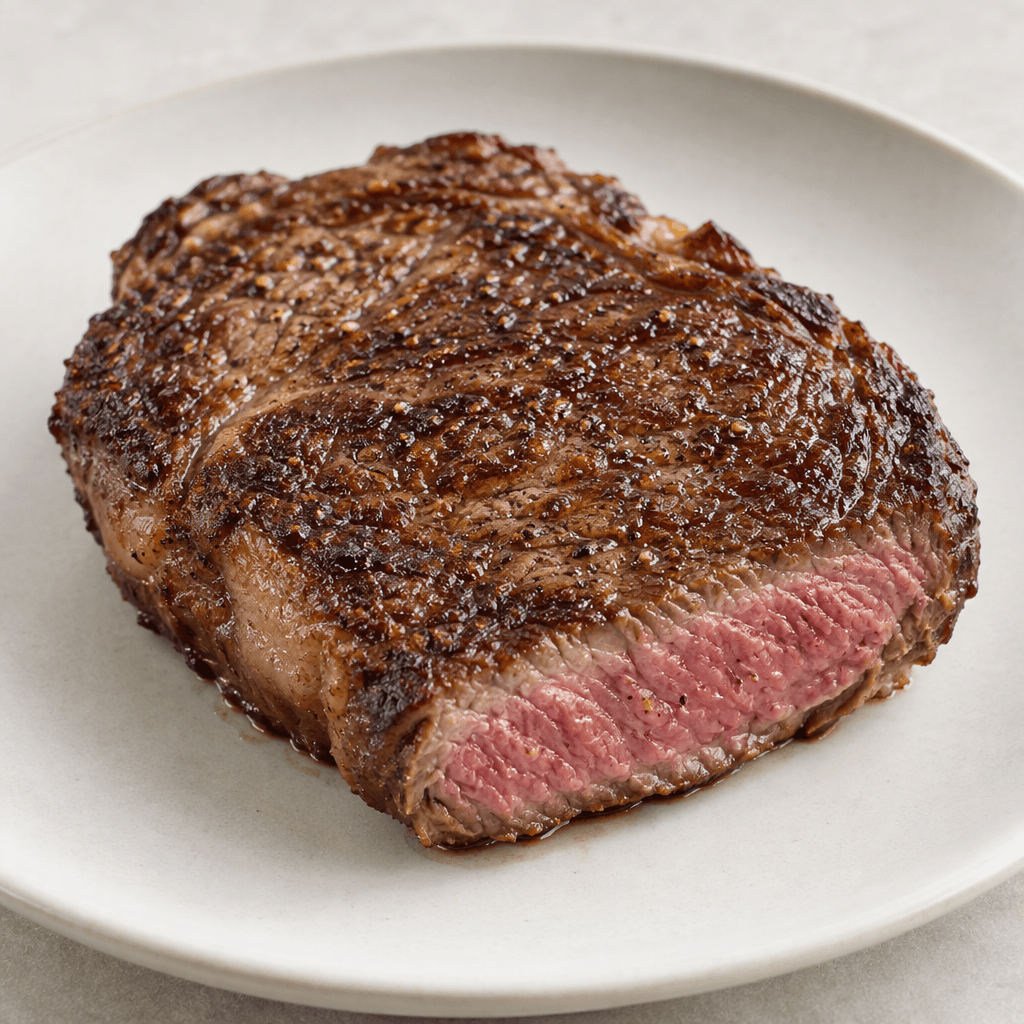
Beef steak Calories
High in protein, iron, and B vitamins
In season: Spring · Summer · Autumn · Winter
CALORIES
GI
POTASSIUM
FIBER
Quick answer
1 piece (medium) of Beef steak (150 g) has 375 calories. That works out to 250 calories per 100 g. It contains 0 g of carbs, 39 g of protein, 25.5 g of fat and 0 g of fiber. Its 3.8 µg of B12 covers 156% of the Daily Value. Its glycemic index is 0 (low), so it raises blood sugar slowly.
What is Beef steak?
Dana külbastı is a Turkish-style veal steak or cutlet, usually cut from the boneless leg and cooked quickly in a pan or on a grill. The cut can be thin or fairly substantial, depending on the butcher. A well-seared crust gives way to tender, juicy meat, with simple seasoning often enough to bring out its flavour. In Turkey it is commonly served as a main course with rice, grilled vegetables or salad; abroad, it also works well with potatoes or a green salad. It provides protein and iron with no carbohydrates, making it a satisfying choice for a protein-focused meal. For a lighter plate, use little added fat and pair it with plenty of vegetables.
Beef steak Nutrition Facts
Selected: 100 g
250
KCAL / 100G
Carbs
0g
· 0% DV
Protein
26g
· 52% DV
Fat
17g
· 22% DV
Fiber
0g
· 0% DV
DV is the share of the daily value covered, on a 2,000 kcal reference diet.
Calories come from: Carbs 0% · Protein 40% · Fat 60%
Beef steak Vitamins & Minerals
Vitamins
B12
2.5µg · 104% DV
B6
0.5mg · 29% DV
B3
4.5mg · 28% DV
B2
0.2mg · 15% DV
Minerals
Zinc
5mg · 45% DV
Selenium
18µg · 33% DV
Phosphorus
200mg · 29% DV
Iron
3mg · 17% DV
How Nutritious Is Beef steak?
Nutrient density
High
How many vitamins, minerals and how much fiber this food carries per calorie. A high score means a lot of nutrition for few calories.
Satiety score
Medium
An EatBetter score computed from fiber, protein and calorie density. A high score means staying full longer on the same calories.
Both scores are calculated per 100 g and do not change with the selected portion. The satiety score is EatBetter's own calculation, not a clinical measure.
Beef steak Glycemic Index
GLYCEMIC INDEX
GLYCEMIC LOAD
Accounts for portion size — a more realistic measure than GI alone.
How to Burn Off Beef steak
To burn the 250 calories in 100 g:
🚶
Walking (5 km/h)
🏃
Running (8 km/h)
🚴
Cycling
🏊
Swimming
Times are calculated with the MET equation for a 70 kg adult. Actual burn varies with your weight, age and pace.
Is Beef steak Processed?
NOVA 2
Minimally Processed
1. Unprocessed
2. Minimally Processed
3. Processed
4. Ultra-Processed
NOVA classifies foods into 4 groups by industrial processing. NOVA 1 (unprocessed) is the healthiest.
Does Beef steak Contain Allergens?
No known major allergens
Which Diets Is Beef steak Good For?
Vegan
— Not suitable
Vegetarian
— Not suitable
Gluten-Free
✓ Suitable
Dairy-Free
— Not suitable
Mediterranean
✓ Suitable
Paleo
✓ Suitable
Whole30
— Not suitable
DASH
— Not suitable
Keto
✓ Suitable
Low FODMAP
— Not suitable
Beef steak Fat Profile
SATURATED
7.2g
MONOUNSATURATED
7.5g
POLYUNSATURATED
0.4g
Omega 6:3 ratio 3.8:1
Below the ideal 4:1 — a good omega balance.
Compare Beef steak
Foods Similar to Beef steak
Frequently Asked Questions About Beef steak
How do you cook beef steak in a pan?
Cook beef steak in a thoroughly heated, heavy pan so its surface browns instead of steaming. Pat the meat dry, avoid crowding the pan, turn it only after a crust forms, and let it rest before slicing.
How do you make beef steak tender?
Choose a tender steak cut or slice the cooked beef steak across the muscle fibres. Avoid prolonged cooking over gentle heat, which can dry out many steak cuts; resting the meat before cutting also helps retain its juices.
Which cut of beef is best for beef steak?
Ribeye, strip steak, and tenderloin are popular tender cuts for beef steak, while tougher cuts need slower cooking or tenderizing. The best choice depends on whether you want rich marbling, a leaner bite, or a particularly tender texture.
Should you wash beef steak before cooking it?
No, do not wash beef steak. Rinsing can spread raw-meat bacteria around the sink and nearby surfaces, while cooking properly handles the safety risk. Patting the steak dry with a paper towel helps it brown better.
When should you season beef steak with salt?
Season beef steak before cooking so the salt has time to season the surface, or salt it just before it goes into the pan. Dry the surface before searing; moisture left on the steak interferes with browning.
How can you tell when beef steak is done?
The most reliable way to check beef steak doneness is to measure the centre with an instant-read meat thermometer. Colour alone is not dependable, and whole steak cuts have different safety guidance from ground beef.
Why should beef steak rest after cooking?
Beef steak should rest briefly after cooking so its juices settle before you cut it. Slice too soon and more juice runs onto the plate; resting also gives the centre a moment to finish warming.
Can you grill beef steak from frozen?
Yes, you can grill beef steak from frozen, but it cooks less evenly and takes longer than a thawed steak. Use moderate heat to cook the centre without burning the outside, and check doneness with a thermometer.
How should you store leftover beef steak?
Store leftover beef steak in a covered container in the refrigerator soon after the meal. Eat it within a few days and reheat it until the centre is hot; thin slices also work well in sandwiches or salads.
Can you freeze beef steak after cooking it?
Yes, cooked beef steak can be frozen in an airtight package. Cool it promptly, portion it before freezing for easier use, and thaw it in the refrigerator; reheated steak may be less juicy than freshly cooked steak.
Have another question about Beef steak?
Ask the AI nutrition coach — calories, portions, alternatives and more, answered in seconds in the app.

Scan calories with your camera
Instant AI nutrition analysis

Nutrition data compiled from USDA FoodData Central and scientific sources.