

Ready & Packaged Foods
All →Vegetables & Legumes
All →Desserts & Confectionery
All →Meat & Protein
All →Grains & Bakery
All →Beverages
All →Milk & Dairy
All →

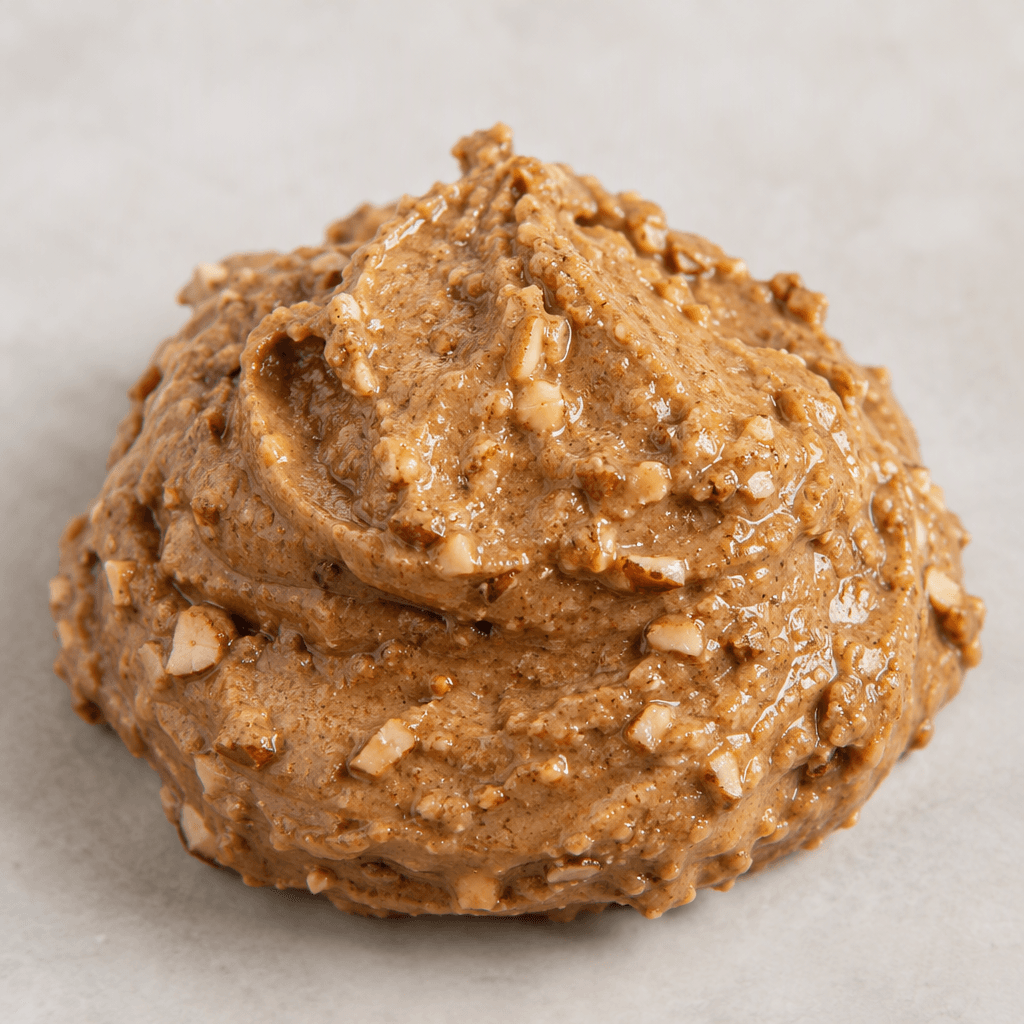
Crunchy almond butter Calories
Detailed nutrition analysis with calories, glycemic index, vitamins and minerals.
CALORIES · 100 G
GI
POTASSIUM · 100 G
FIBER · 100 G
Quick answer
1 tablespoon (medium) of Crunchy almond butter (16 g) has 98 calories. That works out to 610 calories per 100 g. It contains 2.9 g of carbs, 3.4 g of protein, 8.8 g of fat and 1.8 g of fiber. Its 3.8 mg of Vitamin E covers 26% of the Daily Value. Its glycemic index is 35 (low), so it raises blood sugar slowly.
Crunchy almond butter Nutrition Facts
Selected: 1 tablespoon (medium) · 16 g
98
KCAL / 16G
Carbs
2.9g
· 1% DV
Protein
3.4g
· 7% DV
Fat
8.8g
· 11% DV
Fiber
1.8g
· 6% DV
DV is the share of the daily value covered, on a 2,000 kcal reference diet.
Calories come from: Carbs 11% · Protein 13% · Fat 76%
Crunchy almond butter nutrition facts table · 1 tablespoon (medium) (16 g)
| Nutrient | Amount | % DV |
|---|---|---|
| Calories | 98 kcal | |
| Total fat | 8.8 g | 11% |
| Saturated fat | 0.67 g | 3% |
| Trans fat | 0 g | |
| Sodium | 0.8 mg | 0% |
| Total carbohydrate | 2.9 g | 1% |
| Fiber | 1.8 g | 6% |
| Protein | 3.4 g | 7% |
Calories: Calories measure energy. Average daily need is 2,000 kcal. Excess calories are stored as fat, too few cause weight loss.
Carbs: Your body's primary energy source. The brain runs exclusively on carbs. Daily need: 275g.
Protein: Essential for muscle repair and cell growth. Daily need: 50g. Keeps you full and boosts metabolism.
Fat: Needed for hormone production and vitamin absorption. Daily need: 78g. Limit saturated fats, choose unsaturated.
Fiber: Critical for digestive health and satiety. Daily need: 28g. Stabilizes blood sugar, lowers cholesterol.

Log this food in EatBetter
100,000+ people use it
- Get your daily calorie target
- Snap your meal, log it in seconds
- See every vitamin and mineral

📸 Scan the code to get the app free.

How Many Calories in 1 Tablespoon of Crunchy almond butter?
| Serving | Amount | Calories |
|---|---|---|
| 1 tablespoon (medium) | 16 g | 98 kcal |
| 1 teaspoon (small) | 5 g | 31 kcal |
| 1 slice (thin) | 10 g | 61 kcal |
| 1 piece (medium) | 20 g | 122 kcal |
| 1 ounce (medium) | 28 g | 171 kcal |
| 1 pack (mini) | 30 g | 183 kcal |
| 2 tablespoon (large) | 32 g | 195 kcal |
| 100 g | 100 g | 610 kcal |
| 1 cup (large) | 250 g | 1525 kcal |
Calculated from 610 calories per 100 g.
Frequently Asked Questions About Crunchy almond butter
Is crunchy almond butter healthy?
Yes, crunchy almond butter can be a nutritious choice because it provides protein, fibre and mostly unsaturated fats from almonds. It is energy-dense, so spreading a modest amount on toast or stirring it into oats is a practical way to enjoy it.
What is crunchy almond butter made of?
Crunchy almond butter is made mainly from ground almonds, with small almond pieces left in or mixed back in for texture. Some products also contain salt, oil or sweeteners, so the exact ingredients vary by brand.
Why does oil separate in crunchy almond butter?
Oil separation in crunchy almond butter is normal: natural almond oil can rise to the top when the jar sits. Stir it thoroughly with a clean utensil before eating; a distinctly rancid smell is a reason to discard it.
Does crunchy almond butter need to be refrigerated after opening?
No, crunchy almond butter does not always need refrigeration after opening. Keep the tightly closed jar in a cool, dry place away from sunlight; chilling can make it firmer. Follow the storage directions on the specific product if they differ.
How is crunchy almond butter different from smooth almond butter?
Crunchy almond butter contains small pieces of almond, while smooth almond butter is ground to an even texture. Both are used in similar ways, but the crunchy version adds bite to toast, porridge and baking.
Can you use crunchy almond butter in baking?
Yes, crunchy almond butter works in cookies, energy bites and other recipes that use nut butter. The almond pieces add texture, so the result will not be as smooth as one made with creamy almond butter.
Can crunchy almond butter replace peanut butter?
Yes, crunchy almond butter can replace peanut butter in many sandwiches and recipes. It has a distinct almond flavour, so expect a different taste even when the texture is similar; it also is not a safe substitute for someone avoiding tree nuts.
How do you make crunchy almond butter at home?
To make crunchy almond butter, blend most of the almonds in a powerful food processor until smooth, then pulse in a smaller amount of chopped almonds. Lightly toasting the almonds first can help them blend and deepen the flavour.
How can you tell if crunchy almond butter has gone bad?
Crunchy almond butter may have spoiled if it develops a sharp, stale or paint-like smell, visible mould or an unusually unpleasant taste. Keep water and used utensils out of the jar, and discard it if you notice these signs.
Can people with diabetes eat crunchy almond butter?
Yes, people with diabetes can often include crunchy almond butter, particularly when it has no added sugar. Products differ, and individual blood-glucose responses and meal plans vary, so ask your clinician or dietitian if you need advice for your own plan.
Crunchy almond butter Vitamins & Minerals
Vitamins
Vitamin E
3.84mg · 26% DV
B2
0.18mg · 14% DV
Biotin
2.72µg · 9% DV
B3
0.58mg · 4% DV
Minerals
Copper
0.16mg · 18% DV
Manganese
0.37mg · 16% DV
Phosphorus
77mg · 11% DV
Magnesium
43mg · 10% DV
Potassium ⭐
114mg · 3% DV
Sodium
0.8mg · 0% DV
Crunchy almond butter Glycemic Index
GLYCEMIC INDEX
GLYCEMIC LOAD
Accounts for portion size — a more realistic measure than GI alone.
How to Burn Off Crunchy almond butter
To burn the 98 calories in 1 tablespoon (medium) (16 g):
🚶
Walking (5 km/h)
🏃
Running (8 km/h)
🚴
Cycling
🏊
Swimming
Times are calculated with the MET equation for a 70 kg adult. Actual burn varies with your weight, age and pace.
What is Crunchy almond butter?
Crunchy almond butter is a thick spread made from ground almonds, with small pieces left in for texture. It has a toasted, nutty flavour and a rich consistency; depending on the almonds used, it may be slightly sweet without added sweetener.
In the US and elsewhere, it is commonly spread on toast, stirred into porridge or blended into smoothies. It also pairs well with apple or banana slices, making it an easy snack. Almond butter is energy-dense and provides fibre as well as plant protein; it contains 21 g of protein per 100 g. A modest spoonful is often enough, especially when serving it with fruit or alongside a less rich breakfast.
How Nutritious Is Crunchy almond butter?
Nutrient density
High
How many vitamins, minerals and how much fiber this food carries per calorie. A high score means a lot of nutrition for few calories.
Satiety score
High
An EatBetter score computed from fiber, protein and calorie density. A high score means staying full longer on the same calories.
Both scores are calculated per 100 g and do not change with the selected portion. The satiety score is EatBetter's own calculation, not a clinical measure.
Is Crunchy almond butter Processed?
NOVA 2
Minimally Processed
1. Unprocessed
2. Minimally Processed
3. Processed
4. Ultra-Processed
NOVA classifies foods into 4 groups by industrial processing. NOVA 1 (unprocessed) is the healthiest.
Does Crunchy almond butter Contain Allergens?
Contains these allergens:
Which Diets Is Crunchy almond butter Good For?
Vegan
✓ Suitable
Vegetarian
✓ Suitable
Gluten-Free
✓ Suitable
Dairy-Free
— Not suitable
Mediterranean
✓ Suitable
Paleo
✓ Suitable
Whole30
— Not suitable
DASH
— Not suitable
Keto
— Not suitable
Low FODMAP
— Not suitable
Crunchy almond butter Fat Profile
SATURATED
0.67g
MONOUNSATURATED
5.44g
POLYUNSATURATED
2.08g
Compare Crunchy almond butter
Foods Similar to Crunchy almond butter
Have another question about Crunchy almond butter?
Ask the AI nutrition coach — calories, portions, alternatives and more, answered in seconds in the app.

Scan calories with your camera
Instant AI nutrition analysis

Nutrition data compiled from USDA FoodData Central and scientific sources.