

Ready & Packaged Foods
All →Vegetables & Legumes
All →Desserts & Confectionery
All →Meat & Protein
All →Grains & Bakery
All →Beverages
All →Milk & Dairy
All →

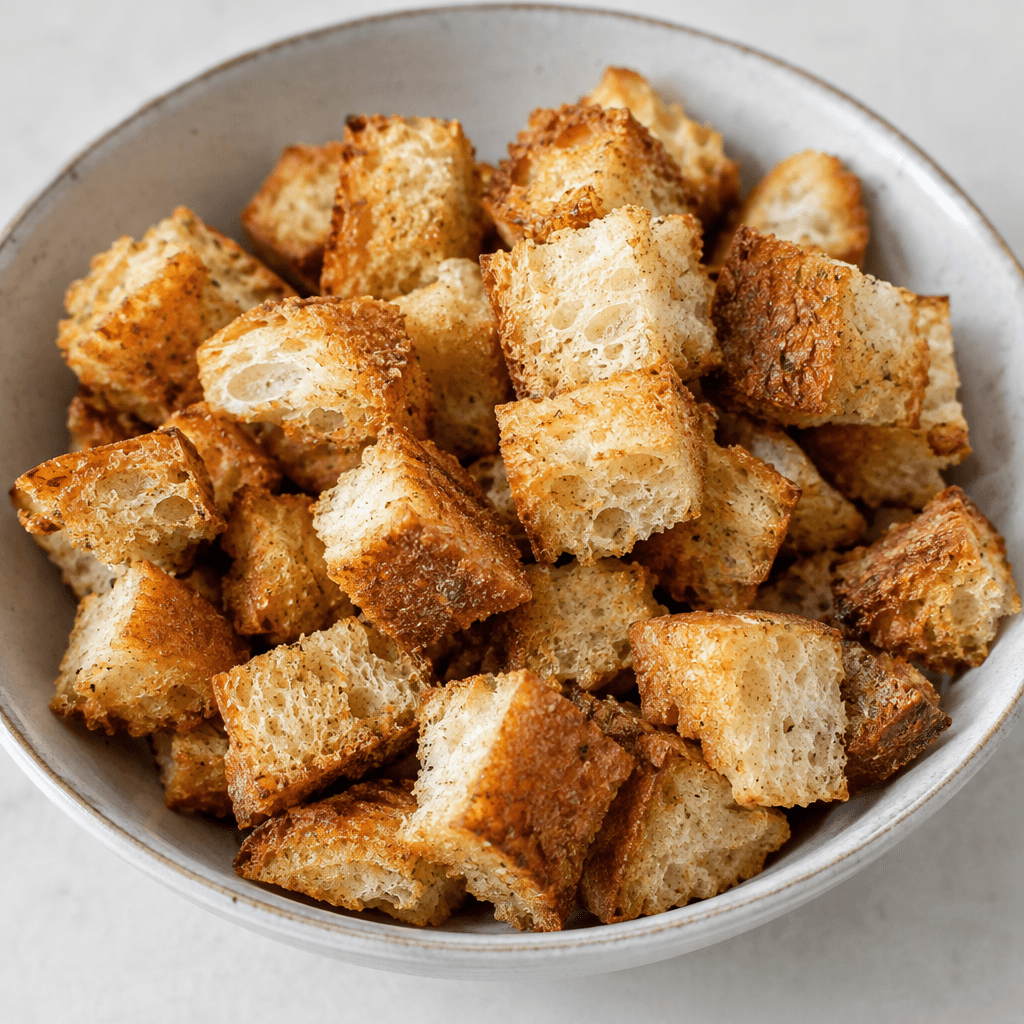
Croutons Calories
Crunchy bread cubes for salads and soups
In season: Spring · Summer · Autumn · Winter
CALORIES
GI
POTASSIUM
FIBER
Quick answer
1 cup (medium) of Croutons (30 g) has 122 calories. That works out to 407 calories per 100 g. It contains 20.3 g of carbs, 3.8 g of protein, 2.8 g of fat and 1.2 g of fiber. Its 5.7 µg of Selenium covers 10% of the Daily Value. Its glycemic index is 70 (high), so it raises blood sugar quickly.
What is Croutons?
Croutons are small cubes of bread toasted or fried until crisp, often with oil and seasonings. They are closely associated with French cooking, and are also a handy way to use up bread that is no longer fresh. Their browned edges and crunchy texture make a contrast with softer ingredients.
In many places, croutons are scattered over salads or added to soups just before serving so they keep their crunch. They are especially familiar in Caesar-style salads, but work with leafy greens, creamy soups and roasted vegetables too. As a bread-based topping, they are mostly a source of carbohydrates rather than protein. Use a modest handful for crunch, or toast bread cubes with just a little oil at home.
Croutons Nutrition Facts
Selected: 100 g
407
KCAL / 100G
Carbs
67.5g
· 25% DV
Protein
12.5g
· 25% DV
Fat
9.2g
· 12% DV
Fiber
4.1g
· 15% DV
DV is the share of the daily value covered, on a 2,000 kcal reference diet.
Calories come from: Carbs 67% · Protein 12% · Fat 21%
Croutons Vitamins & Minerals
Vitamins
B1
0.32mg · 27% DV
B3
3.2mg · 20% DV
B2
0.19mg · 15% DV
Folate
45µg · 11% DV
Minerals
Selenium
19µg · 35% DV
Sodium
670mg · 29% DV
Iron
3mg · 17% DV
Phosphorus
110mg · 16% DV
How Nutritious Is Croutons?
Nutrient density
Low
How many vitamins, minerals and how much fiber this food carries per calorie. A high score means a lot of nutrition for few calories.
Satiety score
Medium
An EatBetter score computed from fiber, protein and calorie density. A high score means staying full longer on the same calories.
Both scores are calculated per 100 g and do not change with the selected portion. The satiety score is EatBetter's own calculation, not a clinical measure.
Croutons Glycemic Index
GLYCEMIC INDEX
GLYCEMIC LOAD
Accounts for portion size — a more realistic measure than GI alone.
How to Burn Off Croutons
To burn the 407 calories in 100 g:
🚶
Walking (5 km/h)
🏃
Running (8 km/h)
🚴
Cycling
🏊
Swimming
Times are calculated with the MET equation for a 70 kg adult. Actual burn varies with your weight, age and pace.
Is Croutons Processed?
NOVA 3
Processed
1. Unprocessed
2. Minimally Processed
3. Processed
4. Ultra-Processed
NOVA classifies foods into 4 groups by industrial processing. NOVA 1 (unprocessed) is the healthiest.
Does Croutons Contain Allergens?
Contains these allergens:
Which Diets Is Croutons Good For?
Vegan
— Not suitable
Vegetarian
✓ Suitable
Gluten-Free
— Not suitable
Dairy-Free
— Not suitable
Mediterranean
— Not suitable
Paleo
— Not suitable
Whole30
— Not suitable
DASH
— Not suitable
Keto
— Not suitable
Low FODMAP
— Not suitable
Croutons Fat Profile
SATURATED
2.1g
MONOUNSATURATED
2.7g
POLYUNSATURATED
2.1g
Omega 6:3 ratio 43.3:1
Above the ideal 4:1 (43.3:1).
Compare Croutons
Foods Similar to Croutons
Frequently Asked Questions About Croutons
What are croutons made of?
Croutons are pieces of bread that have been toasted or fried until crisp. They are often seasoned with oil, salt, garlic, herbs, or cheese, then added to salads and soups for crunch.
How do you make croutons at home?
To make croutons at home, cut bread into cubes, toss with a little oil and your preferred seasonings, and bake until crisp and golden. Turn the pieces partway through so they brown evenly.
How do you keep croutons crispy in a salad?
Add croutons to a salad just before serving. Salad dressing and moisture from the other ingredients soften them if they sit together, so you can also serve the croutons on the side.
Can you freeze croutons?
Yes, croutons can be frozen in an airtight container or freezer bag. Let them thaw, then warm them briefly in the oven if they have lost some of their crunch.
How long do croutons last after opening?
Opened croutons stay crisp longest in a tightly sealed container kept in a cool, dry place. Moisture makes them stale, so avoid leaving the bag open; if they soften, briefly reheating them can help restore their crunch.
What soups are croutons good in?
Croutons go well with smooth soups such as tomato, pumpkin, and creamy vegetable soups because they add a crisp contrast. Add them to each bowl at serving time rather than simmering them in the pot.
Can you make croutons without an oven?
Yes, you can make croutons in a skillet. Toss bread cubes with a little oil and seasoning, then cook over medium heat, stirring often until they are browned and crisp.
Are croutons supposed to be hard?
Croutons should be dry and crunchy, but they should not be unpleasantly hard or burnt. If homemade pieces are tough, cut the bread into smaller, even cubes and watch them closely as they toast.
Can you use croutons as breadcrumbs?
Yes, you can crush croutons into crumbs and use them as a seasoned breadcrumb substitute. They work well as a topping for baked dishes, but their added oil and seasonings may change the flavor of a recipe.
What can you do with leftover croutons?
Leftover croutons can be crushed over casseroles, blended into breadcrumbs, or served with soup or salad. For a quick savory topping, break them into smaller pieces and scatter them over roasted vegetables just before serving.
Have another question about Croutons?
Ask the AI nutrition coach — calories, portions, alternatives and more, answered in seconds in the app.

Scan calories with your camera
Instant AI nutrition analysis

Nutrition data compiled from USDA FoodData Central and scientific sources.