

Ready & Packaged Foods
All →Vegetables & Legumes
All →Desserts & Confectionery
All →Meat & Protein
All →Grains & Bakery
All →Beverages
All →Milk & Dairy
All →

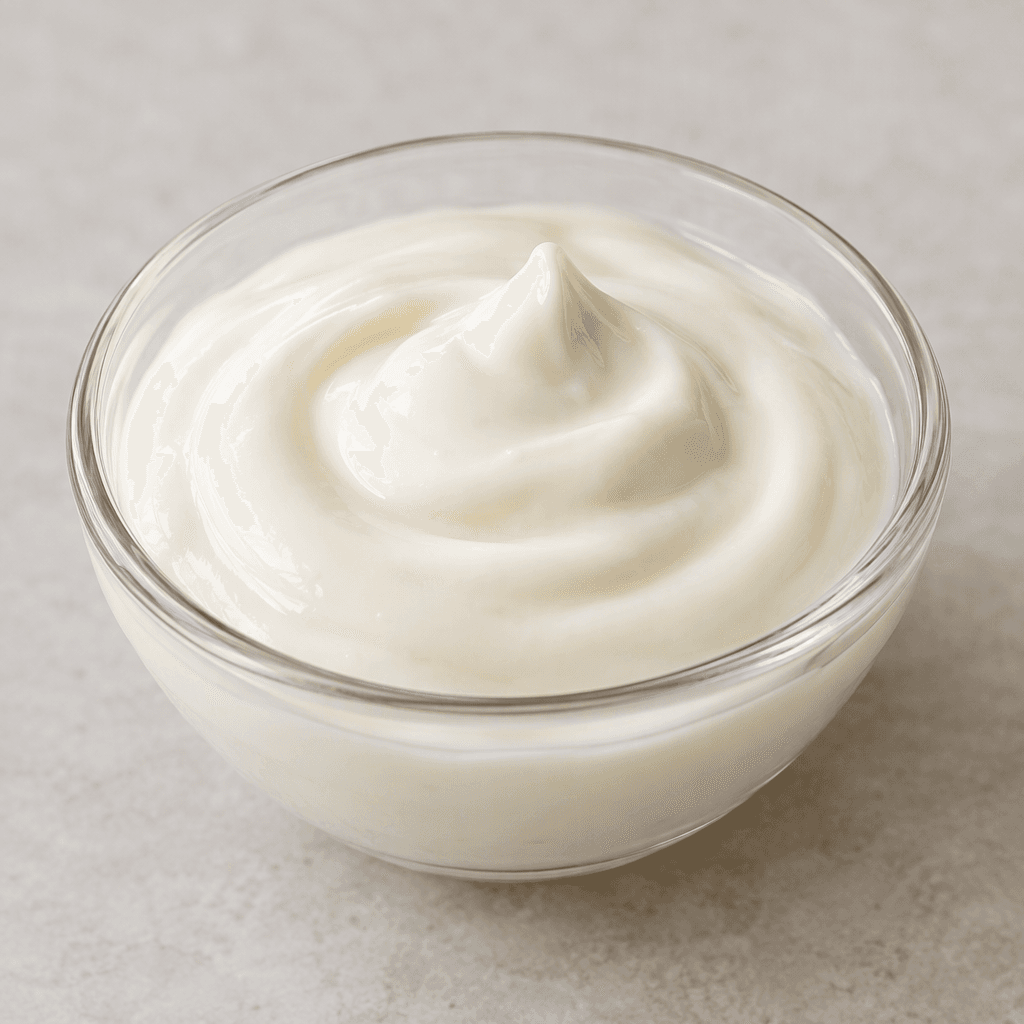
Cream (35% fat) Calories
Rich, high-fat cream for cooking and desserts
In season: Spring · Summer · Autumn · Winter
CALORIES
GI
POTASSIUM
FIBER
Quick answer
2 tablespoon (medium) of Cream (35% fat) (30 g) has 102 calories. That works out to 340 calories per 100 g. It contains 0.9 g of carbs, 0.6 g of protein, 10.5 g of fat and 0 g of fiber. Its 99 µg of Vitamin A covers 11% of the Daily Value. Its glycemic index is 35 (low), so it raises blood sugar slowly.
What is Cream (35% fat)?
Cream (35% fat) is the rich portion of milk, with a smooth, pourable texture and enough fat to give dishes body. It is commonly used both in cooking and in desserts; when well chilled, it can also be whipped for a soft, airy topping.
Across many English-speaking kitchens, it goes into pasta sauces, soups and gravies, or is poured over fruit and desserts. Its richness makes it satisfying, but it is high in fat and contributes little protein, so a small amount often goes a long way. Stir it in near the end of cooking for a silky finish, or pair it with tart fruit or a tomato-based sauce to balance its creamy taste.
Cream (35% fat) Nutrition Facts
Selected: 100 g
340
KCAL / 100G
Carbs
3g
· 1% DV
Protein
2.1g
· 4% DV
Fat
35g
· 45% DV
Fiber
0g
· 0% DV
DV is the share of the daily value covered, on a 2,000 kcal reference diet.
Calories come from: Carbs 4% · Protein 3% · Fat 93%
Cream (35% fat) Vitamins & Minerals
Vitamins
Vitamin A
330µg · 37% DV
B12
0.5µg · 21% DV
B2
0.23mg · 18% DV
B5
0.5mg · 10% DV
Minerals
Iodine
16µg · 11% DV
Phosphorus
60mg · 9% DV
Calcium
80mg · 8% DV
Potassium ⭐
120mg · 4% DV
How Nutritious Is Cream (35% fat)?
Nutrient density
Medium
How many vitamins, minerals and how much fiber this food carries per calorie. A high score means a lot of nutrition for few calories.
Satiety score
Low
An EatBetter score computed from fiber, protein and calorie density. A high score means staying full longer on the same calories.
Both scores are calculated per 100 g and do not change with the selected portion. The satiety score is EatBetter's own calculation, not a clinical measure.
Cream (35% fat) Glycemic Index
GLYCEMIC INDEX
GLYCEMIC LOAD
Accounts for portion size — a more realistic measure than GI alone.
How to Burn Off Cream (35% fat)
To burn the 340 calories in 100 g:
🚶
Walking (5 km/h)
🏃
Running (8 km/h)
🚴
Cycling
🏊
Swimming
Times are calculated with the MET equation for a 70 kg adult. Actual burn varies with your weight, age and pace.
Is Cream (35% fat) Processed?
NOVA 2
Minimally Processed
1. Unprocessed
2. Minimally Processed
3. Processed
4. Ultra-Processed
NOVA classifies foods into 4 groups by industrial processing. NOVA 1 (unprocessed) is the healthiest.
Does Cream (35% fat) Contain Allergens?
Contains these allergens:
Which Diets Is Cream (35% fat) Good For?
Vegan
— Not suitable
Vegetarian
— Not suitable
Gluten-Free
✓ Suitable
Dairy-Free
— Not suitable
Mediterranean
✓ Suitable
Paleo
✓ Suitable
Whole30
— Not suitable
DASH
— Not suitable
Keto
✓ Suitable
Low FODMAP
— Not suitable
Cream (35% fat) Fat Profile
SATURATED
22g
MONOUNSATURATED
9.5g
POLYUNSATURATED
0.7g
Omega 6:3 ratio 8.3:1
Above the ideal 4:1 (8.3:1).
Compare Cream (35% fat)
Foods Similar to Cream (35% fat)
Frequently Asked Questions About Cream (35% fat)
How do you whip 35% fat cream?
Chill the 35% fat cream, bowl and beaters first, then whip until it holds soft or firm peaks. Stop once it reaches the texture you want; overwhipping causes the fat to separate and can turn the cream into butter.
What is the difference between 35% fat cream and whipping cream?
35% fat cream has enough fat to whip and hold soft peaks, while products sold as whipping cream can have different fat levels depending on the country. Check the package for whipping instructions, since some cooking creams are not designed to whip.
What can I use instead of 35% fat cream?
For a cooked sauce or soup, a mixture of milk and butter can add richness in place of 35% fat cream, but it will not whip. For whipped toppings or desserts that rely on cream holding its shape, that substitute will not give the same result.
How should you store opened 35% fat cream?
Keep opened 35% fat cream tightly covered in the refrigerator and follow the package’s instructions for use after opening. Do not leave it out for long; discard it if it develops an off smell, unusual discoloration or lumps.
Can you freeze 35% fat cream?
Yes, you can freeze 35% fat cream, but thawing may leave it separated or grainy and make it harder to whip. Stir it well after thawing and use it in cooked soups or sauces rather than recipes that depend on a smooth whipped texture.
Can you boil 35% fat cream?
Yes, 35% fat cream can be heated and gently simmered, but a hard boil may make a sauce split or scorch. Add it toward the end of cooking, stir regularly and keep the heat low, especially when acidic ingredients are in the dish.
Why won't 35% fat cream whip?
35% fat cream may fail to whip if it is warm, the bowl is warm, or the product is intended for cooking rather than whipping. Chill the cream and equipment thoroughly, and check that the package says it is suitable for whipping.
Can you make butter from 35% fat cream?
Yes, keep whipping 35% fat cream past the point where it forms peaks, and the fat will separate into butter and liquid. Drain the butter, rinse it in cold water and press out excess liquid before storing it in the refrigerator.
How do you stop 35% fat cream splitting in pasta sauce?
To help 35% fat cream stay smooth in pasta sauce, lower the heat before adding it and stir it in gradually. Avoid a rapid boil, and add acidic ingredients such as lemon juice slowly; tempering the cream with a little hot sauce also helps.
Can you put 35% fat cream in coffee?
Yes, 35% fat cream can be added to coffee for a richer, smoother taste. Pour it in gradually and stir. Very hot or acidic coffee can sometimes change the cream’s appearance, but a slight change alone does not mean it has spoiled.
Have another question about Cream (35% fat)?
Ask the AI nutrition coach — calories, portions, alternatives and more, answered in seconds in the app.

Scan calories with your camera
Instant AI nutrition analysis

Nutrition data compiled from USDA FoodData Central and scientific sources.