

Ready & Packaged Foods
All →Vegetables & Legumes
All →Desserts & Confectionery
All →Meat & Protein
All →Grains & Bakery
All →Beverages
All →Milk & Dairy
All →

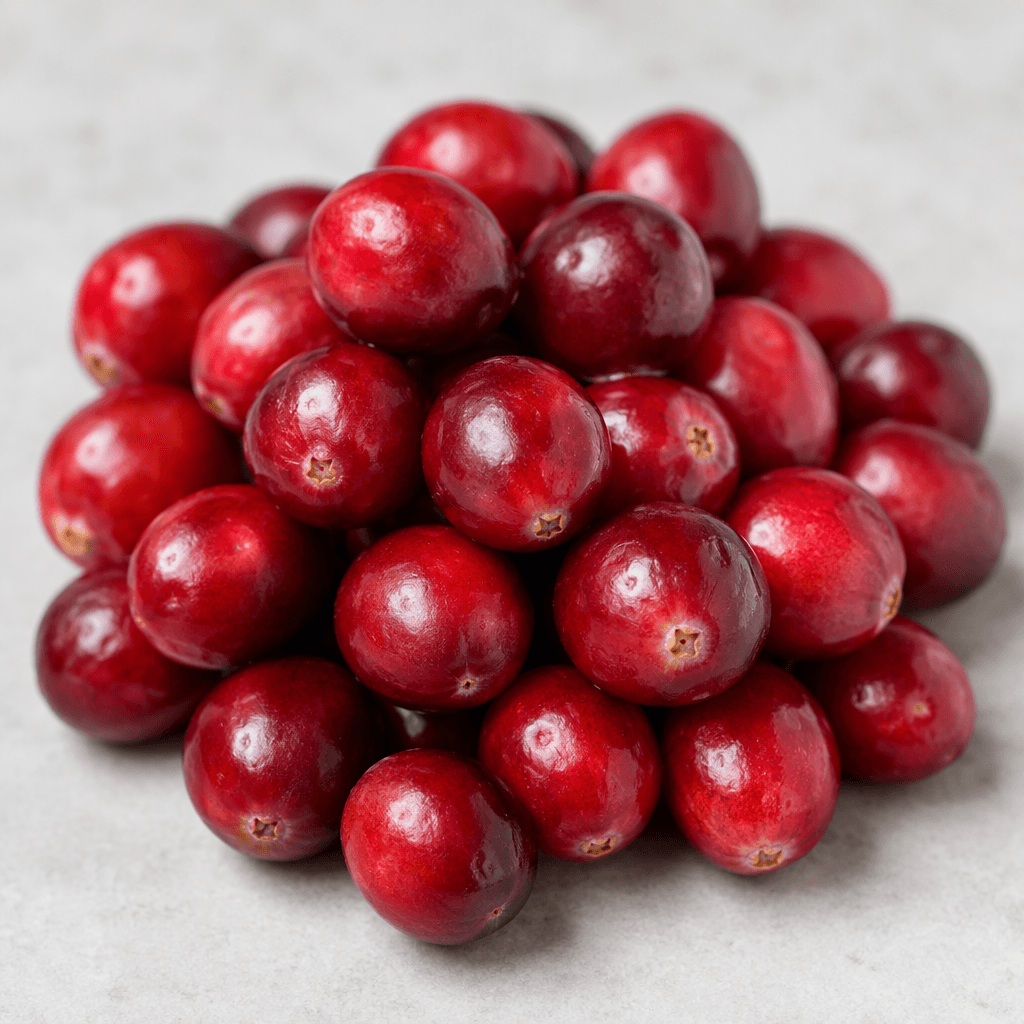
Cranberry Calories
Vitamin C, antioxidant, low calorie
In season: Autumn · Winter
CALORIES
GI
POTASSIUM
FIBER
Quick answer
100 g of Cranberry has 46 calories. It contains 12.2 g of carbs, 0.4 g of protein, 0.1 g of fat and 3.6 g of fiber. Its 14 mg of Vitamin C covers 16% of the Daily Value. Its glycemic index is 45 (low), so it raises blood sugar slowly.
What is Cranberry?
Kızılcık, known in English as the Cornelian cherry, is the small, red fruit of a dogwood tree, not the North American cranberry. It is grown and eaten in Turkey and parts of Europe and western Asia. The fruit is notably tart and a little astringent when firm, becoming softer and milder as it ripens.
In Turkey it is eaten fresh or made into marmalade, jam and a refreshing sherbet; the preserves work well at breakfast or with plain yoghurt. For English-speaking cooks, its sharp flavour also suits sauces and desserts where a tart fruit is welcome. It provides fibre while remaining low in calories, and a little sweetener can balance its acidity in cooking.
Cranberry Nutrition Facts
Selected: 100 g
46
KCAL / 100G
Carbs
12.2g
· 4% DV
Protein
0.4g
· 1% DV
Fat
0.1g
· 0% DV
Fiber
3.6g
· 13% DV
DV is the share of the daily value covered, on a 2,000 kcal reference diet.
Calories come from: Carbs 95% · Protein 3% · Fat 2%
Cranberry Vitamins & Minerals
Vitamins
Vitamin C
14mg · 16% DV
Vitamin E
1.2mg · 8% DV
B5
0.3mg · 6% DV
B6
0.06mg · 4% DV
Minerals
Potassium ⭐
85mg · 3% DV
Phosphorus
13mg · 2% DV
Calcium
8mg · 1% DV
Magnesium
6mg · 1% DV
How Nutritious Is Cranberry?
Nutrient density
High
How many vitamins, minerals and how much fiber this food carries per calorie. A high score means a lot of nutrition for few calories.
Satiety score
Medium
An EatBetter score computed from fiber, protein and calorie density. A high score means staying full longer on the same calories.
Both scores are calculated per 100 g and do not change with the selected portion. The satiety score is EatBetter's own calculation, not a clinical measure.
Cranberry Glycemic Index
GLYCEMIC INDEX
GLYCEMIC LOAD
Accounts for portion size — a more realistic measure than GI alone.
How to Burn Off Cranberry
To burn the 46 calories in 100 g:
🚶
Walking (5 km/h)
🏃
Running (8 km/h)
🚴
Cycling
🏊
Swimming
Times are calculated with the MET equation for a 70 kg adult. Actual burn varies with your weight, age and pace.
Is Cranberry Processed?
NOVA 1
Unprocessed
1. Unprocessed
2. Minimally Processed
3. Processed
4. Ultra-Processed
NOVA classifies foods into 4 groups by industrial processing. NOVA 1 (unprocessed) is the healthiest.
Does Cranberry Contain Allergens?
No known major allergens
Which Diets Is Cranberry Good For?
Vegan
✓ Suitable
Vegetarian
✓ Suitable
Gluten-Free
✓ Suitable
Dairy-Free
— Not suitable
Mediterranean
✓ Suitable
Paleo
✓ Suitable
Whole30
— Not suitable
DASH
— Not suitable
Keto
— Not suitable
Low FODMAP
— Not suitable
Cranberry Fat Profile
SATURATED
0.01g
MONOUNSATURATED
0.02g
POLYUNSATURATED
0.04g
Omega 6:3 ratio 3:1
Below the ideal 4:1 — a good omega balance.
Compare Cranberry
Foods Similar to Cranberry
Frequently Asked Questions About Cranberry
What is kızılcık, and is it the same as a cranberry?
Kızılcık is a tart Cornelian cherry, not the cranberry commonly sold in English-speaking countries. They are different fruits, so recipes and nutrition information for cranberries should not automatically be applied to kızılcık.
What does a Cornelian cherry taste like?
A Cornelian cherry tastes tart and astringent, especially before it is fully ripe. As it ripens and darkens, it becomes softer and somewhat sweeter, though it generally remains more sour than many fresh fruits.
Can you eat Cornelian cherries raw?
Yes, you can eat a Cornelian cherry raw, but its firm flesh can be quite sour and its pit is hard. Eat around the pit, or cook the fruit if you prefer a softer texture and less sharp flavor.
How do you use Cornelian cherries?
Cornelian cherries are commonly cooked into jam, syrup, compote, or fruit sauce. Their tartness also works well in savory sauces; strain the cooked fruit if you want to remove the pits and skins.
When are Cornelian cherries in season?
Cornelian cherries generally ripen in late summer to early autumn. Look for fruit that has turned a deep red and feels plump; paler, very firm fruit is usually less ripe and more astringent.
How do you store fresh Cornelian cherries?
Keep fresh Cornelian cherries unwashed in the refrigerator and remove any bruised or soft fruit. Rinse them just before eating or cooking, since storing them wet can speed up spoilage.
Can you freeze Cornelian cherries?
Yes, Cornelian cherries freeze well for later cooking. Sort, rinse, and dry them thoroughly, then freeze in a single layer before transferring them to a sealed container; thawed fruit may be softer than fresh.
Do you remove the pits from Cornelian cherries?
Yes, remove or avoid the hard pits when eating Cornelian cherries. For jam or sauce, you can cook the fruit first and press it through a sieve to separate the pits from the pulp.
Are Cornelian cherries the same as dogwood berries?
Cornelian cherries are the edible fruit of Cornus mas, a dogwood species. The name “dogwood berries” can refer to fruit from other dogwood plants, so identify the species rather than assuming every dogwood fruit is edible.
Are Cornelian cherries good for you?
Cornelian cherries provide vitamin C and plant antioxidants, and they can be part of a varied diet. Their tart taste often leads to added sugar in jams and syrups, so fresh or lightly sweetened preparations are a different choice from heavily sweetened ones.
Have another question about Cranberry?
Ask the AI nutrition coach — calories, portions, alternatives and more, answered in seconds in the app.

Scan calories with your camera
Instant AI nutrition analysis

Nutrition data compiled from USDA FoodData Central and scientific sources.