

Ready & Packaged Foods
All →Vegetables & Legumes
All →Desserts & Confectionery
All →Meat & Protein
All →Grains & Bakery
All →Beverages
All →Milk & Dairy
All →

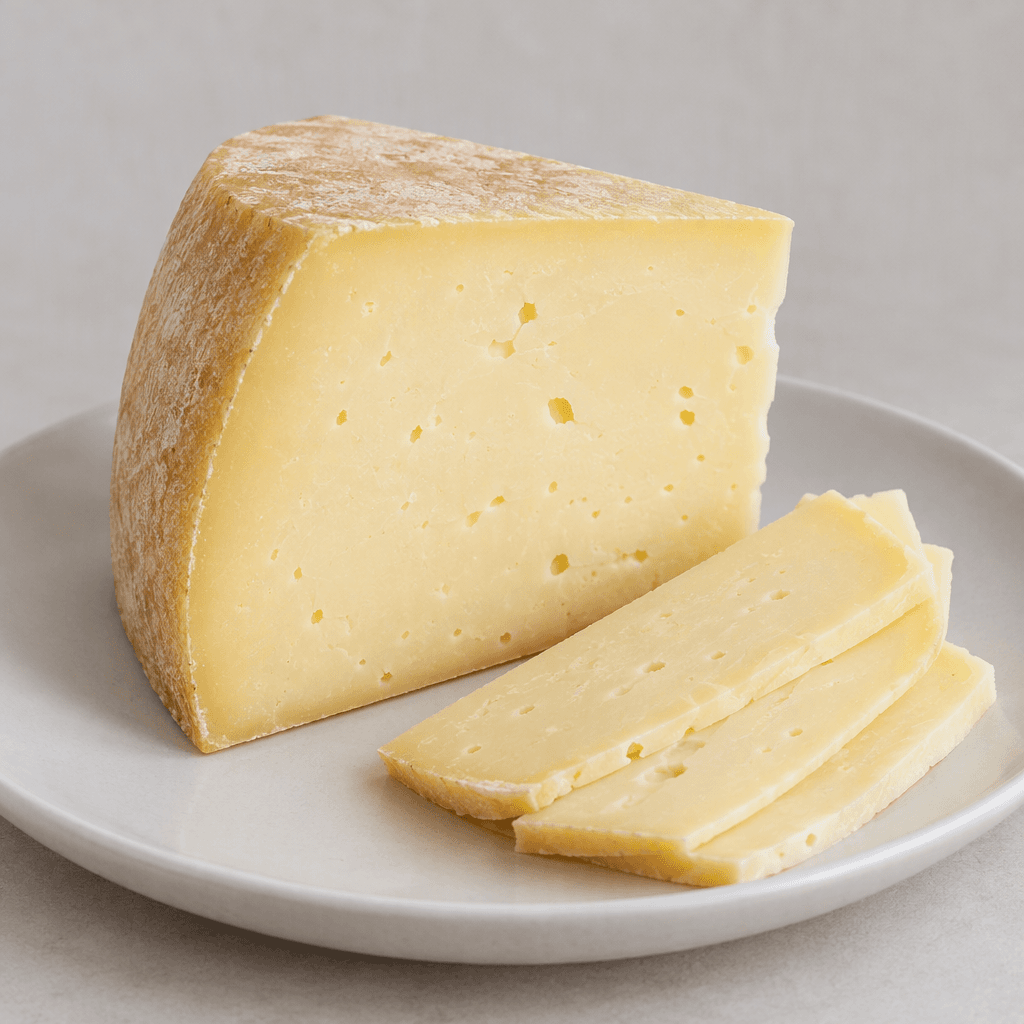
Cow's milk cheese Calories
Source of protein, calcium, and vitamin B12
CALORIES
GI
POTASSIUM
FIBER
Quick answer
1 slice (medium) of Cow's milk cheese (28 g) has 113 calories. That works out to 403 calories per 100 g. It contains 0.4 g of carbs, 7 g of protein, 9.3 g of fat and 0 g of fiber. Its 201.9 mg of Calcium covers 20% of the Daily Value. Its glycemic index is 0 (low), so it raises blood sugar slowly.
What is Cow's milk cheese?
Cow's milk cheese is a broad family of cheeses made by setting and draining cow’s milk, rather than one specific regional variety. Depending on how it is made and aged, it can be soft and mild or firm, tangy and more savoury; some cheeses have small holes and a smooth, sliceable texture.
It is commonly sliced for sandwiches, melted over toast or added to cooked dishes, and can also be served with fruit or crackers on a cheese board. It provides protein, while its fat content makes it energy-dense. For a lighter snack, keep the portion modest and pair it with fresh vegetables or fruit.
Cow's milk cheese Nutrition Facts
Selected: 100 g
403
KCAL / 100G
Carbs
1.3g
· 0% DV
Protein
24.9g
· 50% DV
Fat
33.1g
· 42% DV
Fiber
0g
· 0% DV
DV is the share of the daily value covered, on a 2,000 kcal reference diet.
Calories come from: Carbs 1% · Protein 25% · Fat 74%
Cow's milk cheese Vitamins & Minerals
Vitamins
B12
1.1µg · 46% DV
Vitamin A
337µg · 37% DV
B2
0.38mg · 29% DV
B5
0.41mg · 8% DV
Minerals
Phosphorus
512mg · 73% DV
Calcium
721mg · 72% DV
Zinc
3mg · 27% DV
Sodium
621mg · 27% DV
How Nutritious Is Cow's milk cheese?
Nutrient density
High
How many vitamins, minerals and how much fiber this food carries per calorie. A high score means a lot of nutrition for few calories.
Satiety score
Low
An EatBetter score computed from fiber, protein and calorie density. A high score means staying full longer on the same calories.
Both scores are calculated per 100 g and do not change with the selected portion. The satiety score is EatBetter's own calculation, not a clinical measure.
Cow's milk cheese Glycemic Index
GLYCEMIC INDEX
GLYCEMIC LOAD
Accounts for portion size — a more realistic measure than GI alone.
How to Burn Off Cow's milk cheese
To burn the 403 calories in 100 g:
🚶
Walking (5 km/h)
🏃
Running (8 km/h)
🚴
Cycling
🏊
Swimming
Times are calculated with the MET equation for a 70 kg adult. Actual burn varies with your weight, age and pace.
Is Cow's milk cheese Processed?
NOVA 3
Processed
1. Unprocessed
2. Minimally Processed
3. Processed
4. Ultra-Processed
NOVA classifies foods into 4 groups by industrial processing. NOVA 1 (unprocessed) is the healthiest.
Does Cow's milk cheese Contain Allergens?
Contains these allergens:
Which Diets Is Cow's milk cheese Good For?
Vegan
— Not suitable
Vegetarian
— Not suitable
Gluten-Free
✓ Suitable
Dairy-Free
— Not suitable
Mediterranean
✓ Suitable
Paleo
— Not suitable
Whole30
— Not suitable
DASH
— Not suitable
Keto
✓ Suitable
Low FODMAP
— Not suitable
Cow's milk cheese Fat Profile
SATURATED
21.1g
MONOUNSATURATED
9.4g
POLYUNSATURATED
1g
Omega 6:3 ratio 2.3:1
Below the ideal 4:1 — a good omega balance.
Compare Cow's milk cheese
Foods Similar to Cow's milk cheese
Frequently Asked Questions About Cow's milk cheese
Does cow's milk cheese contain lactose?
Yes, cow's milk cheese can contain lactose, but the amount varies by type and aging. Long-aged hard cheeses usually have very little, while fresh cheeses tend to contain more. If lactose bothers you, try a small serving first.
Is cow's milk cheese healthy?
Cow's milk cheese can be part of a balanced diet and provides useful nutrients, but some varieties are high in salt and saturated fat. Choose a less salty option when possible and keep portions moderate, especially if you eat cheese often.
How is cow's milk cheese made?
Cow's milk cheese is made by adding cultures and usually rennet to milk so it coagulates. The curds are cut and drained from the whey, then the cheese is salted and, depending on the style, pressed and aged.
Can you freeze cow's milk cheese?
Yes, you can freeze cow's milk cheese, but thawing may make it crumbly or dry. Wrap it airtight before freezing and use thawed cheese in cooked dishes, sauces, or casseroles, where a change in texture matters less.
How long does cow's milk cheese last after opening?
Opened cow's milk cheese keeps best when wrapped or stored in a clean, airtight container in the refrigerator. Its usable life varies by style and moisture level; discard it if it develops unexpected mold, a slimy surface, or an unusual smell.
Does cow's milk cheese melt well?
Many cow's milk cheeses melt well, but the result depends on the variety and moisture content. Mozzarella and cheddar-style cheeses melt smoothly, while some aged, dry cheeses can turn grainy or release oil. Melt it gently for a better texture.
Is cow's milk cheese safe during pregnancy?
Yes, cow's milk cheese made with pasteurized milk is generally safe during pregnancy. Avoid cheese made from unpasteurized milk, which can carry harmful bacteria. Check the package for the milk treatment, especially for soft or imported cheeses.
What is the difference between cow's milk cheese and goat cheese?
Cow's milk cheese often has a milder, more neutral flavor, while goat cheese can taste tangier and more distinctive. Texture and nutrition vary with the specific cheese-making method, so the milk source alone does not determine every difference.
Why does cow's milk cheese have holes?
Some cow's milk cheeses develop holes when bacteria release carbon dioxide during aging. The gas forms pockets in the curd, as in Swiss-style cheeses. Many cow's milk cheeses have no holes; their presence depends on the cultures and production method.
Can you eat the rind on cow's milk cheese?
Sometimes. Natural rinds on many cheeses are edible, though their flavor and texture may be strong. Do not eat a wax, plastic, or other artificial coating; remove it before serving. If you cannot identify the covering, cut it away.
Have another question about Cow's milk cheese?
Ask the AI nutrition coach — calories, portions, alternatives and more, answered in seconds in the app.

Scan calories with your camera
Instant AI nutrition analysis

Nutrition data compiled from USDA FoodData Central and scientific sources.