

Ready & Packaged Foods
All →Vegetables & Legumes
All →Desserts & Confectionery
All →Meat & Protein
All →Grains & Bakery
All →Beverages
All →Milk & Dairy
All →

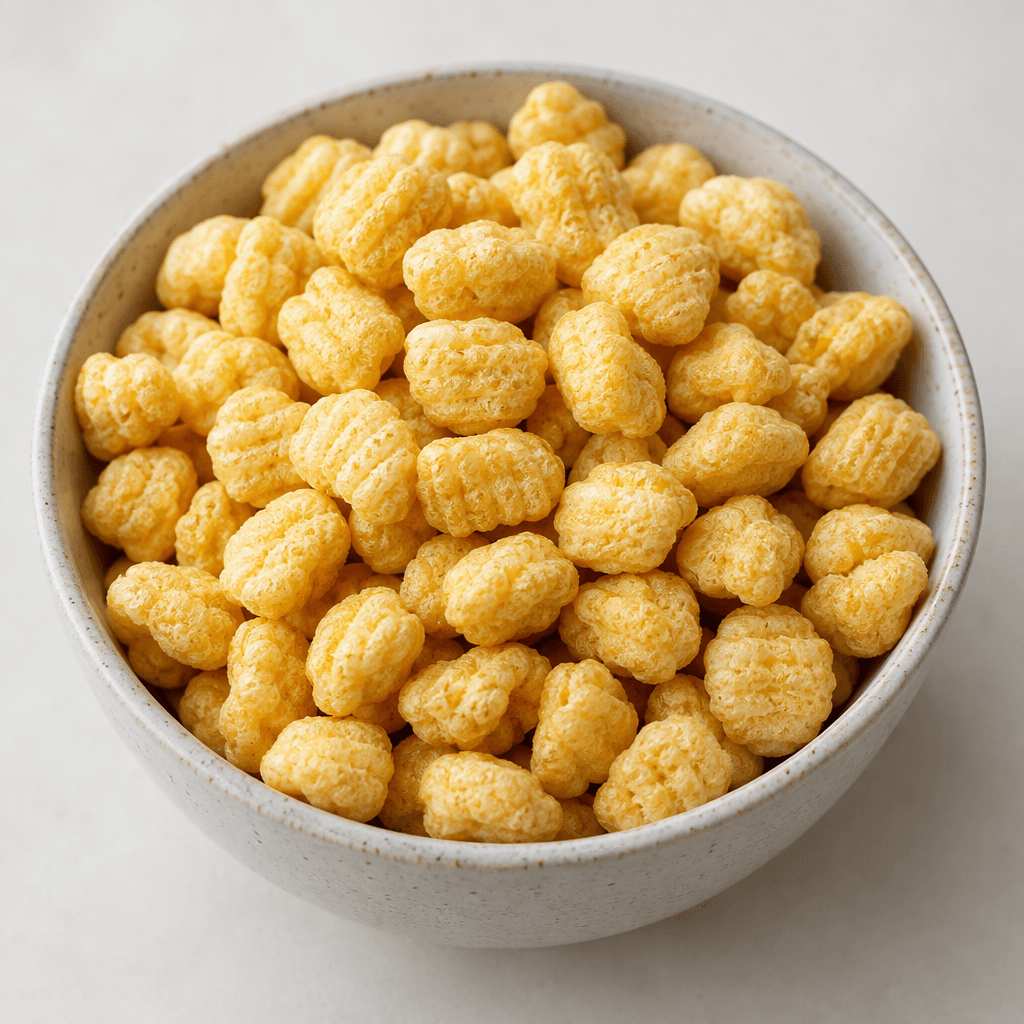
Corn Pops Calories
Low fat, source of fiber, light snack
In season: Spring · Summer · Autumn · Winter
CALORIES
GI
POTASSIUM
FIBER
Quick answer
1 cup (medium) of Corn Pops (8 g) has 31 calories. That works out to 387 calories per 100 g. It contains 6.2 g of carbs, 1 g of protein, 0.4 g of fat and 1.2 g of fiber. Its glycemic index is 72 (high), so it raises blood sugar quickly.
What is Corn Pops?
Mısır patlağı means popcorn: whole dried corn kernels heated until they burst into light, crisp pieces. It is a familiar snack at cinemas and at home, where it can be made in a pot or an air popper. This is popcorn, not the sweetened breakfast cereal sometimes sold under the name Corn Pops.
Its texture is airy and crunchy, with a mild corn flavour. English-speaking audiences commonly eat it during films, as a quick snack, or alongside a drink; it may be served plain, salted, buttered or seasoned. Plain popcorn provides fibre and stays relatively low in fat, while generous butter or oil makes it richer. For a lighter bowl, use little oil and add herbs or spices instead of extra salt.
Corn Pops Nutrition Facts
Selected: 100 g
387
KCAL / 100G
Carbs
77.9g
· 28% DV
Protein
12.9g
· 26% DV
Fat
4.5g
· 6% DV
Fiber
14.5g
· 52% DV
DV is the share of the daily value covered, on a 2,000 kcal reference diet.
Calories come from: Carbs 77% · Protein 13% · Fat 10%
Corn Pops Vitamins & Minerals
Vitamins
B3
2.3mg · 14% DV
B1
0.12mg · 10% DV
B6
0.15mg · 9% DV
B5
0.4mg · 8% DV
Minerals
Phosphorus
358mg · 51% DV
Manganese
1mg · 43% DV
Magnesium
144mg · 34% DV
Zinc
2mg · 18% DV
How Nutritious Is Corn Pops?
Nutrient density
Medium
How many vitamins, minerals and how much fiber this food carries per calorie. A high score means a lot of nutrition for few calories.
Satiety score
Medium
An EatBetter score computed from fiber, protein and calorie density. A high score means staying full longer on the same calories.
Both scores are calculated per 100 g and do not change with the selected portion. The satiety score is EatBetter's own calculation, not a clinical measure.
Corn Pops Glycemic Index
GLYCEMIC INDEX
GLYCEMIC LOAD
Accounts for portion size — a more realistic measure than GI alone.
How to Burn Off Corn Pops
To burn the 387 calories in 100 g:
🚶
Walking (5 km/h)
🏃
Running (8 km/h)
🚴
Cycling
🏊
Swimming
Times are calculated with the MET equation for a 70 kg adult. Actual burn varies with your weight, age and pace.
Is Corn Pops Processed?
NOVA 2
Minimally Processed
1. Unprocessed
2. Minimally Processed
3. Processed
4. Ultra-Processed
NOVA classifies foods into 4 groups by industrial processing. NOVA 1 (unprocessed) is the healthiest.
Does Corn Pops Contain Allergens?
No known major allergens
Which Diets Is Corn Pops Good For?
Vegan
✓ Suitable
Vegetarian
✓ Suitable
Gluten-Free
✓ Suitable
Dairy-Free
— Not suitable
Mediterranean
✓ Suitable
Paleo
— Not suitable
Whole30
— Not suitable
DASH
— Not suitable
Keto
— Not suitable
Low FODMAP
— Not suitable
Corn Pops Fat Profile
SATURATED
0.6g
MONOUNSATURATED
1.3g
POLYUNSATURATED
2.3g
Omega 6:3 ratio 105:1
Above the ideal 4:1 (105:1).
Compare Corn Pops
Foods Similar to Corn Pops
Frequently Asked Questions About Corn Pops
What kind of corn is used to make popcorn?
Popcorn is made from a special type of dried corn with a hard hull and enough moisture inside to build pressure when heated. Here, popcorn means popped corn kernels, or mısır patlağı in Turkish—not the sweetened Corn Pops cereal.
Why do popcorn kernels sometimes not pop?
Popcorn kernels may stay unpopped if they have dried out, are heated unevenly, or are not a popping variety. Store kernels in an airtight container and shake the pan during cooking so heat reaches them more evenly.
How do you make popcorn on the stovetop?
To make stovetop popcorn, heat a little oil in a heavy pot, add a single layer of popping corn, and cover it. Shake the pot occasionally, then remove it from the heat when the popping slows. Season after cooking.
Is popcorn a healthy snack?
Plain popcorn can be a fiber-containing, relatively low-fat snack, and it is minimally processed when simply popped. Heavy butter, oil, salt, or sugary coatings change its nutritional profile, so making it plain at home gives you more control.
Why does popcorn turn chewy?
Popcorn turns chewy when it absorbs moisture from the air or is trapped in a container while still warm. Let freshly popped popcorn release its steam and cool completely before storing it in an airtight container.
How should you store popcorn to keep it crisp?
Store popped popcorn only after it has cooled, using an airtight container in a dry place. Exposure to humidity makes it lose its crunch. If it has softened, a brief reheat in the oven can help restore some crispness.
Can you make popcorn without oil?
Yes, popcorn can be made without oil in an air popper or a suitable covered microwave-safe container. It may taste drier than oil-popped popcorn, so add seasonings after popping; never put metal or a sealed container in the microwave.
Are unpopped popcorn kernels safe to eat?
It is better not to chew unpopped popcorn kernels because their hardness can damage teeth. Set them aside after popping; kernels often remain whole because they lacked enough moisture or did not heat evenly.
Is popcorn okay for people with diabetes?
People with diabetes can include plain popcorn, but its carbohydrates still matter for blood-glucose management. Keep the portion in line with your meal plan and avoid sugary coatings; a dietitian can help tailor portions to your individual plan.
Why does movie-theater popcorn taste different from homemade popcorn?
Movie-theater popcorn often tastes different because it is cooked with more oil and salt and may use flavored toppings. At home, you can get a closer savory taste with a little oil and seasoning, while controlling how much you add.
Have another question about Corn Pops?
Ask the AI nutrition coach — calories, portions, alternatives and more, answered in seconds in the app.

Scan calories with your camera
Instant AI nutrition analysis

Nutrition data compiled from USDA FoodData Central and scientific sources.