

Ready & Packaged Foods
All →Vegetables & Legumes
All →Desserts & Confectionery
All →Meat & Protein
All →Grains & Bakery
All →Beverages
All →Milk & Dairy
All →

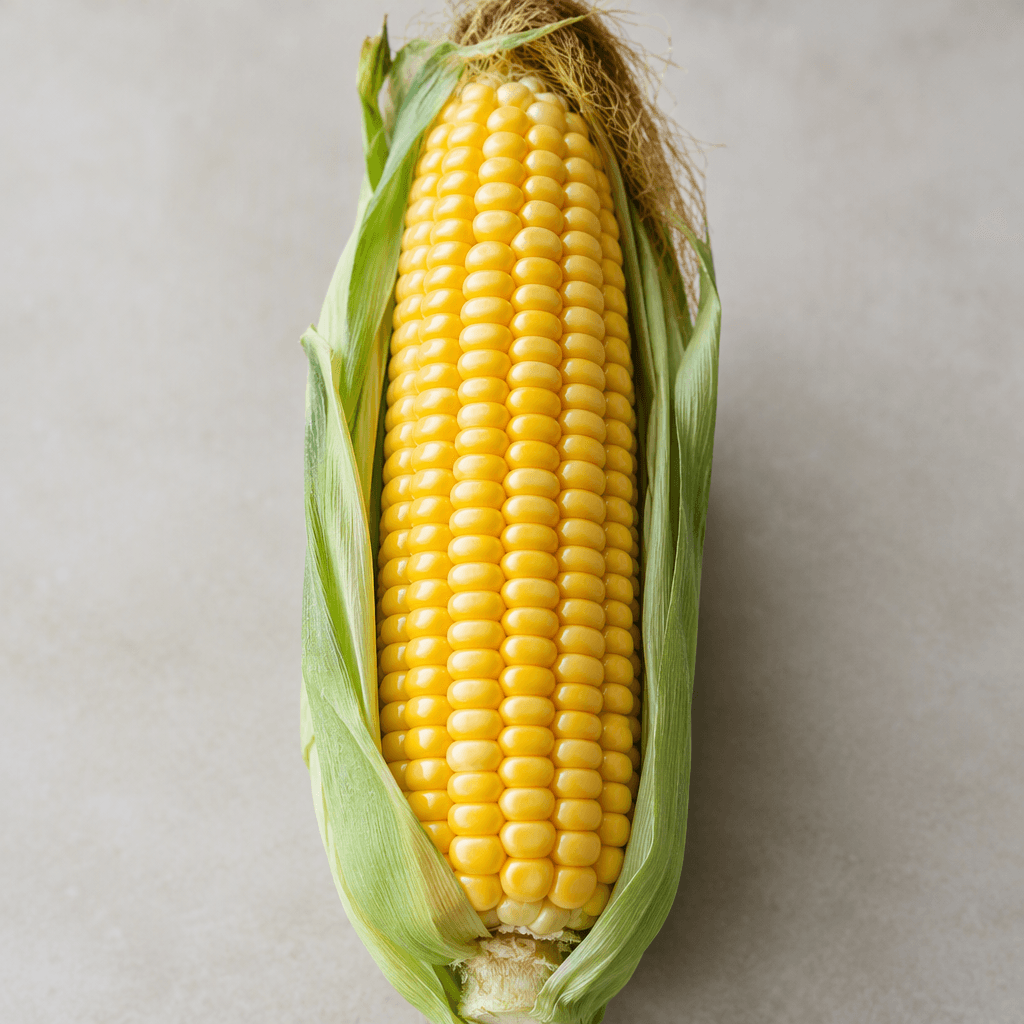
Corn Calories
Rich in fiber and vitamins, gluten-free grain
In season: Summer · Autumn
CALORIES
GI
POTASSIUM
FIBER
Quick answer
1 piece (medium) of Corn (90 g) has 77 calories. That works out to 86 calories per 100 g. It contains 17.1 g of carbs, 2.9 g of protein, 1.1 g of fat and 2.4 g of fiber. Its 5.4 µg of Biotin covers 18% of the Daily Value. Its glycemic index is 52 (medium), so it raises blood sugar at a moderate pace.
What is Corn?
Corn is the edible grain of a tall cereal plant, usually eaten fresh on the cob or as loose kernels; it is also dried and ground into flour. Across much of the world, fresh corn is boiled or grilled, while kernels are added to soups, salads and other everyday dishes.
Its plump kernels have a gently sweet taste and a juicy bite when fresh, becoming tender after cooking. Corn provides carbohydrate and fibre, with 2.7 g of fibre per 100 g, and is naturally gluten-free. For a more filling meal, pair it with beans or other vegetables; a squeeze of lime or a little seasoning works well on a grilled cob.
Corn Nutrition Facts
Selected: 100 g
86
KCAL / 100G
Carbs
19g
· 7% DV
Protein
3.2g
· 6% DV
Fat
1.2g
· 2% DV
Fiber
2.7g
· 10% DV
DV is the share of the daily value covered, on a 2,000 kcal reference diet.
Calories come from: Carbs 76% · Protein 13% · Fat 11%
Corn Vitamins & Minerals
Vitamins
Biotin
6µg · 20% DV
B1
0.2mg · 17% DV
B5
0.7mg · 14% DV
B3
1.7mg · 11% DV
Minerals
Phosphorus
89mg · 13% DV
Magnesium
37mg · 9% DV
Zinc
1mg · 9% DV
Potassium ⭐
270mg · 8% DV
How Nutritious Is Corn?
Nutrient density
Medium
How many vitamins, minerals and how much fiber this food carries per calorie. A high score means a lot of nutrition for few calories.
Satiety score
Medium
An EatBetter score computed from fiber, protein and calorie density. A high score means staying full longer on the same calories.
Both scores are calculated per 100 g and do not change with the selected portion. The satiety score is EatBetter's own calculation, not a clinical measure.
Corn Glycemic Index
GLYCEMIC INDEX
GLYCEMIC LOAD
Accounts for portion size — a more realistic measure than GI alone.
How to Burn Off Corn
To burn the 86 calories in 100 g:
🚶
Walking (5 km/h)
🏃
Running (8 km/h)
🚴
Cycling
🏊
Swimming
Times are calculated with the MET equation for a 70 kg adult. Actual burn varies with your weight, age and pace.
Is Corn Processed?
NOVA 1
Unprocessed
1. Unprocessed
2. Minimally Processed
3. Processed
4. Ultra-Processed
NOVA classifies foods into 4 groups by industrial processing. NOVA 1 (unprocessed) is the healthiest.
Does Corn Contain Allergens?
No known major allergens
Which Diets Is Corn Good For?
Vegan
✓ Suitable
Vegetarian
✓ Suitable
Gluten-Free
✓ Suitable
Dairy-Free
— Not suitable
Mediterranean
✓ Suitable
Paleo
✓ Suitable
Whole30
— Not suitable
DASH
— Not suitable
Keto
— Not suitable
Low FODMAP
— Not suitable
Corn Fat Profile
SATURATED
0.18g
MONOUNSATURATED
0.3g
POLYUNSATURATED
0.5g
Omega 6:3 ratio 20:1
Above the ideal 4:1 (20:1).
Compare Corn
Foods Similar to Corn
Frequently Asked Questions About Corn
How long should you boil corn on the cob?
Boil fresh corn on the cob until the kernels are tender; young sweet corn often takes around 4–6 minutes once the water returns to a boil. Older ears may need longer, so check a kernel before serving.
How can you tell if corn on the cob is fresh?
Fresh corn has green, snug husks, moist silk, and plump kernels. If you press a kernel, it should release a milky liquid; dry or shriveled kernels and browned, brittle silk suggest the ear is past its best.
Can you freeze corn on the cob?
Yes, corn on the cob freezes well. Blanch the ears briefly, cool them promptly, dry them, and seal them in a freezer-safe bag or container. You can also cut off the kernels before freezing.
How long does corn on the cob last in the fridge?
Keep corn on the cob in its husk in the refrigerator and use it promptly for the best flavor. Its sugars gradually turn to starch after harvest, so refrigeration slows quality loss but does not stop it.
Is corn a grain or a vegetable?
Corn is a grain botanically, but fresh sweet corn is commonly treated as a starchy vegetable in cooking. Dried corn and products such as cornmeal are used as grains.
Can you eat corn raw?
Yes, fresh sweet corn can be eaten raw after you remove the husk and silk and rinse the ear. Mature, starchier corn is usually cooked, since its kernels are less tender and sweet.
Do you need to remove the silk from corn before cooking it?
It is best to remove most of the silk before cooking corn on the cob, since the strands can cling to the kernels. Peel back the husk, pull away the silk, and rinse off any remaining strands.
Is sweet corn the same as field corn?
No, sweet corn and field corn are different types of corn. Sweet corn is harvested while its kernels are tender and is commonly eaten on the cob; field corn is usually harvested mature and used for animal feed or processed ingredients.
Why does corn show up undigested in your poop?
Corn can appear whole in stool because its outer kernel coating contains cellulose, which human digestive enzymes do not fully break down. Chewing the kernels thoroughly breaks them up and exposes more of the inside.
Can people with diabetes eat corn?
Yes, people with diabetes can eat corn, but its carbohydrates can affect blood glucose. Portion size and what you eat with it matter; a healthcare professional can help tailor advice to your glucose-management plan.
Have another question about Corn?
Ask the AI nutrition coach — calories, portions, alternatives and more, answered in seconds in the app.

Scan calories with your camera
Instant AI nutrition analysis

Nutrition data compiled from USDA FoodData Central and scientific sources.