

Ready & Packaged Foods
All →Vegetables & Legumes
All →Desserts & Confectionery
All →Meat & Protein
All →Grains & Bakery
All →Beverages
All →Milk & Dairy
All →

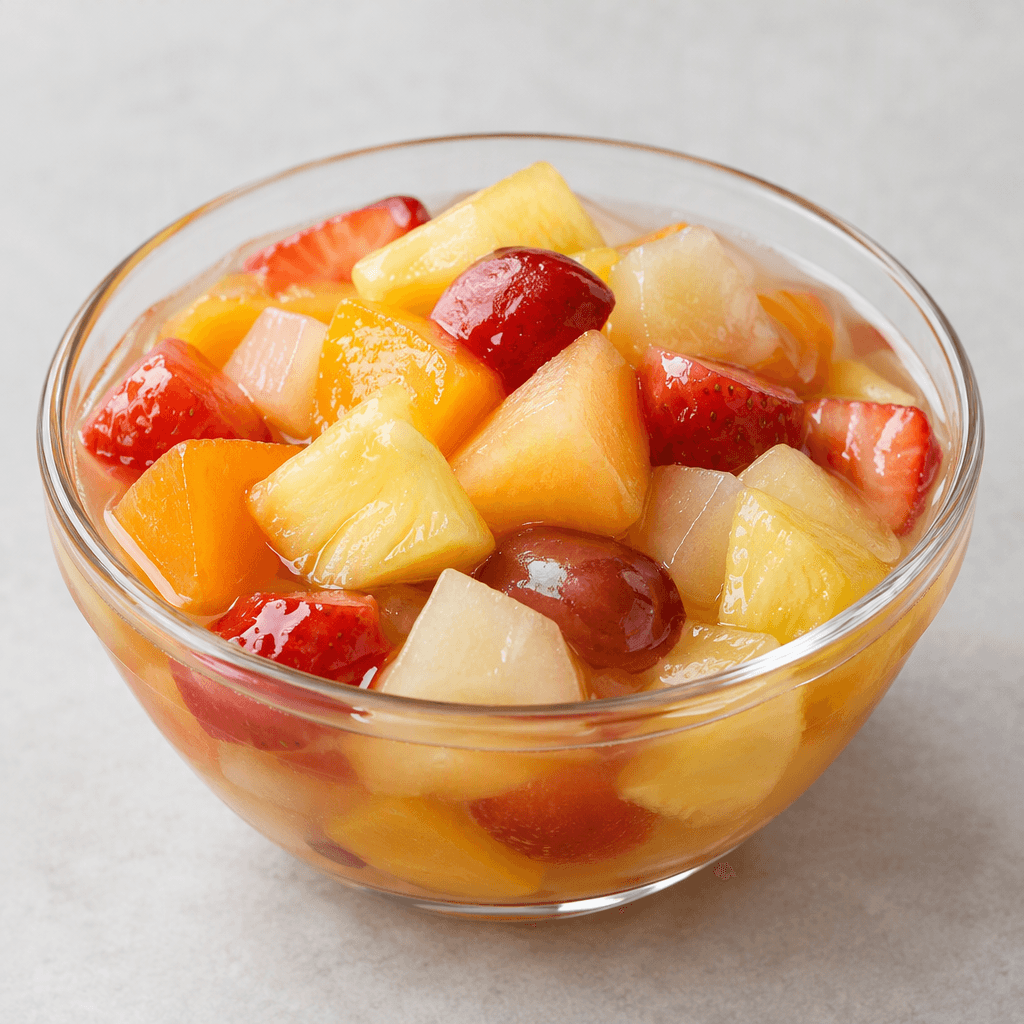
Compote Calories
Fruit-based, sweet, cooked dessert
In season: Spring · Summer · Autumn
CALORIES
GI
POTASSIUM
FIBER
Quick answer
1 cup (medium) of Compote (150 g) has 128 calories. That works out to 85 calories per 100 g. It contains 31.5 g of carbs, 0.5 g of protein, 0.2 g of fat and 2.3 g of fiber. Its 0 mg of Copper covers 5% of the Daily Value. Its glycemic index is 65 (medium), so it raises blood sugar at a moderate pace.
What is Compote?
Turkish-style compote is made by gently cooking pieces of fruit in water, often with sugar, until tender. Apples, pears, quince, apricots and sour cherries are common choices, though home recipes change with the season. The fruit stays soft and the lightly sweet cooking liquid is usually served chilled, with the pieces and syrup together. In Turkey, compote is enjoyed as a cooling dessert or alongside a meal, and it can also appear at iftar; it is generally made with fresh fruit, unlike hoşaf, which is typically based on dried fruit. It is mostly carbohydrate, with little protein or fat. To keep it lighter, use less sugar and let ripe fruit provide more of the sweetness.
Compote Nutrition Facts
Selected: 100 g
85
KCAL / 100G
Carbs
21g
· 8% DV
Protein
0.3g
· 1% DV
Fat
0.1g
· 0% DV
Fiber
1.5g
· 5% DV
DV is the share of the daily value covered, on a 2,000 kcal reference diet.
Calories come from: Carbs 98% · Protein 1% · Fat 1%
Compote Vitamins & Minerals
Vitamins
B1
0.02mg · 2% DV
B2
0.02mg · 2% DV
B5
0.1mg · 2% DV
B6
0.04mg · 2% DV
Minerals
Potassium ⭐
65mg · 2% DV
Calcium
8mg · 1% DV
Magnesium
5mg · 1% DV
Iodine
1µg · 1% DV
How Nutritious Is Compote?
Nutrient density
Medium
How many vitamins, minerals and how much fiber this food carries per calorie. A high score means a lot of nutrition for few calories.
Satiety score
Medium
An EatBetter score computed from fiber, protein and calorie density. A high score means staying full longer on the same calories.
Both scores are calculated per 100 g and do not change with the selected portion. The satiety score is EatBetter's own calculation, not a clinical measure.
Compote Glycemic Index
GLYCEMIC INDEX
GLYCEMIC LOAD
Accounts for portion size — a more realistic measure than GI alone.
How to Burn Off Compote
To burn the 85 calories in 100 g:
🚶
Walking (5 km/h)
🏃
Running (8 km/h)
🚴
Cycling
🏊
Swimming
Times are calculated with the MET equation for a 70 kg adult. Actual burn varies with your weight, age and pace.
Is Compote Processed?
NOVA 2
Minimally Processed
1. Unprocessed
2. Minimally Processed
3. Processed
4. Ultra-Processed
NOVA classifies foods into 4 groups by industrial processing. NOVA 1 (unprocessed) is the healthiest.
Does Compote Contain Allergens?
No known major allergens
Which Diets Is Compote Good For?
Vegan
✓ Suitable
Vegetarian
✓ Suitable
Gluten-Free
✓ Suitable
Dairy-Free
— Not suitable
Mediterranean
✓ Suitable
Paleo
— Not suitable
Whole30
— Not suitable
DASH
— Not suitable
Keto
— Not suitable
Low FODMAP
— Not suitable
Compote Fat Profile
SATURATED
0.01g
MONOUNSATURATED
0.01g
POLYUNSATURATED
0.02g
Omega 6:3 ratio 2:1
Below the ideal 4:1 — a good omega balance.
Compare Compote
Foods Similar to Compote
Frequently Asked Questions About Compote
What is fruit compote?
Fruit compote is fruit gently cooked in water or syrup until tender, with the pieces usually left whole or chunky. It can be served warm or chilled, either as a dessert on its own or as a topping.
What is the difference between compote and jam?
Compote is cooked fruit served with its cooking liquid, while jam is cooked down into a thick spread and is usually preserved with sugar. Compote is generally looser and often made to eat soon rather than to store long-term.
How do you make fruit compote?
To make compote, simmer prepared fruit with a little water until it softens but still holds its shape. Add sugar if you want it sweeter, and take the pan off the heat before softer fruits break down completely.
Which fruits are best for compote?
Apples, pears, stone fruit, berries, and rhubarb all work well in compote. You can use one fruit or mix several; add firmer pieces first and delicate berries later so they finish cooking without turning to mush.
How do you serve compote?
Serve compote on its own in a bowl, or spoon it over yogurt, oatmeal, pancakes, ice cream, or cake. You can serve it warm or chilled, and include both the fruit pieces and some of the syrup.
How long does compote last in the fridge?
Homemade compote usually keeps for about three days in a clean, covered container in the refrigerator. Let it cool before storing, use a clean spoon when serving, and discard it if you notice mold, fizzing, or an unusual smell.
Can you freeze compote?
Yes, compote can be frozen in a freezer-safe airtight container. Leave a little room for expansion, then thaw it in the refrigerator; the fruit may be softer afterward, so thawed compote works especially well as a topping.
Can you make compote without sugar?
Yes, compote can be made without added sugar, especially with ripe fruit. Taste it after cooking, since some fruits become sweeter as they soften; a little lemon juice can brighten the flavor without adding sweetness.
Is compote the same as stewed fruit?
Compote is a type of stewed fruit, but the terms are not always used identically. Compote usually means fruit cooked gently and served with its liquid, while stewed fruit can describe a wider range of cooked fruit preparations.
Can you use frozen fruit to make compote?
Yes, frozen fruit works well in compote and can go straight into the pan without thawing. It releases more liquid as it cooks, so start with less water than you would for fresh fruit and adjust the texture at the end.
Have another question about Compote?
Ask the AI nutrition coach — calories, portions, alternatives and more, answered in seconds in the app.

Scan calories with your camera
Instant AI nutrition analysis

Nutrition data compiled from USDA FoodData Central and scientific sources.