

Ready & Packaged Foods
All →Vegetables & Legumes
All →Desserts & Confectionery
All →Meat & Protein
All →Grains & Bakery
All →Beverages
All →Milk & Dairy
All →

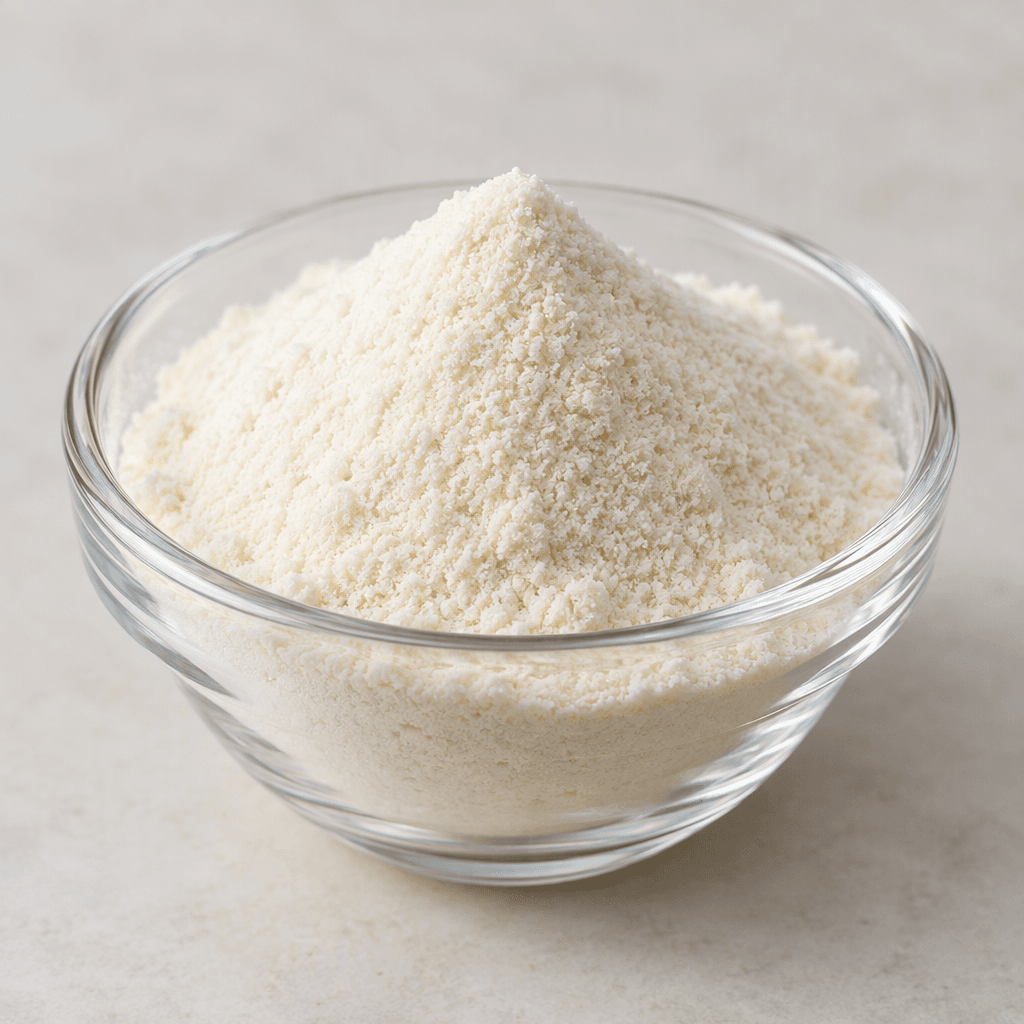
Collagen Supplement Calories
High in protein, popular for skin and joint health
CALORIES
GI
POTASSIUM
FIBER
Quick answer
1 tablespoon (medium) of Collagen Supplement (10 g) has 36 calories. That works out to 360 calories per 100 g. It contains 0 g of carbs, 9 g of protein, 0 g of fat and 0 g of fiber. Its glycemic index is 0 (low), so it raises blood sugar slowly.
What is Collagen Supplement?
A collagen supplement is usually a fine powder made from collagen extracted from animal connective tissue. The source and formulation can vary by product. It is commonly stirred into water, coffee, smoothies or soup, either at breakfast or at another point in the day. The powder is generally mild in flavour and blends easily, making it simple to add without changing a drink much. It is high in protein, with 90 g per 100 g. Try it in a drink you already enjoy, and check the label if the animal source matters to your dietary preferences.
Collagen Supplement Nutrition Facts
Selected: 100 g
360
KCAL / 100G
Carbs
0g
· 0% DV
Protein
90g
· 180% DV
Fat
0g
· 0% DV
Fiber
0g
· 0% DV
DV is the share of the daily value covered, on a 2,000 kcal reference diet.
Calories come from: Carbs 0% · Protein 100% · Fat 0%

Log this food in EatBetter
100,000+ people use it
- Get your daily calorie target
- Snap your meal, log it in seconds
- See every vitamin and mineral

📸 Scan the code to get the app free.

Collagen Supplement Vitamins & Minerals
Vitamins
Vitamin A
0µg · 0% DV
B1
0mg · 0% DV
B2
0mg · 0% DV
B3
0mg · 0% DV
Minerals
Sodium
200mg · 9% DV
Iron
1mg · 6% DV
Phosphorus
30mg · 4% DV
Calcium
20mg · 2% DV
Potassium ⭐
10mg · 0% DV
How Nutritious Is Collagen Supplement?
Nutrient density
Medium
How many vitamins, minerals and how much fiber this food carries per calorie. A high score means a lot of nutrition for few calories.
Satiety score
Low
An EatBetter score computed from fiber, protein and calorie density. A high score means staying full longer on the same calories.
Both scores are calculated per 100 g and do not change with the selected portion. The satiety score is EatBetter's own calculation, not a clinical measure.
Collagen Supplement Glycemic Index
GLYCEMIC INDEX
GLYCEMIC LOAD
Accounts for portion size — a more realistic measure than GI alone.
How to Burn Off Collagen Supplement
To burn the 360 calories in 100 g:
🚶
Walking (5 km/h)
🏃
Running (8 km/h)
🚴
Cycling
🏊
Swimming
Times are calculated with the MET equation for a 70 kg adult. Actual burn varies with your weight, age and pace.
Is Collagen Supplement Processed?
NOVA 3
Processed
1. Unprocessed
2. Minimally Processed
3. Processed
4. Ultra-Processed
NOVA classifies foods into 4 groups by industrial processing. NOVA 1 (unprocessed) is the healthiest.
Does Collagen Supplement Contain Allergens?
No known major allergens
Which Diets Is Collagen Supplement Good For?
Vegan
— Not suitable
Vegetarian
— Not suitable
Gluten-Free
✓ Suitable
Dairy-Free
— Not suitable
Mediterranean
✓ Suitable
Paleo
✓ Suitable
Whole30
— Not suitable
DASH
— Not suitable
Keto
✓ Suitable
Low FODMAP
— Not suitable
Collagen Supplement Fat Profile
SATURATED
0g
MONOUNSATURATED
0g
POLYUNSATURATED
0g
Compare Collagen Supplement
Foods Similar to Collagen Supplement
Frequently Asked Questions About Collagen Supplement
Does a collagen supplement actually help your skin?
A collagen supplement may modestly improve skin hydration or elasticity for some people, but it will not erase wrinkles or stop skin aging. Research results are mixed, and supplements do not replace sun protection or a balanced diet.
How much collagen supplement should you take?
Use the serving size stated for your specific collagen supplement, since products differ in concentration and formulation. The nutrition panel’s serving information is not necessarily a recommended daily dose, so don’t assume that taking more will improve results.
Is a collagen supplement made from fish better than one from beef?
Neither fish-derived nor beef-derived collagen has been shown to be universally better. Their collagen types and sources differ, so choose based on your preferences and the product’s stated source rather than assuming one works best for everyone.
What is the difference between collagen peptides and gelatin in a supplement?
Collagen peptides are collagen broken into smaller fragments, while gelatin is a less extensively processed form of collagen. Peptides generally dissolve more easily in cold liquids; gelatin thickens liquids as it cools.
Can a collagen supplement help with joint pain?
A collagen supplement may ease joint discomfort for some people, but it is not a proven treatment for arthritis or joint injury. Persistent pain, swelling, or limited movement should be assessed rather than managed with a supplement alone.
Can you put a collagen supplement in coffee?
Yes, most powdered collagen supplements can be stirred into coffee, including hot coffee. Mixing the powder with a small splash first can help prevent clumps; follow the product’s directions if they specify a different method.
Does a collagen supplement help hair growth?
A collagen supplement has not been proven to prevent hair loss or reliably make hair grow faster. Hair changes can have many causes, including nutrient deficiencies, so collagen should not be treated as a substitute for finding the cause.
Are collagen supplements vegan?
No, conventional collagen supplements come from animal tissue, commonly fish, cattle, or pigs. Products marketed as vegan collagen usually contain nutrients intended to support the body’s collagen production, not collagen itself.
Can you take a collagen supplement on an empty stomach?
Yes, a collagen supplement can generally be taken on an empty stomach, but there is no established advantage to doing so. Take it with food if that feels better for your digestion or makes it easier to remember.
Is a collagen supplement safe during pregnancy?
Pregnancy safety depends on the supplement’s source and full ingredient list, and collagen products have not been adequately studied for routine use during pregnancy. Ask your clinician before taking one, especially if it contains added ingredients.
Have another question about Collagen Supplement?
Ask the AI nutrition coach — calories, portions, alternatives and more, answered in seconds in the app.

Scan calories with your camera
Instant AI nutrition analysis

Nutrition data compiled from USDA FoodData Central and scientific sources.