

Ready & Packaged Foods
All →Vegetables & Legumes
All →Desserts & Confectionery
All →Meat & Protein
All →Grains & Bakery
All →Beverages
All →Milk & Dairy
All →

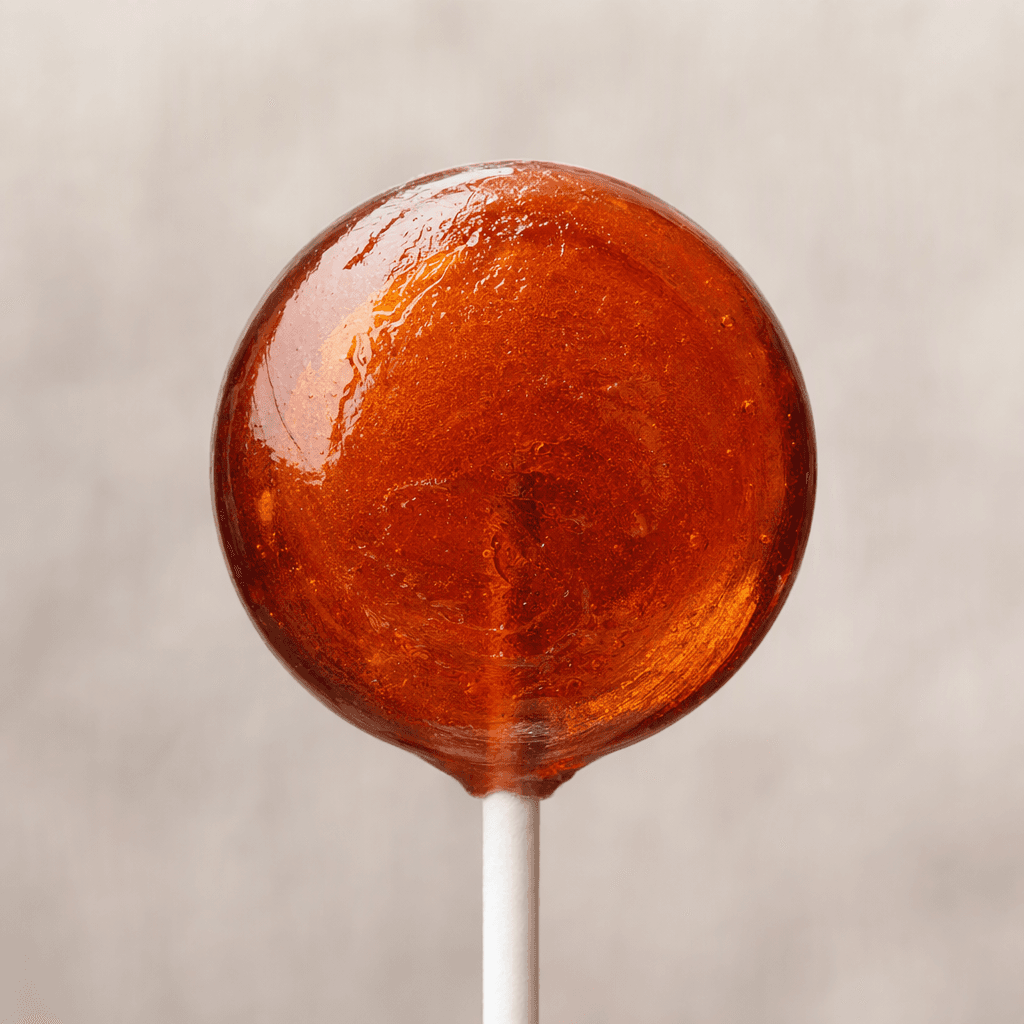
Cola lollipop Calories
Cola lollipop
CALORIES
GI
POTASSIUM
FIBER
Quick answer
1 piece (medium) of Cola lollipop (15 g) has 59 calories. That works out to 390 calories per 100 g. It contains 14.7 g of carbs, 0 g of protein, 0 g of fat and 0 g of fiber. Its glycemic index is 80 (high), so it raises blood sugar quickly.
What is Cola lollipop?
A Cola lollipop is a hard candy on a stick, flavoured to evoke cola. It is typically made from a cooked sugar mixture that is poured into a mould and cooled; the cola taste comes from flavouring and does not necessarily mean the drink itself is an ingredient. Sold individually, it is a familiar small sweet in many countries.
It dissolves slowly, with a distinctly sweet, sometimes tangy flavour and a crisp texture if you bite into it. People may enjoy one as an occasional treat, while travelling, after a meal or simply when they want something sweet. Nutritionally, it is almost entirely carbohydrate, with no protein, fat or fibre. If you want a smaller sweet snack, one medium lollipop is a straightforward portion; water makes a simple accompaniment.
Cola lollipop Nutrition Facts
Selected: 100 g
390
KCAL / 100G
Carbs
98g
· 36% DV
Protein
0g
· 0% DV
Fat
0g
· 0% DV
Fiber
0g
· 0% DV
DV is the share of the daily value covered, on a 2,000 kcal reference diet.
Calories come from: Carbs 100% · Protein 0% · Fat 0%
Cola lollipop Vitamins & Minerals
Vitamins
Vitamin A
0µg · 0% DV
B1
0mg · 0% DV
B2
0mg · 0% DV
B3
0mg · 0% DV
Minerals
Calcium
2mg · 0% DV
Iron
0mg · 0% DV
Magnesium
0mg · 0% DV
Zinc
0mg · 0% DV
How Nutritious Is Cola lollipop?
Nutrient density
Low
How many vitamins, minerals and how much fiber this food carries per calorie. A high score means a lot of nutrition for few calories.
Satiety score
Low
An EatBetter score computed from fiber, protein and calorie density. A high score means staying full longer on the same calories.
Both scores are calculated per 100 g and do not change with the selected portion. The satiety score is EatBetter's own calculation, not a clinical measure.
Cola lollipop Glycemic Index
GLYCEMIC INDEX
GLYCEMIC LOAD
Accounts for portion size — a more realistic measure than GI alone.
How to Burn Off Cola lollipop
To burn the 390 calories in 100 g:
🚶
Walking (5 km/h)
🏃
Running (8 km/h)
🚴
Cycling
🏊
Swimming
Times are calculated with the MET equation for a 70 kg adult. Actual burn varies with your weight, age and pace.
Is Cola lollipop Processed?
NOVA 4
Ultra-Processed
1. Unprocessed
2. Minimally Processed
3. Processed
4. Ultra-Processed
NOVA classifies foods into 4 groups by industrial processing. NOVA 1 (unprocessed) is the healthiest.
Does Cola lollipop Contain Allergens?
No known major allergens
Which Diets Is Cola lollipop Good For?
Vegan
— Not suitable
Vegetarian
✓ Suitable
Gluten-Free
— Not suitable
Dairy-Free
— Not suitable
Mediterranean
— Not suitable
Paleo
— Not suitable
Whole30
— Not suitable
DASH
— Not suitable
Keto
— Not suitable
Low FODMAP
— Not suitable
Cola lollipop Fat Profile
SATURATED
0g
MONOUNSATURATED
0g
POLYUNSATURATED
0g
Compare Cola lollipop
Foods Similar to Cola lollipop
Frequently Asked Questions About Cola lollipop
Does a Cola lollipop contain caffeine?
Most Cola lollipops do not contain caffeine; cola flavour is usually added as flavouring rather than coming from caffeinated cola. Recipes vary, so caffeine is only present if the manufacturer adds it.
Is a Cola lollipop made with real cola?
Usually, no. A Cola lollipop is typically made with sugar or syrup and cola flavouring, not poured cola. The flavour aims to resemble the soft drink, but the candy is not the drink in solid form.
Can you make a Cola lollipop at home?
Yes. Homemade Cola lollipops can be made by cooking sugar, glucose syrup and water to hard-candy stage, then adding cola flavouring and pouring the mixture into moulds. Hot sugar can cause severe burns, so handle it carefully.
Are sugar-free Cola lollipops available?
Yes, some manufacturers make sugar-free Cola lollipops using sweeteners instead of sugar. Availability and sweeteners vary by product, and sugar-free versions may still affect people differently or cause digestive discomfort if eaten in excess.
Why doesn't a Cola lollipop fizz like cola?
A Cola lollipop normally has cola flavour but not the dissolved carbon dioxide that makes soda fizz. It is a hard candy, so it will not produce the bubbling sensation of a carbonated drink.
Can children choke on a Cola lollipop?
Yes, a hard Cola lollipop can pose a choking risk, especially for young children. A child should sit still while eating one and should not run, play, or lie down with the candy in their mouth.
Can a Cola lollipop damage your teeth?
Yes, the sugar in a Cola lollipop can contribute to tooth decay. Sucking on it keeps sugar in contact with the teeth for a while; rinsing with water afterward and brushing regularly help limit the risk.
Can people with diabetes eat a Cola lollipop?
A regular Cola lollipop can raise blood sugar because it is usually made with sugar or glucose syrup. People with diabetes should account for it in their eating plan; a clinician or dietitian can advise on individual needs.
Why can a Cola lollipop taste sour?
A Cola lollipop may taste sour because its recipe includes food acids to sharpen the flavour. Sour-coated versions can taste more tart than plain ones, and the intensity varies between brands.
How should you store a Cola lollipop?
Keep a Cola lollipop sealed in a cool, dry place. Heat can soften or deform it, while moisture can make its surface sticky; follow the date and storage directions printed on the package.
Have another question about Cola lollipop?
Ask the AI nutrition coach — calories, portions, alternatives and more, answered in seconds in the app.

Scan calories with your camera
Instant AI nutrition analysis

Nutrition data compiled from USDA FoodData Central and scientific sources.