

Ready & Packaged Foods
All →Vegetables & Legumes
All →Desserts & Confectionery
All →Meat & Protein
All →Grains & Bakery
All →Beverages
All →Milk & Dairy
All →

Cokomel Calories
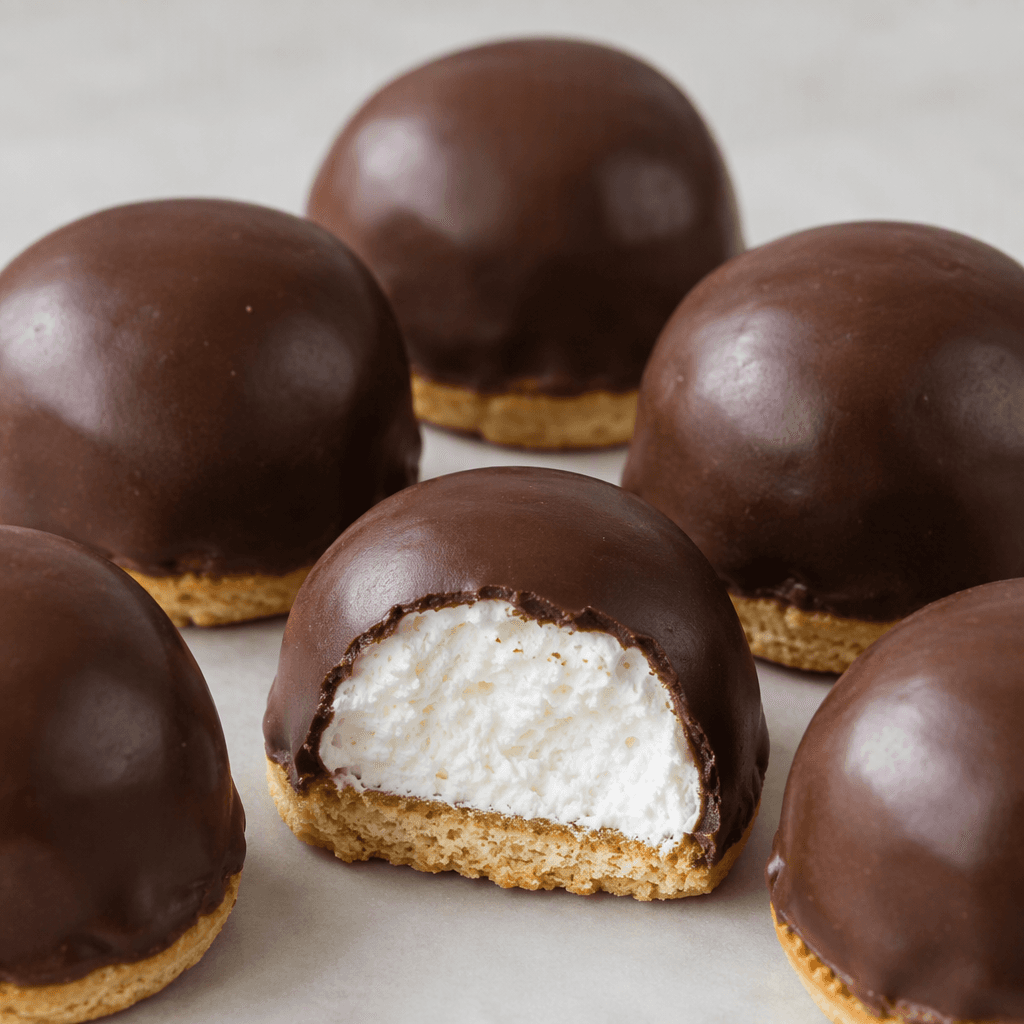
Chocolate-coated marshmallow biscuit
CALORIES
GI
POTASSIUM
FIBER
Quick answer
1 piece (medium) of Cokomel (30 g) has 126 calories. That works out to 420 calories per 100 g. It contains 21.6 g of carbs, 1.2 g of protein, 3.9 g of fat and 0.6 g of fiber. Its glycemic index is 70 (high), so it raises blood sugar quickly.
What is Cokomel?
Cokomel is a packaged sweet made with a thin biscuit base, a light, airy marshmallow layer and a smooth chocolate coating. The chocolate gives way to a soft centre, while the biscuit adds a little crunch and keeps the marshmallow from feeling too rich on its own.
It works as an occasional treat with tea or coffee, or as a small sweet after a meal; in Turkey, it is also a familiar choice for tea breaks and lunchboxes. Its nutritional profile is mainly carbohydrate, with 420 kcal per 100 g. For a lighter snack, have one medium piece rather than grazing on several, and pair it with unsweetened tea or coffee.
Cokomel Nutrition Facts
Selected: 100 g
420
KCAL / 100G
Carbs
72g
· 26% DV
Protein
4g
· 8% DV
Fat
13g
· 17% DV
Fiber
2g
· 7% DV
DV is the share of the daily value covered, on a 2,000 kcal reference diet.
Calories come from: Carbs 68% · Protein 4% · Fat 28%
Cokomel Vitamins & Minerals
Vitamins
B2
0.08mg · 6% DV
B1
0.05mg · 4% DV
B5
0.2mg · 4% DV
B12
0.1µg · 4% DV
Minerals
Phosphorus
60mg · 9% DV
Iron
1mg · 6% DV
Sodium
120mg · 5% DV
Selenium
3µg · 5% DV
How Nutritious Is Cokomel?
Nutrient density
Low
How many vitamins, minerals and how much fiber this food carries per calorie. A high score means a lot of nutrition for few calories.
Satiety score
Low
An EatBetter score computed from fiber, protein and calorie density. A high score means staying full longer on the same calories.
Both scores are calculated per 100 g and do not change with the selected portion. The satiety score is EatBetter's own calculation, not a clinical measure.
Cokomel Glycemic Index
GLYCEMIC INDEX
GLYCEMIC LOAD
Accounts for portion size — a more realistic measure than GI alone.
How to Burn Off Cokomel
To burn the 420 calories in 100 g:
🚶
Walking (5 km/h)
🏃
Running (8 km/h)
🚴
Cycling
🏊
Swimming
Times are calculated with the MET equation for a 70 kg adult. Actual burn varies with your weight, age and pace.
Is Cokomel Processed?
NOVA 4
Ultra-Processed
1. Unprocessed
2. Minimally Processed
3. Processed
4. Ultra-Processed
NOVA classifies foods into 4 groups by industrial processing. NOVA 1 (unprocessed) is the healthiest.
Does Cokomel Contain Allergens?
Contains these allergens:
Which Diets Is Cokomel Good For?
Vegan
— Not suitable
Vegetarian
— Not suitable
Gluten-Free
— Not suitable
Dairy-Free
— Not suitable
Mediterranean
— Not suitable
Paleo
— Not suitable
Whole30
— Not suitable
DASH
— Not suitable
Keto
— Not suitable
Low FODMAP
— Not suitable
Cokomel Fat Profile
SATURATED
7g
MONOUNSATURATED
3.5g
POLYUNSATURATED
1.2g
Omega 6:3 ratio 25:1
Above the ideal 4:1 (25:1).
Compare Cokomel
Foods Similar to Cokomel
Frequently Asked Questions About Cokomel
What is Cokomel?
Cokomel is a chocolate-coated marshmallow sweet with a thin biscuit base. Its small, dome-shaped pieces combine a crisp layer with a soft centre and a smooth chocolate coating.
Who makes Cokomel?
Cokomel is made by Ülker, a Turkish food company. It is sold as a packaged confection combining biscuit, marshmallow and chocolate, rather than as a plain chocolate bar.
What is the white centre in Cokomel?
The white centre in Cokomel is a soft marshmallow layer. It sits between the biscuit base and the chocolate coating, giving the sweet its airy texture.
Is Cokomel the same as a Mallomar?
No, Cokomel and Mallomars are not the same product, though both pair marshmallow with chocolate. Cokomel has a small biscuit base under its marshmallow, while recipes and formats vary between brands.
How is Cokomel made?
Cokomel is made by placing a soft marshmallow layer on a small biscuit base and coating it with chocolate. The layered construction is what distinguishes it from a chocolate-covered marshmallow without a biscuit.
Does Cokomel contain gelatin?
Cokomel’s marshmallow may contain gelatin, but ingredients can vary by product formulation and market. If you avoid gelatin for dietary or religious reasons, use the ingredients listed on the package you have.
How should Cokomel be stored?
Store Cokomel in a cool, dry place away from direct sunlight, and seal the pack after opening. Heat can soften or melt its chocolate coating, while moisture can affect the biscuit’s texture.
Can you freeze Cokomel?
Yes, you can freeze Cokomel, although thawing may change the marshmallow’s texture or leave moisture on the chocolate. Thaw it at room temperature and avoid freezing it again once it has thawed.
Can Cokomel raise blood sugar?
Yes, Cokomel can raise blood sugar because it is a sweet confection made with chocolate, marshmallow and biscuit. If you have diabetes, follow your individual food plan when deciding whether and how much to eat.
Can you make Cokomel at home?
Yes, you can make a Cokomel-style sweet at home using small biscuits, marshmallow and melted chocolate. It will resemble the layered original, though matching the packaged product’s exact texture and coating takes practice.
Have another question about Cokomel?
Ask the AI nutrition coach — calories, portions, alternatives and more, answered in seconds in the app.

Scan calories with your camera
Instant AI nutrition analysis

Nutrition data compiled from USDA FoodData Central and scientific sources.