

Ready & Packaged Foods
All →Vegetables & Legumes
All →Desserts & Confectionery
All →Meat & Protein
All →Grains & Bakery
All →Beverages
All →Milk & Dairy
All →

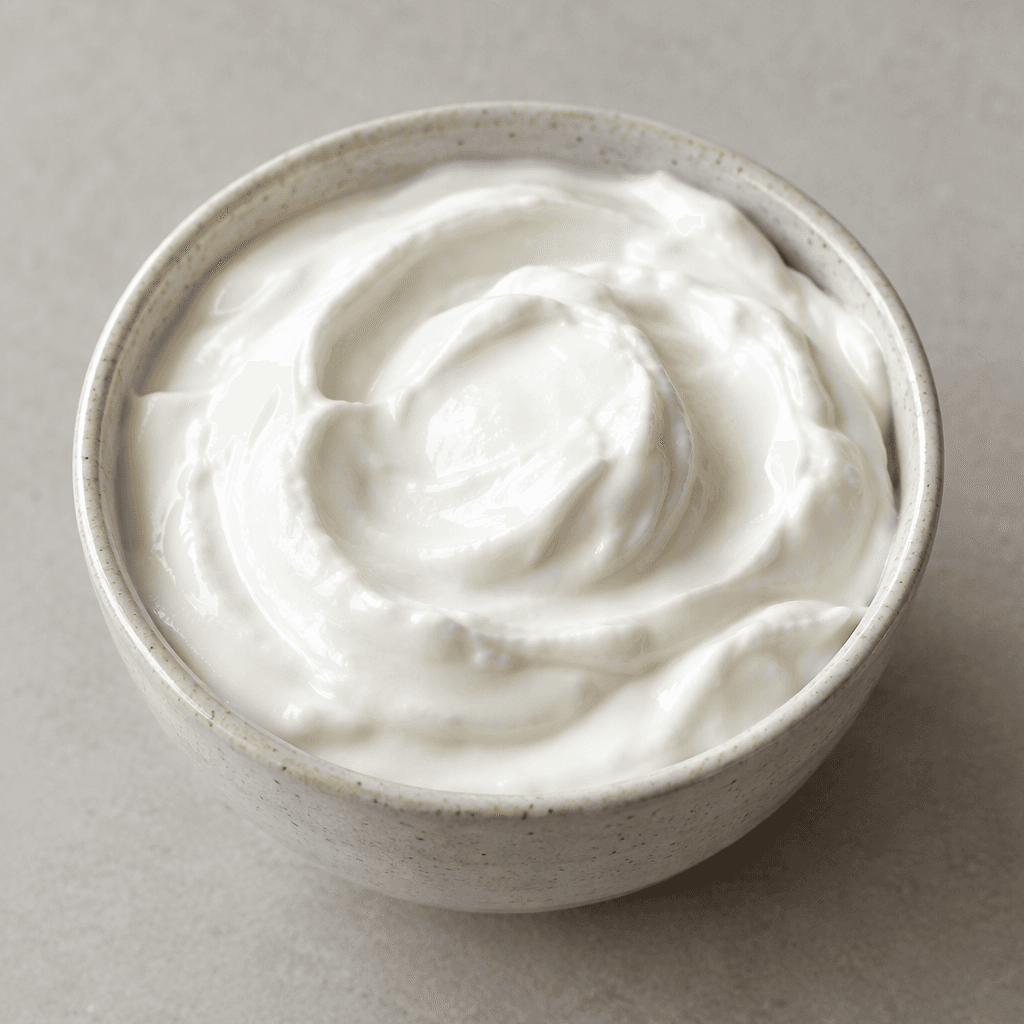
Coconut Yogurt Calories
Plant-based, lactose-free, probiotic source
In season: Spring · Summer · Autumn · Winter
CALORIES
GI
POTASSIUM
FIBER
Quick answer
1 cup (medium) of Coconut Yogurt (150 g) has 180 calories. That works out to 120 calories per 100 g. It contains 9 g of carbs, 1.8 g of protein, 14.3 g of fat and 2.3 g of fiber. Its 0.5 mg of Manganese covers 20% of the Daily Value. Its glycemic index is 35 (low), so it raises blood sugar slowly.
What is Coconut Yogurt?
Coconut yogurt is a plant-based yogurt made by fermenting coconut milk or cream with yogurt cultures. It is a relatively modern alternative to dairy yogurt rather than a traditional dish, and is usually thick and spoonable, with a mild coconut flavour. Texture and richness vary by brand.
In many English-speaking kitchens, it appears at breakfast with fruit, oats or granola, or as a base for smoothies and sauces. It is low in protein compared with dairy yogurt and has 9.5 g of fat per 100 g. Choose an unsweetened variety for a less sweet bowl, and pair it with fresh fruit or toasted oats for contrast.
Coconut Yogurt Nutrition Facts
Selected: 100 g
120
KCAL / 100G
Carbs
6g
· 2% DV
Protein
1.2g
· 2% DV
Fat
9.5g
· 12% DV
Fiber
1.5g
· 5% DV
DV is the share of the daily value covered, on a 2,000 kcal reference diet.
Calories come from: Carbs 21% · Protein 4% · Fat 75%
Coconut Yogurt Vitamins & Minerals
Vitamins
Biotin
1.5µg · 5% DV
B5
0.15mg · 3% DV
B1
0.02mg · 2% DV
B6
0.03mg · 2% DV
Minerals
Potassium ⭐
120mg · 4% DV
Magnesium
12mg · 3% DV
Selenium
1.5µg · 3% DV
Phosphorus
18mg · 3% DV
How Nutritious Is Coconut Yogurt?
Nutrient density
Medium
How many vitamins, minerals and how much fiber this food carries per calorie. A high score means a lot of nutrition for few calories.
Satiety score
Medium
An EatBetter score computed from fiber, protein and calorie density. A high score means staying full longer on the same calories.
Both scores are calculated per 100 g and do not change with the selected portion. The satiety score is EatBetter's own calculation, not a clinical measure.
Coconut Yogurt Glycemic Index
GLYCEMIC INDEX
GLYCEMIC LOAD
Accounts for portion size — a more realistic measure than GI alone.
How to Burn Off Coconut Yogurt
To burn the 120 calories in 100 g:
🚶
Walking (5 km/h)
🏃
Running (8 km/h)
🚴
Cycling
🏊
Swimming
Times are calculated with the MET equation for a 70 kg adult. Actual burn varies with your weight, age and pace.
Is Coconut Yogurt Processed?
NOVA 3
Processed
1. Unprocessed
2. Minimally Processed
3. Processed
4. Ultra-Processed
NOVA classifies foods into 4 groups by industrial processing. NOVA 1 (unprocessed) is the healthiest.
Does Coconut Yogurt Contain Allergens?
No known major allergens
Which Diets Is Coconut Yogurt Good For?
Vegan
✓ Suitable
Vegetarian
✓ Suitable
Gluten-Free
✓ Suitable
Dairy-Free
— Not suitable
Mediterranean
✓ Suitable
Paleo
✓ Suitable
Whole30
— Not suitable
DASH
— Not suitable
Keto
— Not suitable
Low FODMAP
— Not suitable
Coconut Yogurt Fat Profile
SATURATED
8.5g
MONOUNSATURATED
0.7g
POLYUNSATURATED
0.13g
Omega 6:3 ratio 12:1
Above the ideal 4:1 (12:1).
Compare Coconut Yogurt
Foods Similar to Coconut Yogurt
Frequently Asked Questions About Coconut Yogurt
Can you cook with Coconut Yogurt?
Yes, Coconut Yogurt can be stirred into sauces, soups, and curries, but add it near the end and keep the heat gentle. Boiling may make it separate, and its coconut flavor can change the dish.
Is Coconut Yogurt healthy?
Coconut Yogurt can be a useful option if you enjoy its taste or want a plant-based yogurt, but it is not nutritionally identical to dairy yogurt. It is usually much lower in protein, and sweetened varieties can contain added sugar.
How is Coconut Yogurt different from Greek yogurt?
Coconut Yogurt is made from coconut rather than dairy, so it has a coconut flavor and generally provides less protein than Greek yogurt. Greek yogurt is usually tangier; thickness and sweetness vary between brands and products.
Can you put Coconut Yogurt in a smoothie?
Yes, Coconut Yogurt works well in smoothies and gives them a creamy texture with a mild coconut note. Pair it with berries, mango, or banana, and taste before adding sweetener because flavored varieties may already be sweetened.
Why is my Coconut Yogurt runny?
Coconut Yogurt can turn runny if its ingredients separate during storage or if it is stirred vigorously. Stir it gently and chill it; if you notice mold, an unpleasant smell, or other signs of spoilage, discard it.
Can Coconut Yogurt replace sour cream?
Yes, plain Coconut Yogurt can stand in for sour cream on tacos, baked potatoes, or in cold dips. Its coconut flavor is noticeable, so it suits sweet or strongly flavored toppings better than every savory recipe.
Is Coconut Yogurt fermented?
Most Coconut Yogurt is fermented with yogurt cultures, but the exact process and whether live cultures remain vary by product. Some versions are heat-treated after fermentation, so fermentation alone does not guarantee live cultures in the finished yogurt.
How long does Coconut Yogurt last after opening?
Opened Coconut Yogurt should be kept covered in the refrigerator and handled with a clean spoon. Follow the package’s use-by guidance, and throw it away if you see mold or notice an unusual odor.
Can you freeze Coconut Yogurt?
Yes, you can freeze Coconut Yogurt, but thawing often leaves it separated or grainy rather than smooth. Stir it well and use it in a smoothie or cooked dish; freezing is less suitable if you want to eat it plain.
Can you bake with Coconut Yogurt?
Yes, plain Coconut Yogurt can add moisture to muffins, quick breads, and other batters. Its acidity may affect recipes that use baking soda, so choose an unsweetened variety and expect a subtle coconut flavor in the finished bake.
Have another question about Coconut Yogurt?
Ask the AI nutrition coach — calories, portions, alternatives and more, answered in seconds in the app.

Scan calories with your camera
Instant AI nutrition analysis

Nutrition data compiled from USDA FoodData Central and scientific sources.