

Ready & Packaged Foods
All →Vegetables & Legumes
All →Desserts & Confectionery
All →Meat & Protein
All →Grains & Bakery
All →Beverages
All →Milk & Dairy
All →

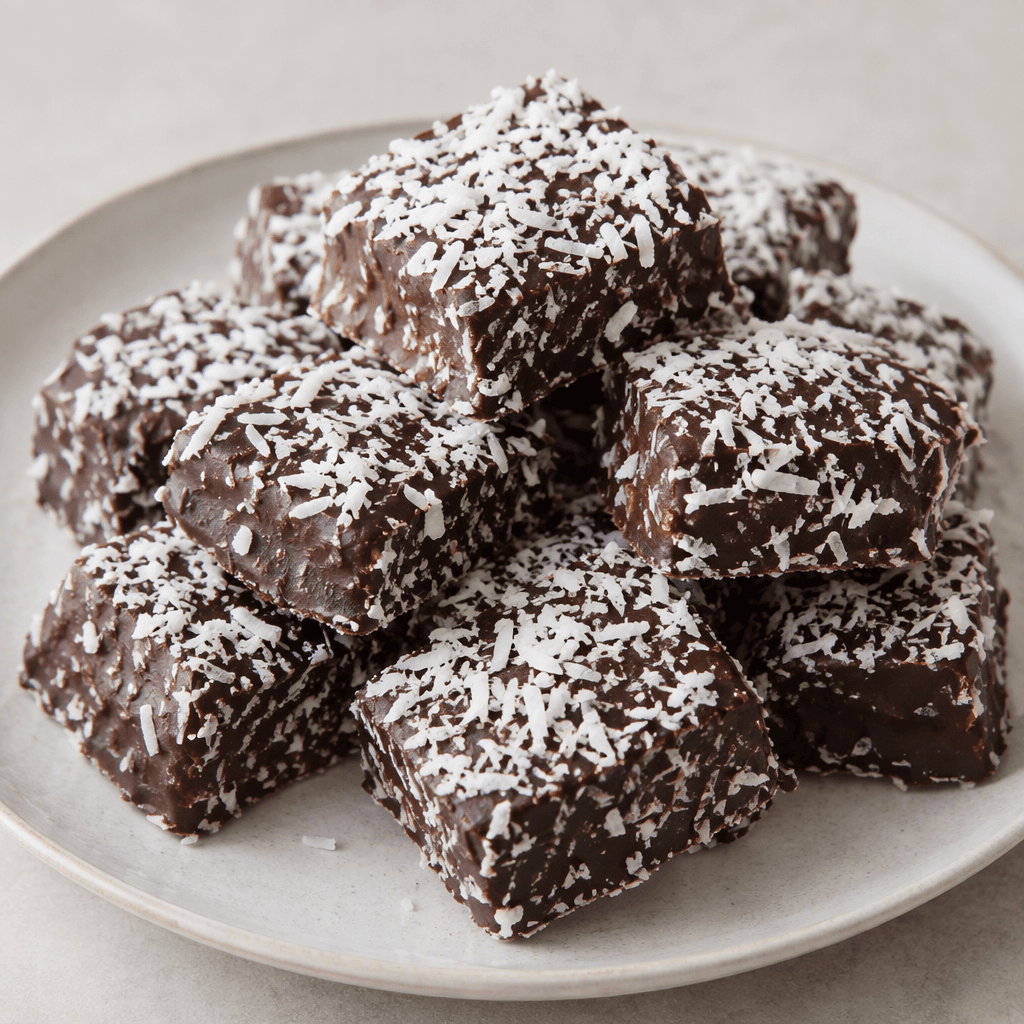
Coconut Chocolate Calories
Sweet chocolate with coconut filling or flakes
In season: Spring · Summer · Autumn · Winter
CALORIES
GI
POTASSIUM
FIBER
Quick answer
1 piece (medium) of Coconut Chocolate (35 g) has 189 calories. That works out to 540 calories per 100 g. It contains 18.2 g of carbs, 1.8 g of protein, 11.9 g of fat and 2.3 g of fiber. Its 0.1 mg of Copper covers 12% of the Daily Value. Its glycemic index is 45 (medium), so it raises blood sugar at a moderate pace.
What is Coconut Chocolate?
Coconut chocolate combines chocolate with either a coconut filling or flakes mixed through it. Depending on the recipe, the centre may be soft and creamy, or the coconut may add a more noticeable, slightly chewy texture. The flavour pairs chocolate’s sweetness with coconut’s fragrant, toasted notes.
It is enjoyed as a small sweet alongside coffee or tea, or used in desserts and baking. Coconut chocolate is energy-dense, with 540 calories per 100 g, so a small piece can be satisfying when you want a treat. For a less rich pairing, serve it with fresh fruit or unsweetened coffee.
Coconut Chocolate Nutrition Facts
Selected: 100 g
540
KCAL / 100G
Carbs
52g
· 19% DV
Protein
5.2g
· 10% DV
Fat
34g
· 44% DV
Fiber
6.5g
· 23% DV
DV is the share of the daily value covered, on a 2,000 kcal reference diet.
Calories come from: Carbs 39% · Protein 4% · Fat 57%
Coconut Chocolate Vitamins & Minerals
Vitamins
B2
0.12mg · 9% DV
Biotin
2.5µg · 8% DV
B1
0.08mg · 7% DV
Vitamin E
1.1mg · 7% DV
Minerals
Manganese
1mg · 43% DV
Phosphorus
110mg · 16% DV
Magnesium
60mg · 14% DV
Iron
2mg · 11% DV
How Nutritious Is Coconut Chocolate?
Nutrient density
Low
How many vitamins, minerals and how much fiber this food carries per calorie. A high score means a lot of nutrition for few calories.
Satiety score
Medium
An EatBetter score computed from fiber, protein and calorie density. A high score means staying full longer on the same calories.
Both scores are calculated per 100 g and do not change with the selected portion. The satiety score is EatBetter's own calculation, not a clinical measure.
Coconut Chocolate Glycemic Index
GLYCEMIC INDEX
GLYCEMIC LOAD
Accounts for portion size — a more realistic measure than GI alone.
How to Burn Off Coconut Chocolate
To burn the 540 calories in 100 g:
🚶
Walking (5 km/h)
🏃
Running (8 km/h)
🚴
Cycling
🏊
Swimming
Times are calculated with the MET equation for a 70 kg adult. Actual burn varies with your weight, age and pace.
Is Coconut Chocolate Processed?
NOVA 3
Processed
1. Unprocessed
2. Minimally Processed
3. Processed
4. Ultra-Processed
NOVA classifies foods into 4 groups by industrial processing. NOVA 1 (unprocessed) is the healthiest.
Does Coconut Chocolate Contain Allergens?
Contains these allergens:
Which Diets Is Coconut Chocolate Good For?
Vegan
— Not suitable
Vegetarian
✓ Suitable
Gluten-Free
— Not suitable
Dairy-Free
— Not suitable
Mediterranean
— Not suitable
Paleo
— Not suitable
Whole30
— Not suitable
DASH
— Not suitable
Keto
— Not suitable
Low FODMAP
— Not suitable
Coconut Chocolate Fat Profile
SATURATED
23g
MONOUNSATURATED
7.5g
POLYUNSATURATED
1.2g
Omega 6:3 ratio 30:1
Above the ideal 4:1 (30:1).
Compare Coconut Chocolate
Foods Similar to Coconut Chocolate
Frequently Asked Questions About Coconut Chocolate
What is coconut chocolate made of?
Coconut chocolate is made with chocolate and coconut, either as flakes mixed in or as a coconut filling covered in chocolate. Recipes vary, so the filling may be soft, chewy or firm depending on the ingredients used.
Is coconut chocolate the same as Bounty?
No. Bounty is a branded chocolate bar with a coconut centre, while coconut chocolate is a broader category that includes other brands and homemade versions. The chocolate coating and coconut-to-chocolate balance can differ.
How do you make coconut chocolate at home?
You can make coconut chocolate at home by coating a coconut filling with melted chocolate. Shape the filling, dip it in the chocolate, then chill until firm; recipes vary in how they bind and sweeten the coconut.
How should you store coconut chocolate?
Store coconut chocolate in a sealed container in a cool, dry place away from sunlight and strong smells. If the room is warm, refrigerate it in an airtight container and let it come closer to room temperature before serving.
Why does coconut chocolate turn white?
A white film on coconut chocolate is usually chocolate bloom: cocoa butter or sugar has moved to the surface after temperature changes or moisture exposure. It can affect the texture and appearance without necessarily meaning the chocolate has spoiled.
Can you freeze coconut chocolate?
Yes, you can freeze coconut chocolate in an airtight package. Thaw it while still wrapped, preferably in the refrigerator, to reduce condensation on the chocolate and help prevent a grainy or damp surface.
Can coconut chocolate be melted for baking?
Yes, coconut chocolate can be melted gently for baking or dipping. The coconut filling may leave the melted mixture uneven, so use it where a textured result works rather than expecting a smooth chocolate coating.
Does coconut chocolate contain caffeine?
Yes, coconut chocolate contains some caffeine if it is made with cocoa chocolate. The amount varies with the type and proportion of chocolate, and coconut itself does not add caffeine.
Is coconut chocolate healthy?
Coconut chocolate is best treated as a sweet rather than a health food. Coconut does not cancel out the sugar in the chocolate or filling, so enjoy it as an occasional dessert instead of relying on it for nutrition.
Can dogs eat coconut chocolate?
No, dogs should not eat coconut chocolate. Chocolate contains theobromine, which can be toxic to dogs, and the coconut filling does not make it safe. Contact a veterinarian promptly if your dog has eaten some.
Have another question about Coconut Chocolate?
Ask the AI nutrition coach — calories, portions, alternatives and more, answered in seconds in the app.

Scan calories with your camera
Instant AI nutrition analysis

Nutrition data compiled from USDA FoodData Central and scientific sources.