

Ready & Packaged Foods
All →Vegetables & Legumes
All →Desserts & Confectionery
All →Meat & Protein
All →Grains & Bakery
All →Beverages
All →Milk & Dairy
All →

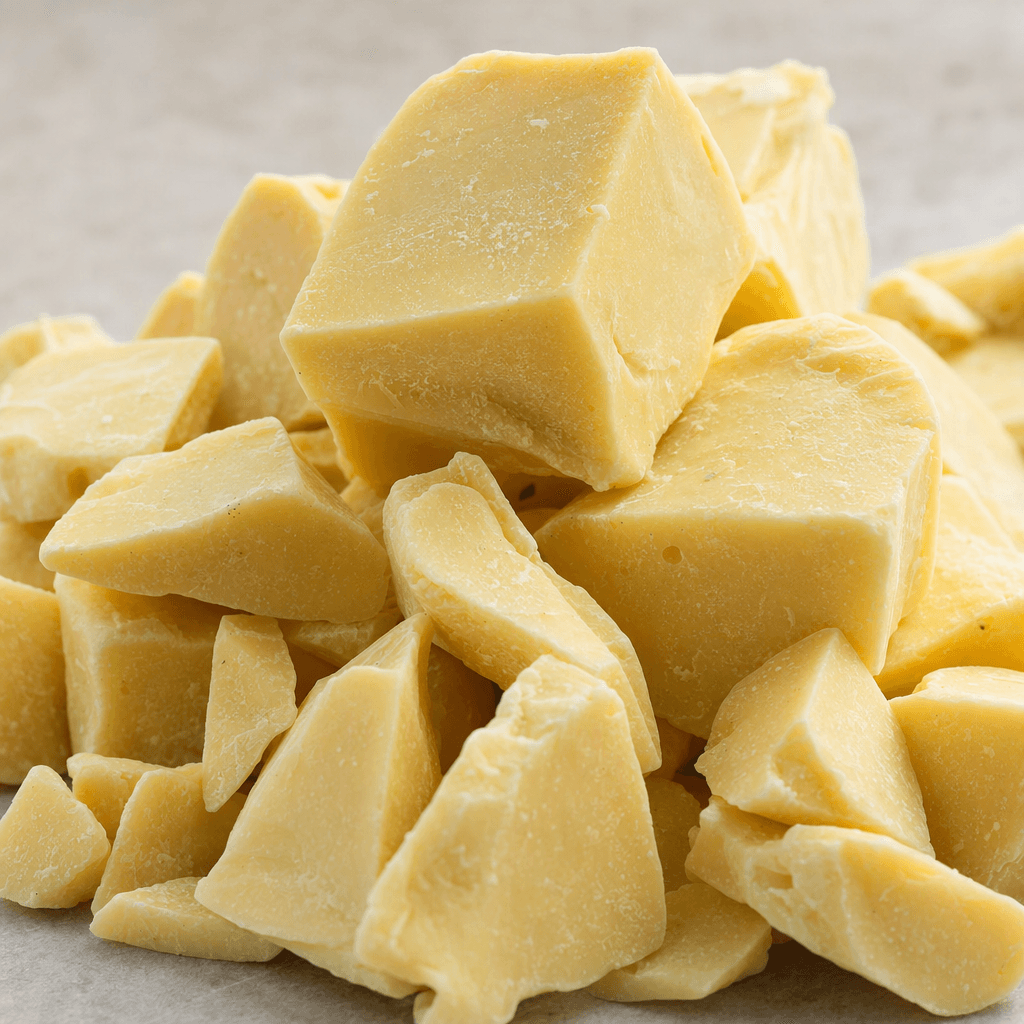
Cocoa Butter Calories
Natural fat from cocoa beans, used in chocolate and cosmetics.
In season: Spring · Summer · Autumn · Winter
CALORIES
GI
POTASSIUM
FIBER
Quick answer
1 tablespoon (medium) of Cocoa Butter (14 g) has 120 calories. That works out to 884 calories per 100 g. It contains 0 g of carbs, 0 g of protein, 13.6 g of fat and 0 g of fiber. Its glycemic index is 0 (low), so it raises blood sugar slowly.
What is Cocoa Butter?
Cocoa butter is the pale, solid fat pressed from cocoa beans during the production of cocoa. It is a key ingredient in chocolate and is also used in some baked goods and confectionery; the same ingredient appears in cosmetics, though food-grade cocoa butter is intended for cooking.
Its aroma is gently chocolate-like, but its flavour is much milder than cocoa powder. It softens and melts readily in the mouth, so it gives chocolate its smooth texture and helps coatings set when cooled. It is rarely eaten on its own. Nutritionally, it is almost entirely fat, with negligible protein and no carbohydrates. Use it sparingly in home baking or chocolate-making; for a lighter dessert, replace some of it with fruit purée or another moist ingredient.
Cocoa Butter Nutrition Facts
Selected: 100 g
884
KCAL / 100G
Carbs
0g
· 0% DV
Protein
0.1g
· 0% DV
Fat
100g
· 128% DV
Fiber
0g
· 0% DV
DV is the share of the daily value covered, on a 2,000 kcal reference diet.
Calories come from: Carbs 0% · Protein 0% · Fat 100%
Cocoa Butter Vitamins & Minerals
Vitamins
Vitamin K
24.7µg · 21% DV
Vitamin E
1.8mg · 12% DV
Vitamin A
0µg · 0% DV
B1
0mg · 0% DV
Minerals
Calcium
2mg · 0% DV
Iron
0mg · 0% DV
Magnesium
1mg · 0% DV
Zinc
0mg · 0% DV
How Nutritious Is Cocoa Butter?
Nutrient density
Low
How many vitamins, minerals and how much fiber this food carries per calorie. A high score means a lot of nutrition for few calories.
Satiety score
Low
An EatBetter score computed from fiber, protein and calorie density. A high score means staying full longer on the same calories.
Both scores are calculated per 100 g and do not change with the selected portion. The satiety score is EatBetter's own calculation, not a clinical measure.
Cocoa Butter Glycemic Index
GLYCEMIC INDEX
GLYCEMIC LOAD
Accounts for portion size — a more realistic measure than GI alone.
How to Burn Off Cocoa Butter
To burn the 884 calories in 100 g:
🚶
Walking (5 km/h)
🏃
Running (8 km/h)
🚴
Cycling
🏊
Swimming
Times are calculated with the MET equation for a 70 kg adult. Actual burn varies with your weight, age and pace.
Is Cocoa Butter Processed?
NOVA 2
Minimally Processed
1. Unprocessed
2. Minimally Processed
3. Processed
4. Ultra-Processed
NOVA classifies foods into 4 groups by industrial processing. NOVA 1 (unprocessed) is the healthiest.
Does Cocoa Butter Contain Allergens?
No known major allergens
Which Diets Is Cocoa Butter Good For?
Vegan
✓ Suitable
Vegetarian
✓ Suitable
Gluten-Free
✓ Suitable
Dairy-Free
— Not suitable
Mediterranean
✓ Suitable
Paleo
✓ Suitable
Whole30
— Not suitable
DASH
— Not suitable
Keto
✓ Suitable
Low FODMAP
— Not suitable
Cocoa Butter Fat Profile
SATURATED
59.7g
MONOUNSATURATED
32.9g
POLYUNSATURATED
3g
Compare Cocoa Butter
Foods Similar to Cocoa Butter
Frequently Asked Questions About Cocoa Butter
What is cocoa butter made from?
Cocoa butter is the fat extracted from cocoa beans. The beans are fermented, dried, and processed into cocoa mass, from which the fat is pressed. It is naturally solid at room temperature and melts with gentle heat.
Can you eat cocoa butter?
Yes, food-grade cocoa butter is edible and is used in chocolate and desserts. Choose a product intended for cooking or confectionery; cocoa butter sold for cosmetic use may contain ingredients or additives not meant to be eaten.
What does cocoa butter do in chocolate?
Cocoa butter gives chocolate its smooth texture, sheen, and characteristic melt-in-the-mouth quality. Its fat crystals also help chocolate set firmly, which is why chocolate makers carefully control how cocoa butter is melted and cooled.
Is cocoa butter the same as cocoa powder?
No. Cocoa butter is the fat pressed from cocoa beans, while cocoa powder is what remains after much of that fat has been removed and the solids are ground. They have different textures and cannot replace each other equally in recipes.
How do you temper cocoa butter for chocolate making?
Tempering means melting cocoa butter and then cooling and gently reheating it in a controlled way so it sets with a stable crystal structure. This helps chocolate become glossy and snap cleanly; follow the temperature guidance for your specific recipe.
How do you melt cocoa butter without burning it?
Chop cocoa butter into small pieces and melt it gently over a double boiler or in short microwave bursts, stirring between intervals. Keep water and steam out of the bowl, since moisture can make chocolate mixtures seize.
What can I use instead of cocoa butter in a recipe?
Coconut oil or another solid fat can work in some recipes, but the texture and flavor will change. For homemade chocolate, cocoa butter is difficult to replace because it sets firmly and melts smoothly in a way many alternatives do not.
Does cocoa butter need to be refrigerated?
No, cocoa butter usually does not need refrigeration. Keep it tightly covered in a cool, dry, dark place away from heat and strong odors. A warm kitchen can soften or melt it, so choose a cooler cupboard if needed.
Does cocoa butter go bad?
Yes, cocoa butter can eventually turn rancid, especially if exposed to heat, air, or light. Discard it if it develops an unpleasant stale or paint-like smell, or if its appearance or texture changes noticeably.
Can cosmetic cocoa butter be used in cooking?
Not necessarily. Cosmetic cocoa butter may be blended with fragrances, preservatives, or other ingredients, so it is not automatically suitable for food. Use cocoa butter labeled for culinary or confectionery use when preparing something to eat.
Have another question about Cocoa Butter?
Ask the AI nutrition coach — calories, portions, alternatives and more, answered in seconds in the app.

Scan calories with your camera
Instant AI nutrition analysis

Nutrition data compiled from USDA FoodData Central and scientific sources.