

Ready & Packaged Foods
All →Vegetables & Legumes
All →Desserts & Confectionery
All →Meat & Protein
All →Grains & Bakery
All →Beverages
All →Milk & Dairy
All →

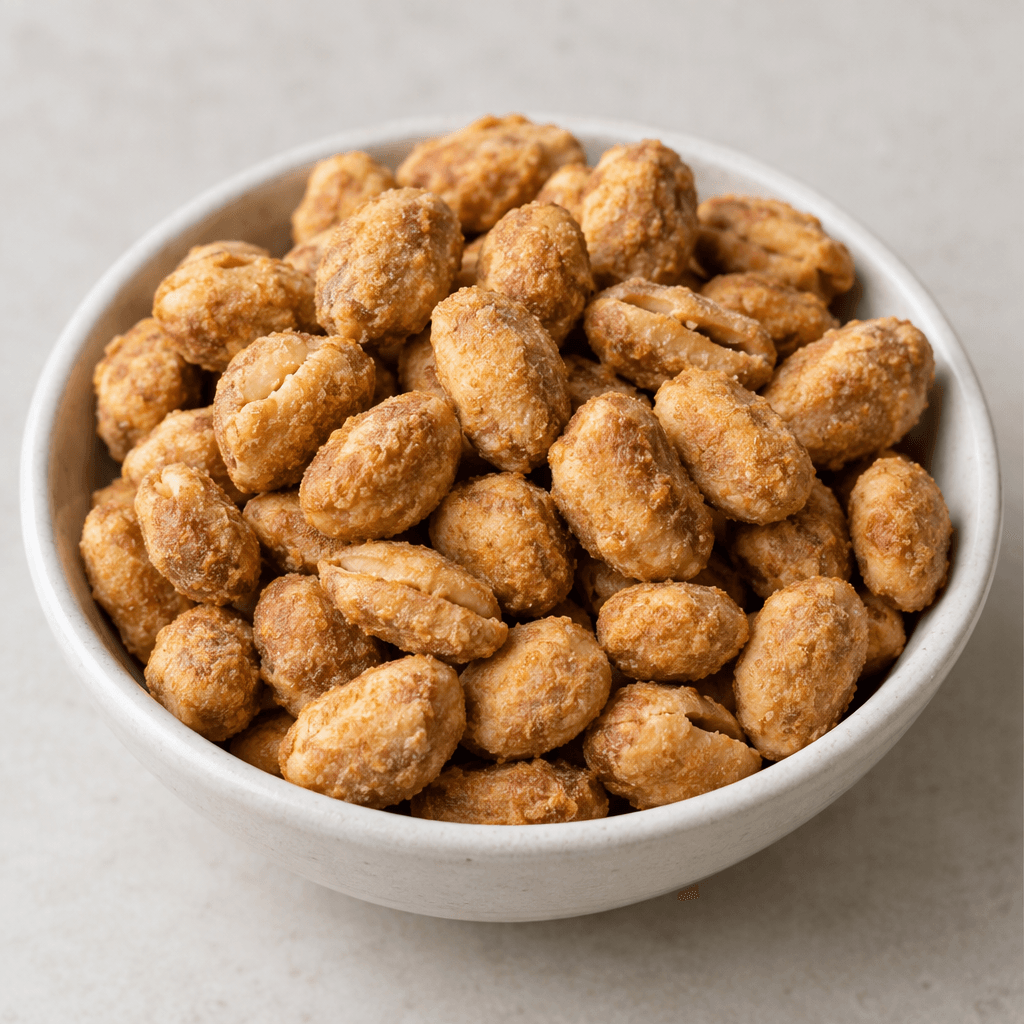
Coated Peanut Calories
Snack, contains protein and fat, usually with a starchy or spicy coating
In season: Spring · Summer · Autumn · Winter
CALORIES
GI
POTASSIUM
FIBER
Quick answer
1 serving (medium) of Coated Peanut (30 g) has 156 calories. That works out to 520 calories per 100 g. It contains 11.4 g of carbs, 5.3 g of protein, 9.6 g of fat and 2 g of fiber. Its 0.3 mg of Copper covers 37% of the Daily Value. Its glycemic index is 55 (medium), so it raises blood sugar at a moderate pace.
What is Coated Peanut?
Coated peanuts are whole peanuts covered in a seasoned, usually flour- or starch-based crust, then commonly fried until crisp. The coating may be mildly salty, spicy or slightly sweet, while the peanut inside stays tender and rich. They are sold as a ready-to-eat snack in many places and are often put out for sharing, served with drinks, or added to snack mixes. Their crunchy coating and the peanuts’ naturally rich taste make them more substantial than a plain, airy snack. They provide protein and fat, with additional carbohydrates from the coating, so they are energy-dense. For a lighter snack, serve a modest portion alongside fresh vegetables or fruit.
Coated Peanut Nutrition Facts
Selected: 100 g
520
KCAL / 100G
Carbs
38g
· 14% DV
Protein
17.5g
· 35% DV
Fat
32g
· 41% DV
Fiber
6.5g
· 23% DV
DV is the share of the daily value covered, on a 2,000 kcal reference diet.
Calories come from: Carbs 30% · Protein 14% · Fat 56%
Coated Peanut Vitamins & Minerals
Vitamins
B3
13.2mg · 83% DV
Biotin
18µg · 60% DV
Vitamin E
7.5mg · 50% DV
Folate
120µg · 30% DV
Minerals
Copper
1mg · 111% DV
Manganese
2mg · 87% DV
Phosphorus
340mg · 49% DV
Magnesium
140mg · 33% DV
How Nutritious Is Coated Peanut?
Nutrient density
Medium
How many vitamins, minerals and how much fiber this food carries per calorie. A high score means a lot of nutrition for few calories.
Satiety score
Medium
An EatBetter score computed from fiber, protein and calorie density. A high score means staying full longer on the same calories.
Both scores are calculated per 100 g and do not change with the selected portion. The satiety score is EatBetter's own calculation, not a clinical measure.
Coated Peanut Glycemic Index
GLYCEMIC INDEX
GLYCEMIC LOAD
Accounts for portion size — a more realistic measure than GI alone.
How to Burn Off Coated Peanut
To burn the 520 calories in 100 g:
🚶
Walking (5 km/h)
🏃
Running (8 km/h)
🚴
Cycling
🏊
Swimming
Times are calculated with the MET equation for a 70 kg adult. Actual burn varies with your weight, age and pace.
Is Coated Peanut Processed?
NOVA 3
Processed
1. Unprocessed
2. Minimally Processed
3. Processed
4. Ultra-Processed
NOVA classifies foods into 4 groups by industrial processing. NOVA 1 (unprocessed) is the healthiest.
Does Coated Peanut Contain Allergens?
Contains these allergens:
Which Diets Is Coated Peanut Good For?
Vegan
— Not suitable
Vegetarian
✓ Suitable
Gluten-Free
— Not suitable
Dairy-Free
— Not suitable
Mediterranean
— Not suitable
Paleo
— Not suitable
Whole30
— Not suitable
DASH
— Not suitable
Keto
— Not suitable
Low FODMAP
— Not suitable
Coated Peanut Fat Profile
SATURATED
5.6g
MONOUNSATURATED
18.2g
POLYUNSATURATED
7.8g
Omega 6:3 ratio 1230:1
Above the ideal 4:1 (1230:1).
Compare Coated Peanut
Foods Similar to Coated Peanut
Frequently Asked Questions About Coated Peanut
What are coated peanuts?
Coated peanuts are whole peanuts covered in a crisp outer layer, often made with flour or starch and seasonings. The coating can be plain, savoury, or spicy, and the exact ingredients vary by recipe and brand.
How do you make coated peanuts at home?
You can make coated peanuts by tossing peanuts with a seasoned flour or starch mixture, adding a little liquid so it clings, then baking or frying them until crisp. Keep the peanuts in a single layer so the coating cooks evenly.
Why does the coating fall off coated peanuts?
The coating on coated peanuts can fall off if it is too dry to stick, too wet to set, or disturbed while cooking. Pat the peanuts dry first, coat them evenly, and leave space between them during cooking.
Are coated peanuts spicy?
Some coated peanuts are spicy, but many are mild or simply savoury. The heat comes from seasonings such as chilli or cayenne, so the flavour depends on the particular recipe or variety.
Are coated peanuts fried or baked?
Coated peanuts can be either fried or baked. Frying sets the coating quickly, while baking can produce a crisp snack with less added oil; the method varies between homemade recipes and packaged products.
How should you store coated peanuts to keep them crunchy?
Keep coated peanuts in an airtight container in a cool, dry place. Moisture softens the outer layer, so seal the container promptly after serving and avoid storing it near a steamy kettle or stove.
What makes the coating on coated peanuts crunchy?
The coating on coated peanuts becomes crunchy as its flour- or starch-based layer dries and browns during cooking. A thin, even coating and enough space for heat to circulate help it crisp rather than turn soft.
How are coated peanuts different from honey-roasted peanuts?
Coated peanuts usually have a crisp flour- or starch-based shell that may be savoury or spicy. Honey-roasted peanuts are typically coated with a sweet honey-and-sugar glaze, so their texture and flavour are different.
Are coated peanuts a healthy snack?
Coated peanuts provide protein and fat from the peanuts, but the outer layer can add starch, salt, or seasonings. They can fit as an occasional snack; a smaller portion is a practical choice, especially for heavily seasoned varieties.
Can coated peanuts cause weight gain?
Coated peanuts do not cause weight gain on their own, but frequent large servings can add substantially to your overall food intake. Portioning some into a bowl instead of eating straight from the bag helps keep servings in check.
Have another question about Coated Peanut?
Ask the AI nutrition coach — calories, portions, alternatives and more, answered in seconds in the app.

Scan calories with your camera
Instant AI nutrition analysis

Nutrition data compiled from USDA FoodData Central and scientific sources.