

Ready & Packaged Foods
All →Vegetables & Legumes
All →Desserts & Confectionery
All →Meat & Protein
All →Grains & Bakery
All →Beverages
All →Milk & Dairy
All →

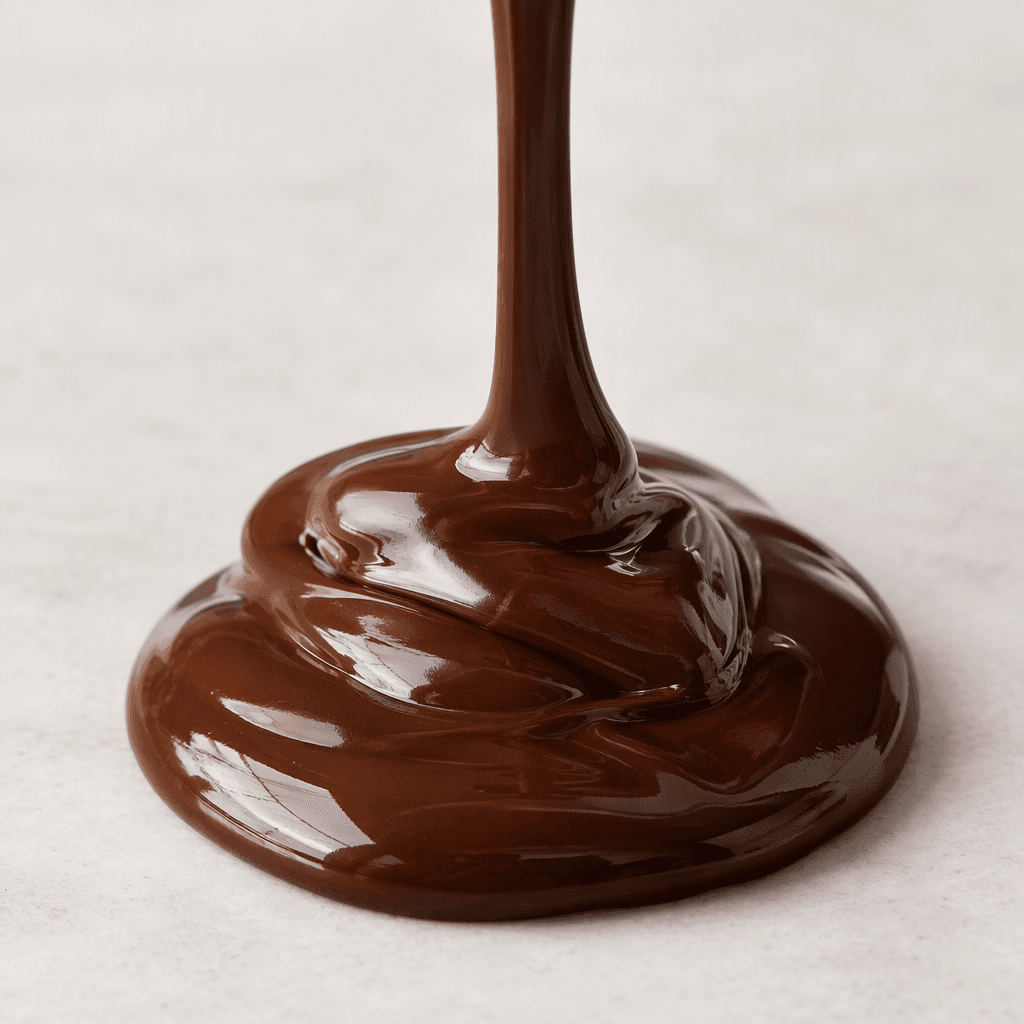
Chocolate Syrup Calories
Sweet, rich, cocoa-flavored syrup
In season: Spring · Summer · Autumn · Winter
CALORIES
GI
POTASSIUM
FIBER
Quick answer
2 tablespoon (medium) of Chocolate Syrup (40 g) has 108 calories. That works out to 270 calories per 100 g. It contains 26.4 g of carbs, 0.8 g of protein, 0.6 g of fat and 0.8 g of fiber. Its 0.1 mg of Copper covers 7% of the Daily Value. Its glycemic index is 65 (high), so it raises blood sugar quickly.
What is Chocolate Syrup?
Chocolate syrup is a sweet, pourable sauce made with cocoa, sugar and liquid. It is sold ready to use and is also easy to make at home; its smooth texture makes it a convenient way to add chocolate flavour to desserts and drinks.
Popular in American-style sundaes and milkshakes, it is also drizzled over ice cream, pancakes and waffles in many places. It is rich in carbohydrates and sweetness, rather than being a substantial source of protein or fat. A small drizzle goes a long way; pair it with fruit or plain yogurt for a less indulgent snack.
Chocolate Syrup Nutrition Facts
Selected: 100 g
270
KCAL / 100G
Carbs
66g
· 24% DV
Protein
2g
· 4% DV
Fat
1.5g
· 2% DV
Fiber
2g
· 7% DV
DV is the share of the daily value covered, on a 2,000 kcal reference diet.
Calories come from: Carbs 92% · Protein 3% · Fat 5%
Chocolate Syrup Vitamins & Minerals
Vitamins
B2
0.04mg · 3% DV
B1
0.02mg · 2% DV
B5
0.08mg · 2% DV
B6
0.03mg · 2% DV
Minerals
Iron
1mg · 6% DV
Magnesium
20mg · 5% DV
Phosphorus
35mg · 5% DV
Calcium
25mg · 3% DV
How Nutritious Is Chocolate Syrup?
Nutrient density
Low
How many vitamins, minerals and how much fiber this food carries per calorie. A high score means a lot of nutrition for few calories.
Satiety score
Low
An EatBetter score computed from fiber, protein and calorie density. A high score means staying full longer on the same calories.
Both scores are calculated per 100 g and do not change with the selected portion. The satiety score is EatBetter's own calculation, not a clinical measure.
Chocolate Syrup Glycemic Index
GLYCEMIC INDEX
GLYCEMIC LOAD
Accounts for portion size — a more realistic measure than GI alone.
How to Burn Off Chocolate Syrup
To burn the 270 calories in 100 g:
🚶
Walking (5 km/h)
🏃
Running (8 km/h)
🚴
Cycling
🏊
Swimming
Times are calculated with the MET equation for a 70 kg adult. Actual burn varies with your weight, age and pace.
Is Chocolate Syrup Processed?
NOVA 3
Processed
1. Unprocessed
2. Minimally Processed
3. Processed
4. Ultra-Processed
NOVA classifies foods into 4 groups by industrial processing. NOVA 1 (unprocessed) is the healthiest.
Does Chocolate Syrup Contain Allergens?
No known major allergens
Which Diets Is Chocolate Syrup Good For?
Vegan
— Not suitable
Vegetarian
✓ Suitable
Gluten-Free
— Not suitable
Dairy-Free
— Not suitable
Mediterranean
— Not suitable
Paleo
— Not suitable
Whole30
— Not suitable
DASH
— Not suitable
Keto
— Not suitable
Low FODMAP
— Not suitable
Chocolate Syrup Fat Profile
SATURATED
0.9g
MONOUNSATURATED
0.3g
POLYUNSATURATED
0.1g
Omega 6:3 ratio 8:1
Above the ideal 4:1 (8:1).
Compare Chocolate Syrup
Foods Similar to Chocolate Syrup
Frequently Asked Questions About Chocolate Syrup
What is chocolate syrup made of?
Chocolate syrup is commonly made with cocoa, a sweetener, and water, though commercial recipes vary. Some products include extra ingredients to adjust thickness, flavor, or shelf stability, so there is no single formula.
How do you make a chocolate milkshake with chocolate syrup?
Add chocolate syrup to milk and ice cream, then blend until smooth. Start with a small amount, taste, and add more if needed; the syrup sweetens the shake as well as giving it chocolate flavor.
Does chocolate syrup need to be refrigerated after opening?
Sometimes. Storage instructions depend on the product: some commercial chocolate syrups can be kept in a cupboard, while others require refrigeration after opening. Close the cap firmly and follow the directions on the bottle.
Is chocolate syrup the same as chocolate sauce?
Not always. Chocolate syrup is usually thinner and easy to mix into drinks, while chocolate sauce is often thicker and intended as a topping. Brands may use the terms differently, so texture is a useful guide.
Can you make chocolate syrup at home?
Yes. Whisk cocoa, sugar, and water together, then simmer gently until smooth. Let the mixture cool before storing it; it thickens as it cools and may not keep as long as a commercially packaged product.
Can chocolate syrup be used in iced coffee?
Yes, chocolate syrup works in iced coffee. Stir it into a little warm coffee first so it dissolves evenly, then add the remaining coffee, milk, and ice.
Can you freeze chocolate syrup?
You can freeze chocolate syrup, but it may separate or change texture after thawing. If you try it, leave room in the container for expansion, thaw it in the refrigerator, and stir thoroughly before using.
Can chocolate syrup be used as a substitute for cocoa powder?
No, chocolate syrup is not a direct substitute for cocoa powder. It adds liquid and sweetness, so using it in a recipe designed for dry cocoa can change both the texture and the balance of the other ingredients.
Can chocolate syrup be heated for hot chocolate?
Yes, chocolate syrup can be stirred into warm milk to make a quick hot chocolate. Heat the milk gently and mix well; boiling can cause milk to scorch and does not improve the drink.
How can you tell if chocolate syrup has gone bad?
Discard chocolate syrup if it has an unusual odor, visible mold, or a marked change in appearance or texture. Keep it tightly closed and use the package’s storage directions, since shelf life varies by product.
Have another question about Chocolate Syrup?
Ask the AI nutrition coach — calories, portions, alternatives and more, answered in seconds in the app.

Scan calories with your camera
Instant AI nutrition analysis

Nutrition data compiled from USDA FoodData Central and scientific sources.