

Ready & Packaged Foods
All →Vegetables & Legumes
All →Desserts & Confectionery
All →Meat & Protein
All →Grains & Bakery
All →Beverages
All →Milk & Dairy
All →

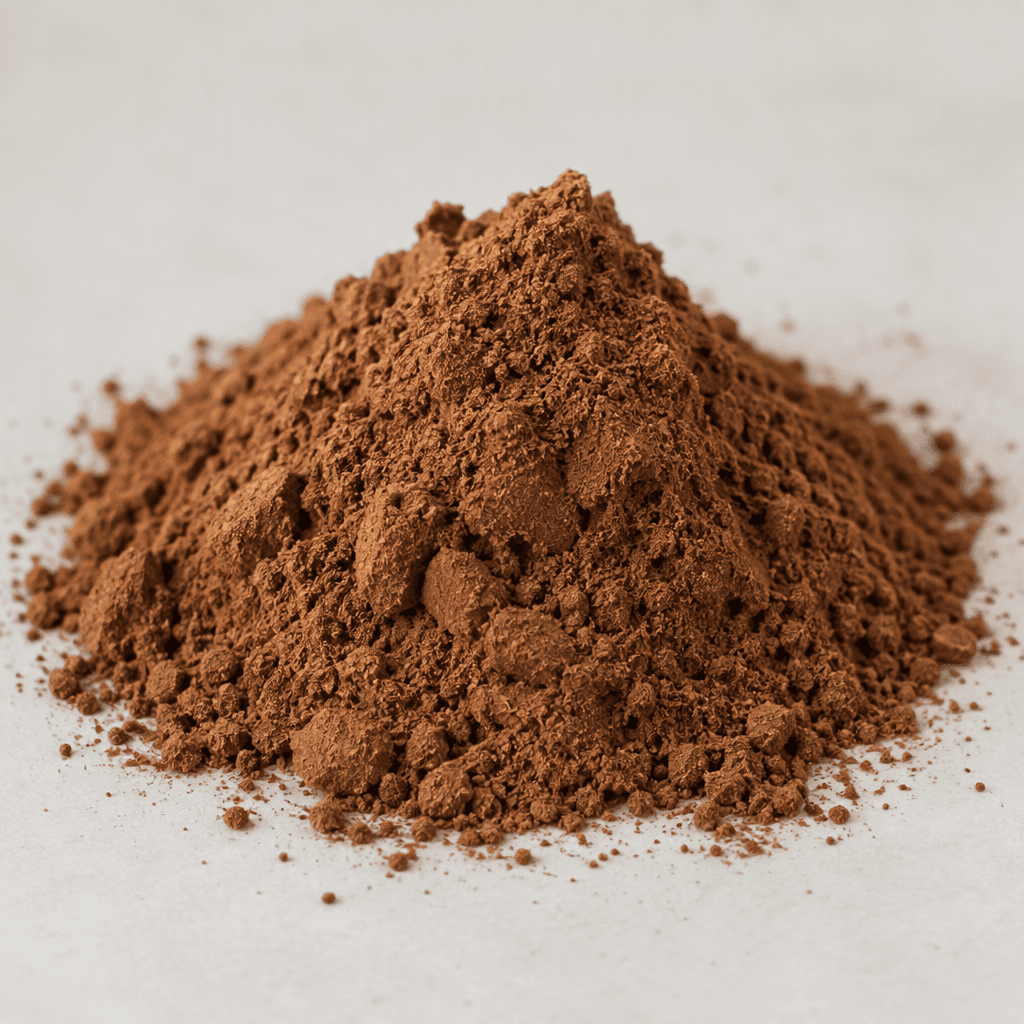
Chocolate Protein Powder Calories
High protein, low sugar, sports nutrition
CALORIES
GI
POTASSIUM
FIBER
Quick answer
1 slice (medium) of Chocolate Protein Powder (30 g) has 111 calories. That works out to 370 calories per 100 g. It contains 4.5 g of carbs, 19.5 g of protein, 1.8 g of fat and 1.8 g of fiber. Its 0.4 mg of B2 covers 28% of the Daily Value. Its glycemic index is 30 (low), so it raises blood sugar slowly.
What is Chocolate Protein Powder?
Chocolate Protein Powder is a fine, cocoa-flavoured powder made with a protein base; the source of that protein varies by product. It is meant to be stirred or blended into drinks and foods rather than eaten on its own.
Its chocolate taste works well in a shake with water or milk, and it can also be blended into smoothies or stirred into porridge, yoghurt or pancake batter. In many places, people use it as a convenient breakfast addition or around a workout, while it is not a traditional staple. It is protein-rich and relatively low in sugar, with 65 g of protein per 100 g. For a lighter shake, mix it with water or an unsweetened drink.
Chocolate Protein Powder Nutrition Facts
Selected: 100 g
370
KCAL / 100G
Carbs
15g
· 5% DV
Protein
65g
· 130% DV
Fat
6g
· 8% DV
Fiber
6g
· 21% DV
DV is the share of the daily value covered, on a 2,000 kcal reference diet.
Calories come from: Carbs 16% · Protein 70% · Fat 14%
Chocolate Protein Powder Vitamins & Minerals
Vitamins
B2
1.2mg · 92% DV
B12
2.2µg · 92% DV
B1
0.8mg · 67% DV
B3
8mg · 50% DV
Minerals
Copper
1mg · 111% DV
Phosphorus
650mg · 93% DV
Manganese
1mg · 43% DV
Iron
7mg · 39% DV
How Nutritious Is Chocolate Protein Powder?
Nutrient density
High
How many vitamins, minerals and how much fiber this food carries per calorie. A high score means a lot of nutrition for few calories.
Satiety score
High
An EatBetter score computed from fiber, protein and calorie density. A high score means staying full longer on the same calories.
Both scores are calculated per 100 g and do not change with the selected portion. The satiety score is EatBetter's own calculation, not a clinical measure.
Chocolate Protein Powder Glycemic Index
GLYCEMIC INDEX
GLYCEMIC LOAD
Accounts for portion size — a more realistic measure than GI alone.
How to Burn Off Chocolate Protein Powder
To burn the 370 calories in 100 g:
🚶
Walking (5 km/h)
🏃
Running (8 km/h)
🚴
Cycling
🏊
Swimming
Times are calculated with the MET equation for a 70 kg adult. Actual burn varies with your weight, age and pace.
Is Chocolate Protein Powder Processed?
NOVA 3
Processed
1. Unprocessed
2. Minimally Processed
3. Processed
4. Ultra-Processed
NOVA classifies foods into 4 groups by industrial processing. NOVA 1 (unprocessed) is the healthiest.
Does Chocolate Protein Powder Contain Allergens?
Contains these allergens:
Which Diets Is Chocolate Protein Powder Good For?
Vegan
— Not suitable
Vegetarian
✓ Suitable
Gluten-Free
— Not suitable
Dairy-Free
— Not suitable
Mediterranean
✓ Suitable
Paleo
— Not suitable
Whole30
— Not suitable
DASH
— Not suitable
Keto
— Not suitable
Low FODMAP
— Not suitable
Chocolate Protein Powder Fat Profile
SATURATED
2.2g
MONOUNSATURATED
2.1g
POLYUNSATURATED
1.2g
Omega 6:3 ratio 3:1
Below the ideal 4:1 — a good omega balance.
Compare Chocolate Protein Powder
Foods Similar to Chocolate Protein Powder
Frequently Asked Questions About Chocolate Protein Powder
How do you mix Chocolate Protein Powder without lumps?
Add the liquid to a shaker first, then add Chocolate Protein Powder and shake with the lid secured. A blender also works well. Mixing the powder with a small splash of liquid before adding the rest can help prevent lumps.
Should you mix Chocolate Protein Powder with milk or water?
You can mix Chocolate Protein Powder with either milk or water. Milk makes the drink creamier, while water gives it a lighter texture. Use enough liquid to reach the consistency you prefer, and mix thoroughly.
When should you take Chocolate Protein Powder, before or after a workout?
You can have Chocolate Protein Powder before or after a workout; the useful timing is whenever it helps you meet your protein needs. After exercise, mix it with water or milk for a convenient drink.
Can Chocolate Protein Powder help with weight loss?
Chocolate Protein Powder does not cause weight loss by itself, but its protein can make a snack more filling. It may fit into a weight-loss plan when used in place of a less filling snack rather than added on top of usual meals.
Does Chocolate Protein Powder help build muscle?
Yes, Chocolate Protein Powder can help you get enough protein to support muscle repair and growth. It works alongside progressive strength training and an adequate diet; drinking it alone does not build muscle.
Can you add Chocolate Protein Powder to oatmeal?
Yes, Chocolate Protein Powder works in oatmeal. Let hot oatmeal cool slightly, then stir in the powder, ideally mixed first with a little milk or water. Adding it while the oats are boiling can make it clump.
Can you bake with Chocolate Protein Powder?
Yes, you can use Chocolate Protein Powder in pancakes, muffins, and other baked recipes. It does not behave exactly like flour, so replacing too much flour can make the result dry or dense; follow a recipe designed for protein powder.
Does heat destroy the protein in Chocolate Protein Powder?
No, cooking does not make the protein in Chocolate Protein Powder disappear. Heat can change the protein’s structure, as it does in cooked foods, but it remains a source of protein in baked dishes or warm recipes.
Can Chocolate Protein Powder replace a meal?
Chocolate Protein Powder on its own is not a complete meal because it lacks the range of nutrients and variety found in a balanced meal. If you need a more substantial smoothie, combine it with foods such as fruit, oats, or yogurt.
Can you take Chocolate Protein Powder every day?
Yes, you can use Chocolate Protein Powder daily if it suits your diet, but it does not need to replace protein-rich whole foods. If you have kidney disease or have been told to limit protein, ask your healthcare professional before using it regularly.
Have another question about Chocolate Protein Powder?
Ask the AI nutrition coach — calories, portions, alternatives and more, answered in seconds in the app.

Scan calories with your camera
Instant AI nutrition analysis

Nutrition data compiled from USDA FoodData Central and scientific sources.