

Ready & Packaged Foods
All →Vegetables & Legumes
All →Desserts & Confectionery
All →Meat & Protein
All →Grains & Bakery
All →Beverages
All →Milk & Dairy
All →

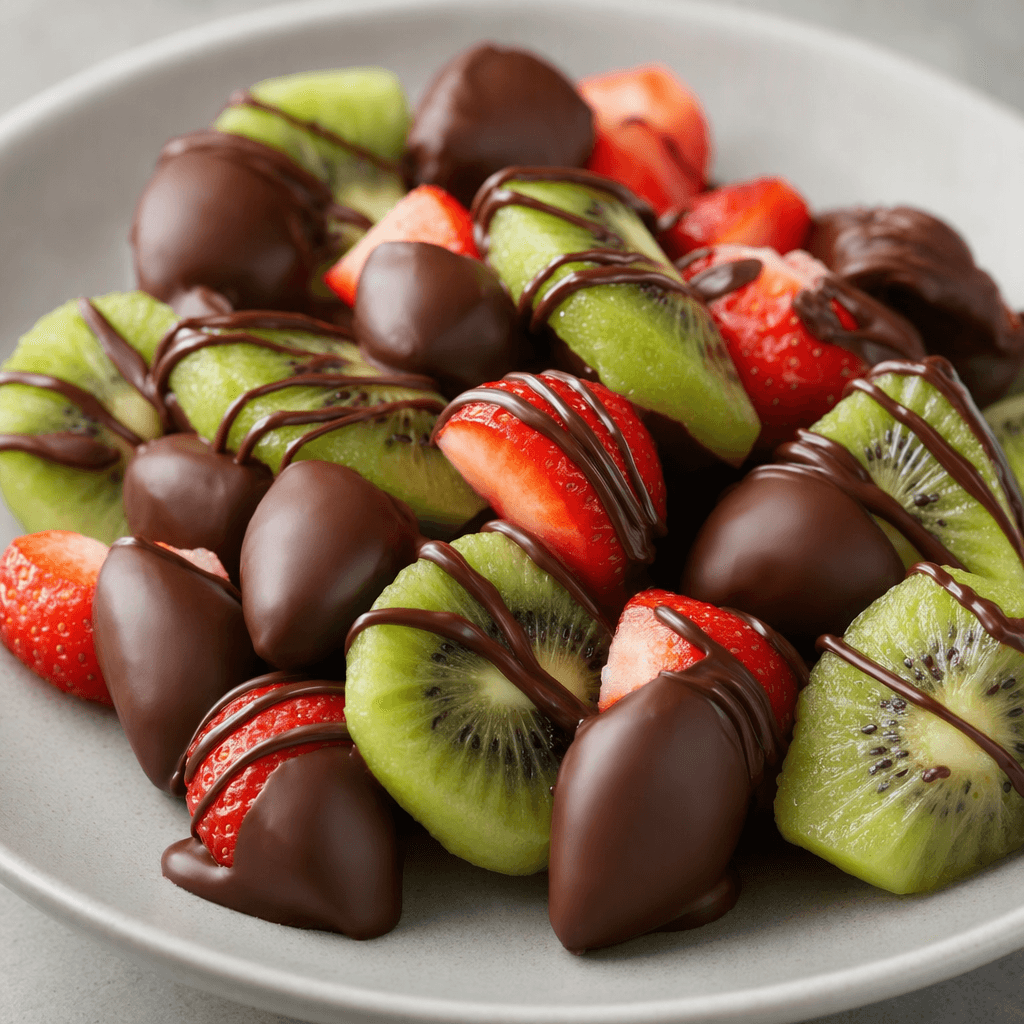
Chocolate fruit dessert Calories
Fruit-based dessert with chocolate
In season: Spring · Summer · Autumn · Winter
CALORIES
GI
POTASSIUM
FIBER
Quick answer
1 serving (medium) of Chocolate fruit dessert (150 g) has 248 calories. That works out to 165 calories per 100 g. It contains 42.6 g of carbs, 3.2 g of protein, 8.4 g of fat and 4.7 g of fiber. Its 0.2 mg of Copper covers 27% of the Daily Value. Its glycemic index is 52 (medium), so it raises blood sugar at a moderate pace.
What is Chocolate fruit dessert?
Chocolate fruit dessert is made by dipping bite-sized pieces of fruit in melted chocolate or drizzling chocolate over them. There is no single traditional recipe: the choice of fruit and the amount of chocolate vary from kitchen to kitchen. Berries, grapes and sliced apple are all common options.
It works as an easy after-dinner sweet, a party platter or a small treat alongside coffee or tea. The fruit brings juiciness and freshness, while the chocolate adds a richer, slightly bittersweet finish. Its carbohydrates are the main feature, with some fibre from the fruit and relatively little protein. For a lighter version, use plenty of fresh fruit and a thin drizzle of dark chocolate.
Chocolate fruit dessert Nutrition Facts
Selected: 100 g
165
KCAL / 100G
Carbs
28.4g
· 10% DV
Protein
2.1g
· 4% DV
Fat
5.6g
· 7% DV
Fiber
3.1g
· 11% DV
DV is the share of the daily value covered, on a 2,000 kcal reference diet.
Calories come from: Carbs 66% · Protein 5% · Fat 29%
Chocolate fruit dessert Vitamins & Minerals
Vitamins
Vitamin C
12.5mg · 14% DV
Vitamin E
0.9mg · 6% DV
B2
0.05mg · 4% DV
B5
0.18mg · 4% DV
Minerals
Phosphorus
52mg · 7% DV
Iron
1mg · 6% DV
Magnesium
24mg · 6% DV
Potassium ⭐
210mg · 6% DV
How Nutritious Is Chocolate fruit dessert?
Nutrient density
Medium
How many vitamins, minerals and how much fiber this food carries per calorie. A high score means a lot of nutrition for few calories.
Satiety score
Medium
An EatBetter score computed from fiber, protein and calorie density. A high score means staying full longer on the same calories.
Both scores are calculated per 100 g and do not change with the selected portion. The satiety score is EatBetter's own calculation, not a clinical measure.
Chocolate fruit dessert Glycemic Index
GLYCEMIC INDEX
GLYCEMIC LOAD
Accounts for portion size — a more realistic measure than GI alone.
How to Burn Off Chocolate fruit dessert
To burn the 165 calories in 100 g:
🚶
Walking (5 km/h)
🏃
Running (8 km/h)
🚴
Cycling
🏊
Swimming
Times are calculated with the MET equation for a 70 kg adult. Actual burn varies with your weight, age and pace.
Is Chocolate fruit dessert Processed?
NOVA 3
Processed
1. Unprocessed
2. Minimally Processed
3. Processed
4. Ultra-Processed
NOVA classifies foods into 4 groups by industrial processing. NOVA 1 (unprocessed) is the healthiest.
Does Chocolate fruit dessert Contain Allergens?
No known major allergens
Which Diets Is Chocolate fruit dessert Good For?
Vegan
— Not suitable
Vegetarian
✓ Suitable
Gluten-Free
— Not suitable
Dairy-Free
— Not suitable
Mediterranean
— Not suitable
Paleo
— Not suitable
Whole30
— Not suitable
DASH
— Not suitable
Keto
— Not suitable
Low FODMAP
— Not suitable
Chocolate fruit dessert Fat Profile
SATURATED
3.1g
MONOUNSATURATED
1.5g
POLYUNSATURATED
0.5g
Omega 6:3 ratio 14:1
Above the ideal 4:1 (14:1).
Compare Chocolate fruit dessert
Foods Similar to Chocolate fruit dessert
Frequently Asked Questions About Chocolate fruit dessert
What fruit works best in chocolate fruit dessert?
Strawberries, bananas, grapes, kiwi and orange segments all work well in chocolate fruit dessert. Choose firm fruit that can be handled easily, and cut pieces to a similar size so they are simple to coat and serve.
How do you make chocolate fruit dessert at home?
To make chocolate fruit dessert, wash and thoroughly dry the fruit, melt the chocolate gently, then dip or drizzle it over the pieces. Set them on baking paper until the chocolate firms, and serve soon after assembling.
Why does chocolate slide off the fruit in chocolate fruit dessert?
Chocolate can slide off chocolate fruit dessert ingredients when the fruit is wet or has a slick surface. Dry each piece thoroughly after washing, and let excess melted chocolate drip off before setting the coated fruit on baking paper.
Can chocolate fruit dessert be made ahead of time?
Chocolate fruit dessert is best assembled close to serving because cut fruit releases moisture as it sits, which can soften the coating. You can wash and dry the fruit ahead, then dip or drizzle it shortly before serving.
How should you store chocolate fruit dessert?
Store chocolate fruit dessert in a covered container in the refrigerator, and eat it while the fruit is still firm. Cut fruit can release liquid and soften the chocolate over time, so this dessert is best made fresh rather than kept for long.
Why does chocolate seize when making chocolate fruit dessert?
Chocolate can seize during chocolate fruit dessert preparation if even a little water gets into the melted chocolate. Use a dry bowl and utensils, and melt gently; if it turns grainy and thick, it may no longer coat the fruit smoothly.
Can you use frozen fruit for chocolate fruit dessert?
Frozen fruit is not ideal for chocolate fruit dessert because thawing makes it soft and wet, so the chocolate may not cling well. Fresh, firm fruit gives a neater coating and holds its shape better on a serving plate.
What kind of chocolate is best for chocolate fruit dessert?
Dark chocolate gives chocolate fruit dessert a more intense, less sweet coating, while milk chocolate makes it sweeter and creamier. Choose based on the fruit: dark chocolate often balances very sweet fruit particularly well.
How do you stop fruit from browning in chocolate fruit dessert?
For chocolate fruit dessert, prepare browning-prone fruit such as apple or banana shortly before serving, since cut surfaces darken when exposed to air. A little citrus juice can slow browning, but dry the pieces before adding chocolate.
How can you make chocolate fruit dessert less messy to serve?
To make chocolate fruit dessert easier to serve, use firm bite-sized fruit and arrange the pieces with space between them while the chocolate sets. Small skewers or cocktail picks also let guests pick up coated fruit without touching the chocolate.
Have another question about Chocolate fruit dessert?
Ask the AI nutrition coach — calories, portions, alternatives and more, answered in seconds in the app.

Scan calories with your camera
Instant AI nutrition analysis

Nutrition data compiled from USDA FoodData Central and scientific sources.