

Ready & Packaged Foods
All →Vegetables & Legumes
All →Desserts & Confectionery
All →Meat & Protein
All →Grains & Bakery
All →Beverages
All →Milk & Dairy
All →

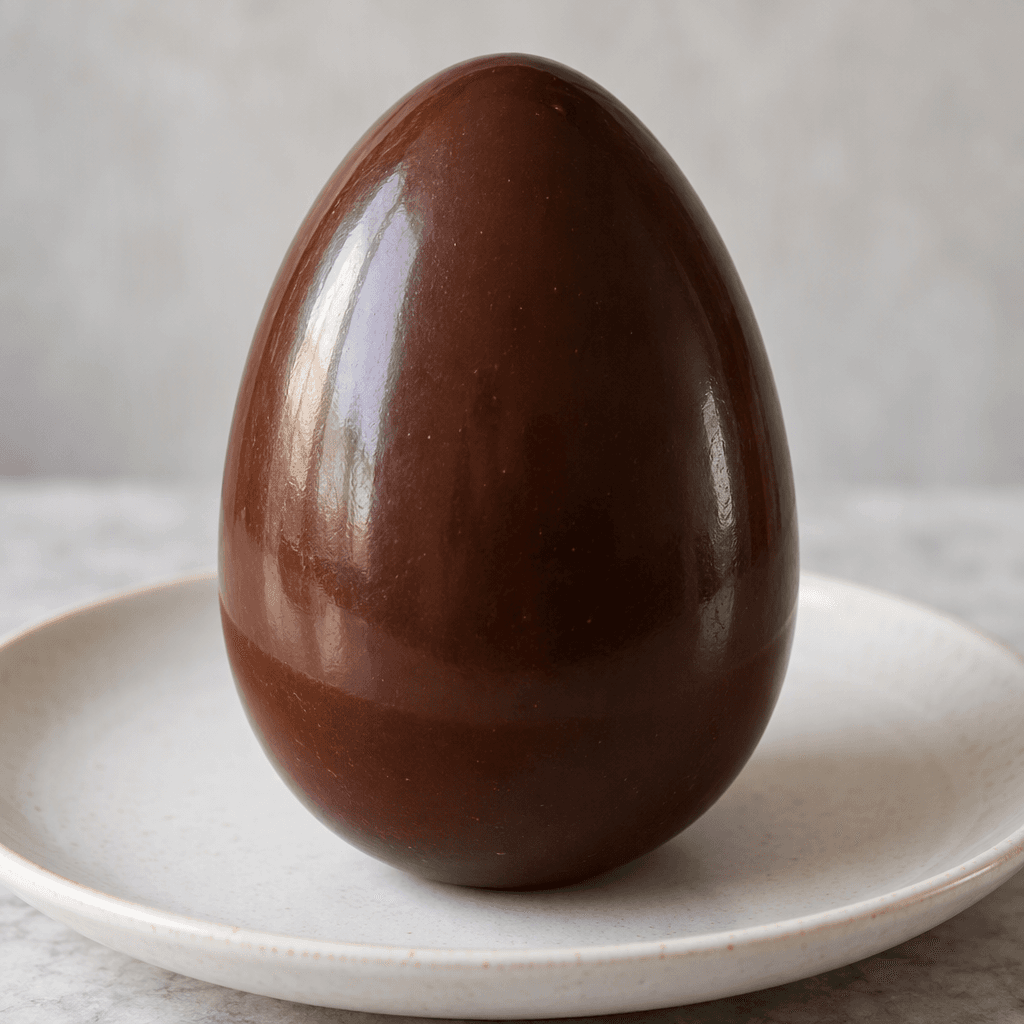
Chocolate egg Calories
A sweet treat shaped like an egg, typically made from milk or dark chocolate, popular during Easter.
In season: Spring
CALORIES
GI
POTASSIUM
FIBER
Quick answer
1 piece (medium) of Chocolate egg (35 g) has 187 calories. That works out to 535 calories per 100 g. It contains 19.4 g of carbs, 2.5 g of protein, 10.9 g of fat and 1.8 g of fiber. Its 0.1 mg of Copper covers 12% of the Daily Value. Its glycemic index is 40 (medium), so it raises blood sugar at a moderate pace.
What is Chocolate egg?
A chocolate egg is a hollow or filled confection shaped in a mould from milk or dark chocolate. It is especially associated with Easter in Europe and other places where chocolate eggs are exchanged as seasonal gifts, though it is also sold year-round as a novelty sweet.
Its smooth shell snaps as you bite, with a milder, creamier taste in milk chocolate and a more pronounced cocoa flavour in dark chocolate. Enjoy it on its own, share it in pieces, or serve it with coffee or tea. It is an energy-dense treat, with much of its energy coming from fat and carbohydrate, so a small portion is often enough. Choose dark chocolate if you prefer a less milky, more cocoa-forward taste.
Chocolate egg Nutrition Facts
Selected: 100 g
535
KCAL / 100G
Carbs
55.5g
· 20% DV
Protein
7.2g
· 14% DV
Fat
31g
· 40% DV
Fiber
5g
· 18% DV
DV is the share of the daily value covered, on a 2,000 kcal reference diet.
Calories come from: Carbs 42% · Protein 5% · Fat 53%
Chocolate egg Vitamins & Minerals
Vitamins
B2
0.25mg · 19% DV
B12
0.4µg · 17% DV
Vitamin E
1.2mg · 8% DV
B1
0.08mg · 7% DV
Minerals
Manganese
1mg · 43% DV
Phosphorus
180mg · 26% DV
Iron
3mg · 17% DV
Magnesium
70mg · 17% DV
How Nutritious Is Chocolate egg?
Nutrient density
Low
How many vitamins, minerals and how much fiber this food carries per calorie. A high score means a lot of nutrition for few calories.
Satiety score
Medium
An EatBetter score computed from fiber, protein and calorie density. A high score means staying full longer on the same calories.
Both scores are calculated per 100 g and do not change with the selected portion. The satiety score is EatBetter's own calculation, not a clinical measure.
Chocolate egg Glycemic Index
GLYCEMIC INDEX
GLYCEMIC LOAD
Accounts for portion size — a more realistic measure than GI alone.
How to Burn Off Chocolate egg
To burn the 535 calories in 100 g:
🚶
Walking (5 km/h)
🏃
Running (8 km/h)
🚴
Cycling
🏊
Swimming
Times are calculated with the MET equation for a 70 kg adult. Actual burn varies with your weight, age and pace.
Is Chocolate egg Processed?
NOVA 3
Processed
1. Unprocessed
2. Minimally Processed
3. Processed
4. Ultra-Processed
NOVA classifies foods into 4 groups by industrial processing. NOVA 1 (unprocessed) is the healthiest.
Does Chocolate egg Contain Allergens?
Contains these allergens:
Which Diets Is Chocolate egg Good For?
Vegan
— Not suitable
Vegetarian
✓ Suitable
Gluten-Free
— Not suitable
Dairy-Free
— Not suitable
Mediterranean
— Not suitable
Paleo
— Not suitable
Whole30
— Not suitable
DASH
— Not suitable
Keto
— Not suitable
Low FODMAP
— Not suitable
Chocolate egg Fat Profile
SATURATED
19g
MONOUNSATURATED
9.5g
POLYUNSATURATED
2.5g
Omega 6:3 ratio 17.5:1
Above the ideal 4:1 (17.5:1).
Compare Chocolate egg
Foods Similar to Chocolate egg
Frequently Asked Questions About Chocolate egg
Why are chocolate eggs associated with Easter?
Chocolate eggs are associated with Easter because eggs have long symbolized new life and rebirth in springtime traditions. Chocolate versions became popular as festive gifts, often hidden for children to find during Easter egg hunts.
How are chocolate eggs made?
Chocolate eggs are made by coating an egg-shaped mold with melted chocolate and letting it set. The shell is released from the mold, then two halves can be joined with more chocolate; some eggs are filled before sealing.
Why are chocolate eggs hollow?
Many chocolate eggs are hollow to keep the shell lighter and leave room for a filling or surprise. Hollow shells are made by coating the inside of an egg-shaped mold with chocolate rather than filling the entire mold.
What chocolate is used to make a chocolate egg?
Chocolate eggs are commonly made with milk or dark chocolate, and white-chocolate versions are also available. The type of chocolate changes the flavor and sweetness, while properly melted chocolate helps the finished shell set smoothly.
How can you make a chocolate egg at home?
You can make a chocolate egg at home by brushing melted chocolate into an egg-shaped mold, chilling it until firm, and repeating to build a sturdy shell. Join two shells with a little melted chocolate, adding a dry filling first if desired.
How do you temper chocolate for a chocolate egg?
Tempering chocolate for a chocolate egg means melting and cooling it in a controlled way before molding. Properly tempered chocolate sets glossy and crisp, and is less likely to develop pale streaks or soften quickly at room temperature.
How should you store a chocolate egg?
Store a chocolate egg in a cool, dry place away from sunlight and strong-smelling foods. Keep it wrapped or in an airtight container; refrigeration is usually unnecessary and can cause condensation when the egg is brought back to room temperature.
Can you freeze a chocolate egg?
Yes, you can freeze a chocolate egg in an airtight, moisture-proof package, but its texture or shine may change after thawing. Let it come gradually to room temperature while still wrapped to reduce condensation on the surface.
What can you put inside a chocolate egg?
You can fill a chocolate egg with small chocolates, candy, dried fruit, or chopped nuts. Make sure the filling is dry before sealing the shell, since moisture can soften the chocolate and affect its texture.
Why has my chocolate egg turned white?
A white or cloudy film on a chocolate egg is usually chocolate bloom, caused by fat or sugar crystals forming on the surface after temperature or moisture changes. It is generally a quality issue rather than a sign that the chocolate has spoiled.
Have another question about Chocolate egg?
Ask the AI nutrition coach — calories, portions, alternatives and more, answered in seconds in the app.

Scan calories with your camera
Instant AI nutrition analysis

Nutrition data compiled from USDA FoodData Central and scientific sources.