

Ready & Packaged Foods
All →Vegetables & Legumes
All →Desserts & Confectionery
All →Meat & Protein
All →Grains & Bakery
All →Beverages
All →Milk & Dairy
All →

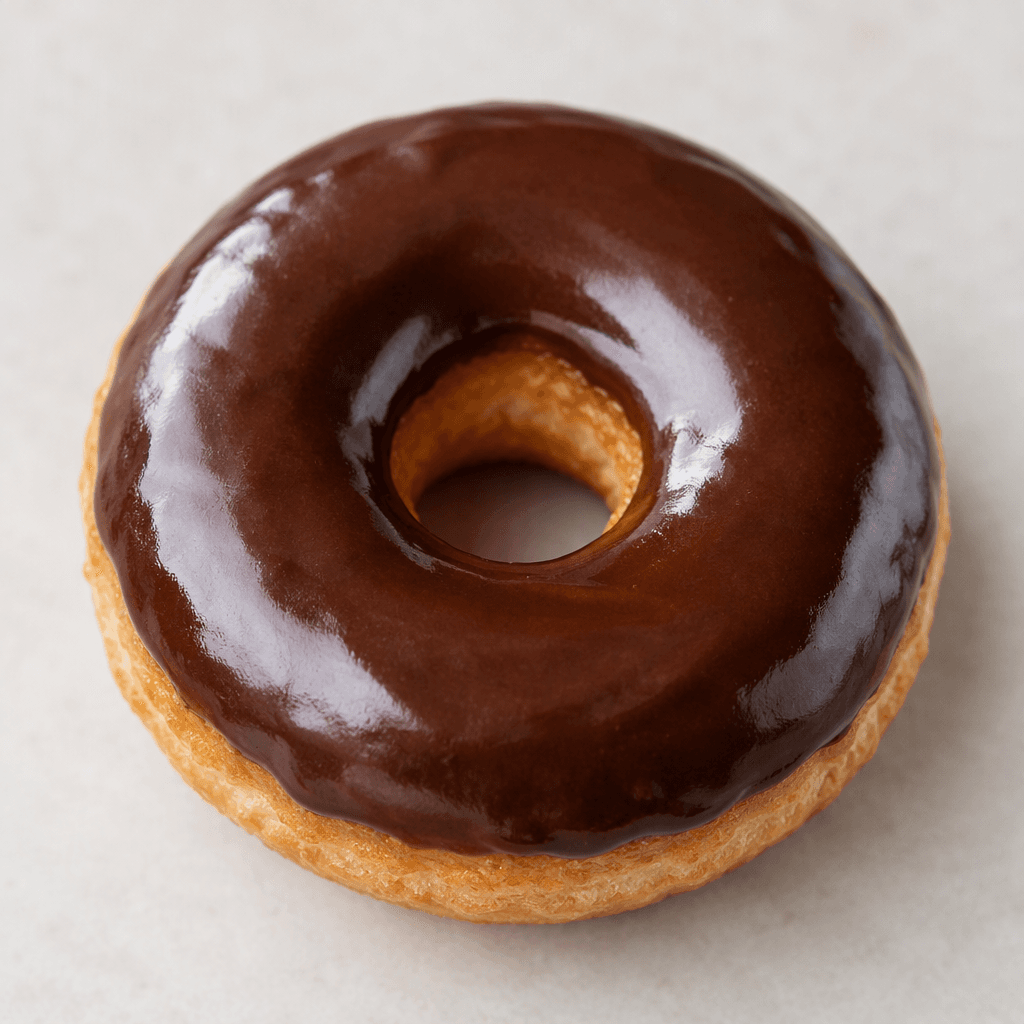
Chocolate donut Calories
Sweet, fried dough, chocolate glazed
In season: Spring · Summer · Autumn · Winter
CALORIES
GI
POTASSIUM
FIBER
Quick answer
1 piece (medium) of Chocolate donut (60 g) has 246 calories. That works out to 410 calories per 100 g. It contains 29.1 g of carbs, 3.1 g of protein, 13.2 g of fat and 1.3 g of fiber. Its 204 mg of Sodium covers 9% of the Daily Value. Its glycemic index is 76 (high), so it raises blood sugar quickly.
What is Chocolate donut?
A chocolate donut is a ring of risen dough, usually fried and finished with a chocolate glaze. Donuts became especially popular in North America, and this familiar bakery and café treat is now found in many places around the world.
The inside is soft and slightly airy, while the smooth coating brings a rich sweetness. It is often enjoyed with coffee or milk as a snack or an occasional breakfast treat. Because it combines fried dough with a sugary glaze, it is energy-dense and relatively modest in protein and fibre; it provides about 410 calories per 100 g. For a lighter-feeling treat, have one small donut with unsweetened coffee or tea rather than pairing it with another sweet.
Chocolate donut Nutrition Facts
Selected: 100 g
410
KCAL / 100G
Carbs
48.5g
· 18% DV
Protein
5.2g
· 10% DV
Fat
22g
· 28% DV
Fiber
2.2g
· 8% DV
DV is the share of the daily value covered, on a 2,000 kcal reference diet.
Calories come from: Carbs 47% · Protein 5% · Fat 48%
Chocolate donut Vitamins & Minerals
Vitamins
B2
0.17mg · 13% DV
B1
0.13mg · 11% DV
B3
1.1mg · 7% DV
Biotin
2.1µg · 7% DV
Minerals
Sodium
340mg · 15% DV
Selenium
7.3µg · 13% DV
Iron
2mg · 11% DV
Phosphorus
65mg · 9% DV
How Nutritious Is Chocolate donut?
Nutrient density
Low
How many vitamins, minerals and how much fiber this food carries per calorie. A high score means a lot of nutrition for few calories.
Satiety score
Low
An EatBetter score computed from fiber, protein and calorie density. A high score means staying full longer on the same calories.
Both scores are calculated per 100 g and do not change with the selected portion. The satiety score is EatBetter's own calculation, not a clinical measure.
Chocolate donut Glycemic Index
GLYCEMIC INDEX
GLYCEMIC LOAD
Accounts for portion size — a more realistic measure than GI alone.
How to Burn Off Chocolate donut
To burn the 410 calories in 100 g:
🚶
Walking (5 km/h)
🏃
Running (8 km/h)
🚴
Cycling
🏊
Swimming
Times are calculated with the MET equation for a 70 kg adult. Actual burn varies with your weight, age and pace.
Is Chocolate donut Processed?
NOVA 4
Ultra-Processed
1. Unprocessed
2. Minimally Processed
3. Processed
4. Ultra-Processed
NOVA classifies foods into 4 groups by industrial processing. NOVA 1 (unprocessed) is the healthiest.
Does Chocolate donut Contain Allergens?
Contains these allergens:
Which Diets Is Chocolate donut Good For?
Vegan
— Not suitable
Vegetarian
— Not suitable
Gluten-Free
— Not suitable
Dairy-Free
— Not suitable
Mediterranean
— Not suitable
Paleo
— Not suitable
Whole30
— Not suitable
DASH
— Not suitable
Keto
— Not suitable
Low FODMAP
— Not suitable
Chocolate donut Fat Profile
SATURATED
8.9g
MONOUNSATURATED
7.3g
POLYUNSATURATED
2.3g
Omega 6:3 ratio 42:1
Above the ideal 4:1 (42:1).
Compare Chocolate donut
Foods Similar to Chocolate donut
Frequently Asked Questions About Chocolate donut
What is a chocolate donut made of?
A chocolate donut is usually made from a wheat-based dough containing ingredients such as flour, sugar, eggs, milk, and a raising agent, then finished with chocolate glaze. Recipes vary: some use yeast dough, while others have a cake-like batter.
Are chocolate donuts fried or baked?
Most chocolate donuts are fried, which gives them a soft interior and a browned exterior beneath the glaze. Baked versions are also sold or made at home, but they tend to have a more cake-like texture.
How do you make chocolate donuts at home?
Make a yeast or cake-style donut dough, shape it, and fry or bake it until cooked through. Let the donuts cool before dipping or spreading on melted chocolate glaze; glazing them while hot can make the coating run.
How should you store a chocolate donut?
Keep a chocolate donut in an airtight container in a cool, dry place to slow staling. Refrigeration can make the dough firm and dry, while warmth can soften the chocolate coating, so avoid sunny or hot spots.
Can you freeze a chocolate donut?
Yes, a chocolate donut can be frozen. Freeze pieces separately first so the glaze does not stick together, then seal them in a freezer-safe container. Thaw at room temperature; the chocolate coating may look less glossy afterward.
Why do chocolate donuts have a hole in the middle?
The hole helps a chocolate donut cook more evenly because heat can reach the center of the dough. Ring-shaped donuts became the familiar style, although some chocolate donuts are made without a hole and filled instead.
What is the difference between a chocolate cake donut and a chocolate yeast donut?
A chocolate cake donut is raised with a leavening agent and has a dense, tender, cake-like crumb. A chocolate yeast donut rises through fermentation and is generally lighter and more elastic. Either style can have chocolate glaze.
Why does the chocolate glaze on a chocolate donut melt?
The glaze on a chocolate donut softens when exposed to heat, direct sun, or a warm car. Store the donut somewhere cool and dry, and avoid stacking it while the coating is soft to prevent smearing.
Can you reheat a chocolate donut?
Yes, but warm a chocolate donut gently and briefly; too much heat can melt the glaze and make the dough tough. Let it cool slightly before eating, since melted chocolate can be very hot.
Can dogs eat chocolate donuts?
No, do not give a dog a chocolate donut. Chocolate can be toxic to dogs, and the sugary, fatty dough is unsuitable too. If a dog has eaten one, contact a veterinarian promptly and share the type and amount of chocolate.
Have another question about Chocolate donut?
Ask the AI nutrition coach — calories, portions, alternatives and more, answered in seconds in the app.

Scan calories with your camera
Instant AI nutrition analysis

Nutrition data compiled from USDA FoodData Central and scientific sources.