

Ready & Packaged Foods
All →Vegetables & Legumes
All →Desserts & Confectionery
All →Meat & Protein
All →Grains & Bakery
All →Beverages
All →Milk & Dairy
All →

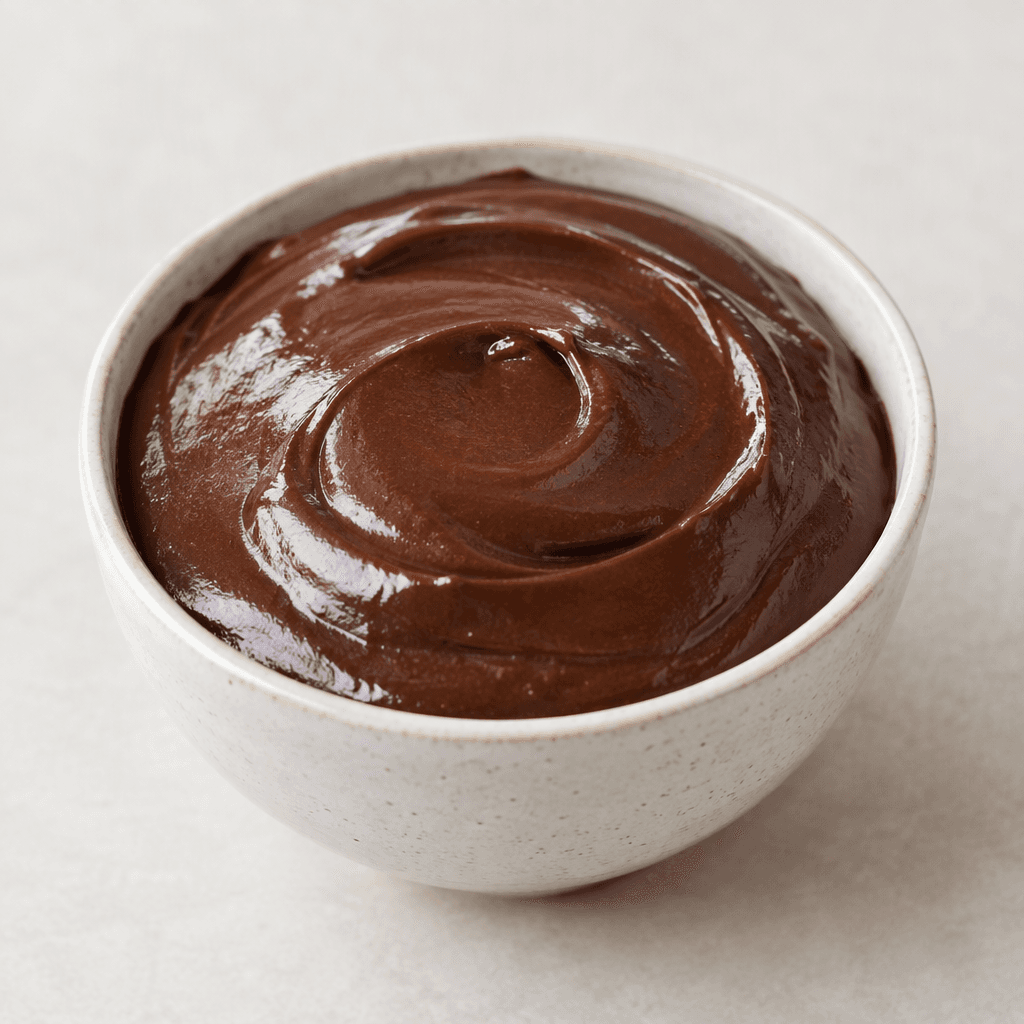
Chocolate cream Calories
Sweet, spreadable chocolate cream
In season: Spring · Summer · Autumn · Winter
CALORIES
GI
POTASSIUM
FIBER
Quick answer
1 tablespoon (medium) of Chocolate cream (18 g) has 97 calories. That works out to 540 calories per 100 g. It contains 10.1 g of carbs, 0.8 g of protein, 5.8 g of fat and 0.6 g of fiber. Its 0.1 mg of Copper covers 6% of the Daily Value. Its glycemic index is 55 (medium), so it raises blood sugar at a moderate pace.
What is Chocolate cream?
Chocolate cream is a sweet, spoonable spread made with cocoa or chocolate, sugar and added fats. Recipes vary in sweetness and richness, and the name can cover both a smooth bread spread and a thicker cream served as a simple dessert; it does not point to one particular regional recipe.
Its texture is glossy and soft, with a pronounced chocolate flavour. It can be spread on toast or pancakes, spooned over fruit, or served in a small bowl as an easy dessert. In many English-speaking homes, it is also used as a filling or topping for cakes and biscuits. It is high in fat and carbohydrates and relatively low in protein, so a modest spoonful is often enough; fresh berries or banana balance its richness.
Chocolate cream Nutrition Facts
Selected: 100 g
540
KCAL / 100G
Carbs
56g
· 20% DV
Protein
4.2g
· 8% DV
Fat
32g
· 41% DV
Fiber
3.5g
· 13% DV
DV is the share of the daily value covered, on a 2,000 kcal reference diet.
Calories come from: Carbs 42% · Protein 3% · Fat 55%
Chocolate cream Vitamins & Minerals
Vitamins
B2
0.15mg · 12% DV
Vitamin E
1.5mg · 10% DV
B5
0.4mg · 8% DV
B1
0.08mg · 7% DV
Minerals
Phosphorus
120mg · 17% DV
Magnesium
60mg · 14% DV
Iron
2mg · 11% DV
Calcium
90mg · 9% DV
How Nutritious Is Chocolate cream?
Nutrient density
Low
How many vitamins, minerals and how much fiber this food carries per calorie. A high score means a lot of nutrition for few calories.
Satiety score
Low
An EatBetter score computed from fiber, protein and calorie density. A high score means staying full longer on the same calories.
Both scores are calculated per 100 g and do not change with the selected portion. The satiety score is EatBetter's own calculation, not a clinical measure.
Chocolate cream Glycemic Index
GLYCEMIC INDEX
GLYCEMIC LOAD
Accounts for portion size — a more realistic measure than GI alone.
How to Burn Off Chocolate cream
To burn the 540 calories in 100 g:
🚶
Walking (5 km/h)
🏃
Running (8 km/h)
🚴
Cycling
🏊
Swimming
Times are calculated with the MET equation for a 70 kg adult. Actual burn varies with your weight, age and pace.
Is Chocolate cream Processed?
NOVA 3
Processed
1. Unprocessed
2. Minimally Processed
3. Processed
4. Ultra-Processed
NOVA classifies foods into 4 groups by industrial processing. NOVA 1 (unprocessed) is the healthiest.
Does Chocolate cream Contain Allergens?
Contains these allergens:
Which Diets Is Chocolate cream Good For?
Vegan
— Not suitable
Vegetarian
✓ Suitable
Gluten-Free
— Not suitable
Dairy-Free
— Not suitable
Mediterranean
✓ Suitable
Paleo
— Not suitable
Whole30
— Not suitable
DASH
— Not suitable
Keto
— Not suitable
Low FODMAP
— Not suitable
Chocolate cream Fat Profile
SATURATED
10.5g
MONOUNSATURATED
15.2g
POLYUNSATURATED
4.1g
Omega 6:3 ratio 44:1
Above the ideal 4:1 (44:1).
Compare Chocolate cream
Foods Similar to Chocolate cream
Frequently Asked Questions About Chocolate cream
What is chocolate cream made of?
Chocolate cream is usually made with cocoa or chocolate, sugar, and fat; some versions also contain milk ingredients or nuts. Recipes vary, so check the ingredient list if you have a food allergy or want to know whether a particular variety contains hazelnuts.
How do you make chocolate cream at home?
You can make chocolate cream by gently heating chocolate with cream and stirring until smooth. Let it cool to thicken, stopping at a slightly softer consistency than you want because it firms as it stands. Homemade versions generally need refrigeration.
What can you use chocolate cream for?
Chocolate cream works as a toast spread, pancake topping, cake filling, or dip for fruit. You can also spoon it over ice cream or stir a small amount into warm milk; for baking, check whether its texture suits the recipe.
Can chocolate cream be used as cake filling?
Yes, chocolate cream can fill a cake, especially when it is thick enough to stay between the layers. Let it soften slightly before spreading, and chill the assembled cake so the filling firms and the layers do not slide.
How is chocolate cream different from chocolate ganache?
Chocolate cream is generally a ready-to-spread sweet product, while ganache is made by combining chocolate and cream for a particular recipe. Ganache can set firm or remain pourable depending on its proportions, so it may not behave like chocolate cream in baking.
Does chocolate cream need to be refrigerated after opening?
Not every chocolate cream needs refrigeration after opening: some commercial spreads are kept in a cool, dry cupboard, while homemade versions should be refrigerated. Close the container tightly, keep it away from heat, and follow its storage directions if the product specifies them.
Can you freeze chocolate cream?
Yes, chocolate cream can be frozen, but thawing may make it grainy or cause the fat to separate. Freeze it in an airtight container, thaw it slowly in the refrigerator, then stir well; its texture may be less suitable for spreading or decorating.
Why does chocolate cream turn hard?
Chocolate cream can harden when it is chilled or stored somewhere cold because its fats firm up. Let it sit at room temperature until spreadable, or warm a small portion gently; avoid heating the whole jar if it is meant to be stored.
Can you heat chocolate cream to make a dessert sauce?
Yes, warm chocolate cream gently to turn it into a pourable dessert sauce. Use low heat and stir often; if it becomes too thick, mix in a little warm milk or cream until it reaches the consistency you want.
Is chocolate cream a good choice for people with diabetes?
Chocolate cream is a sweet food, so it can raise blood glucose and is best treated as an occasional, measured portion rather than a regular topping. If you manage diabetes with medication or have an individual meal plan, ask your clinician how to fit it in.
Have another question about Chocolate cream?
Ask the AI nutrition coach — calories, portions, alternatives and more, answered in seconds in the app.

Scan calories with your camera
Instant AI nutrition analysis

Nutrition data compiled from USDA FoodData Central and scientific sources.