

Ready & Packaged Foods
All →Vegetables & Legumes
All →Desserts & Confectionery
All →Meat & Protein
All →Grains & Bakery
All →Beverages
All →Milk & Dairy
All →

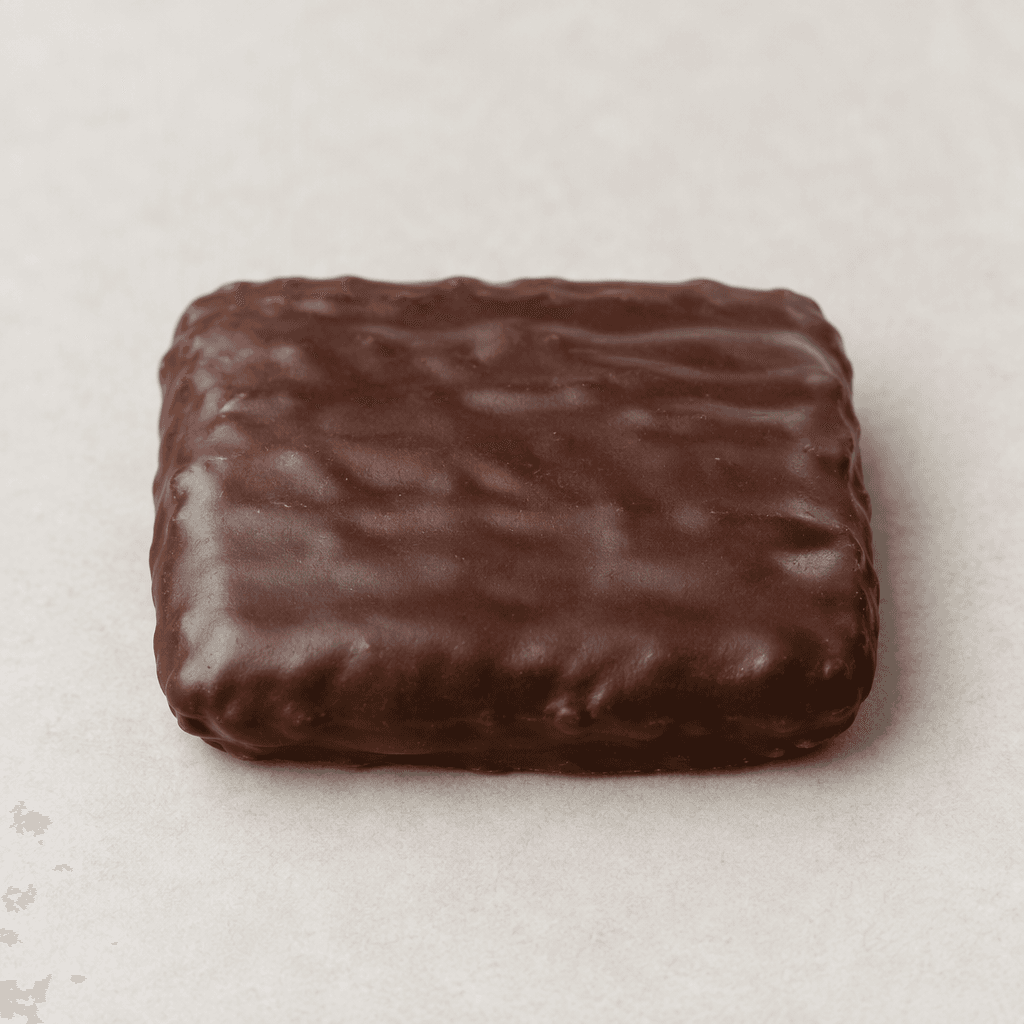
Chocolate-coated biscuit Calories
Sweet snack, combination of chocolate and biscuit
In season: Winter · Spring · Summer · Autumn
CALORIES
GI
POTASSIUM
FIBER
Quick answer
2 piece (medium) of Chocolate-coated biscuit (30 g) has 144 calories. That works out to 480 calories per 100 g. It contains 19.5 g of carbs, 1.8 g of protein, 6.3 g of fat and 0.9 g of fiber. Its 0.1 mg of Copper covers 6% of the Daily Value. Its glycemic index is 65 (high), so it raises blood sugar quickly.
What is Chocolate-coated biscuit?
A chocolate-coated biscuit is a crisp baked biscuit covered with a layer of chocolate. The biscuit may be plain or lightly flavoured, and the coating can be thin or substantial; the result is a sweet, portable snack rather than a particular regional dish.
It is commonly enjoyed with tea or coffee, packed for a quick break, or served alongside other biscuits. The smooth, sweet chocolate contrasts with the biscuit’s dry crunch. Nutritionally, it gets much of its energy from carbohydrates and fat, with comparatively little protein. If you want a lighter snack, have one or two pieces with fruit, or enjoy it after a meal instead of pairing it with another sweet.
Chocolate-coated biscuit Nutrition Facts
Selected: 100 g
480
KCAL / 100G
Carbs
65g
· 24% DV
Protein
6g
· 12% DV
Fat
21g
· 27% DV
Fiber
3g
· 11% DV
DV is the share of the daily value covered, on a 2,000 kcal reference diet.
Calories come from: Carbs 55% · Protein 5% · Fat 40%
Chocolate-coated biscuit Vitamins & Minerals
Vitamins
B2
0.22mg · 17% DV
B1
0.18mg · 15% DV
B3
1.2mg · 8% DV
B5
0.4mg · 8% DV
Minerals
Sodium
270mg · 12% DV
Iron
2mg · 11% DV
Phosphorus
80mg · 11% DV
Zinc
1mg · 9% DV
How Nutritious Is Chocolate-coated biscuit?
Nutrient density
Low
How many vitamins, minerals and how much fiber this food carries per calorie. A high score means a lot of nutrition for few calories.
Satiety score
Low
An EatBetter score computed from fiber, protein and calorie density. A high score means staying full longer on the same calories.
Both scores are calculated per 100 g and do not change with the selected portion. The satiety score is EatBetter's own calculation, not a clinical measure.
Chocolate-coated biscuit Glycemic Index
GLYCEMIC INDEX
GLYCEMIC LOAD
Accounts for portion size — a more realistic measure than GI alone.
How to Burn Off Chocolate-coated biscuit
To burn the 480 calories in 100 g:
🚶
Walking (5 km/h)
🏃
Running (8 km/h)
🚴
Cycling
🏊
Swimming
Times are calculated with the MET equation for a 70 kg adult. Actual burn varies with your weight, age and pace.
Is Chocolate-coated biscuit Processed?
NOVA 3
Processed
1. Unprocessed
2. Minimally Processed
3. Processed
4. Ultra-Processed
NOVA classifies foods into 4 groups by industrial processing. NOVA 1 (unprocessed) is the healthiest.
Does Chocolate-coated biscuit Contain Allergens?
Contains these allergens:
Which Diets Is Chocolate-coated biscuit Good For?
Vegan
— Not suitable
Vegetarian
✓ Suitable
Gluten-Free
— Not suitable
Dairy-Free
— Not suitable
Mediterranean
— Not suitable
Paleo
— Not suitable
Whole30
— Not suitable
DASH
— Not suitable
Keto
— Not suitable
Low FODMAP
— Not suitable
Chocolate-coated biscuit Fat Profile
SATURATED
11g
MONOUNSATURATED
6g
POLYUNSATURATED
2.5g
Omega 6:3 ratio 30:1
Above the ideal 4:1 (30:1).
Compare Chocolate-coated biscuit
Foods Similar to Chocolate-coated biscuit
Frequently Asked Questions About Chocolate-coated biscuit
What is a chocolate-coated biscuit made of?
A chocolate-coated biscuit is a baked biscuit covered with a chocolate or chocolate-style coating. Recipes vary, and the coating may contain cocoa, sugar, milk ingredients, and vegetable fats alongside the biscuit’s flour-based ingredients.
How do you make chocolate-coated biscuits at home?
Dip plain biscuits into melted chocolate, then place them on baking paper until the coating sets. For an even shell, let excess chocolate drip off before setting the biscuits aside, and avoid handling them while the coating is soft.
Why does the chocolate coating on a chocolate-coated biscuit turn white?
The pale or cloudy film is usually chocolate bloom, caused when cocoa butter or sugar moves to the surface after temperature changes or moisture exposure. It can affect appearance and texture, but a white coating alone does not prove the biscuit has spoiled.
Should chocolate-coated biscuits be kept in the fridge?
Usually, no: store chocolate-coated biscuits in a cool, dry cupboard in an airtight container. Refrigeration can introduce condensation when the pack is taken out, which may soften the biscuit or leave marks on the chocolate.
Can you freeze chocolate-coated biscuits?
Yes, chocolate-coated biscuits can be frozen in a well-sealed container, though thawing may affect the coating’s appearance or crispness. Let them come back to room temperature while still sealed to limit condensation on the chocolate.
Can dogs eat chocolate-coated biscuits?
No, do not give chocolate-coated biscuits to dogs. Chocolate can be toxic to dogs, and the biscuit may also contain ingredients that are unsuitable for them; contact a veterinarian promptly if your dog has eaten chocolate.
Why does chocolate slide off a chocolate-coated biscuit?
Chocolate can slide off when it is too warm or applied to a biscuit that is damp or greasy. Make sure the biscuit is dry, let excess chocolate drip away, and leave the coating undisturbed until fully set.
Can you dunk a chocolate-coated biscuit in tea or coffee?
Yes, but a chocolate-coated biscuit may soften quickly in a hot drink, and its coating can melt into the cup. A brief dip works better than leaving it submerged, especially with a thin or crisp biscuit.
Does a chocolate-coated biscuit contain real chocolate?
Not always. Some chocolate-coated biscuits use chocolate made with cocoa butter, while others use a cocoa-based confectionery coating made with different fats. The product’s ingredient list is the way to distinguish the two.
How can you stop chocolate-coated biscuits from sticking together?
Keep chocolate-coated biscuits in a single layer or separate layers with baking paper once the coating has set. Store them in a cool, dry place; warm conditions can soften the chocolate and make the biscuits stick.
Have another question about Chocolate-coated biscuit?
Ask the AI nutrition coach — calories, portions, alternatives and more, answered in seconds in the app.

Scan calories with your camera
Instant AI nutrition analysis

Nutrition data compiled from USDA FoodData Central and scientific sources.