

Ready & Packaged Foods
All →Vegetables & Legumes
All →Desserts & Confectionery
All →Meat & Protein
All →Grains & Bakery
All →Beverages
All →Milk & Dairy
All →

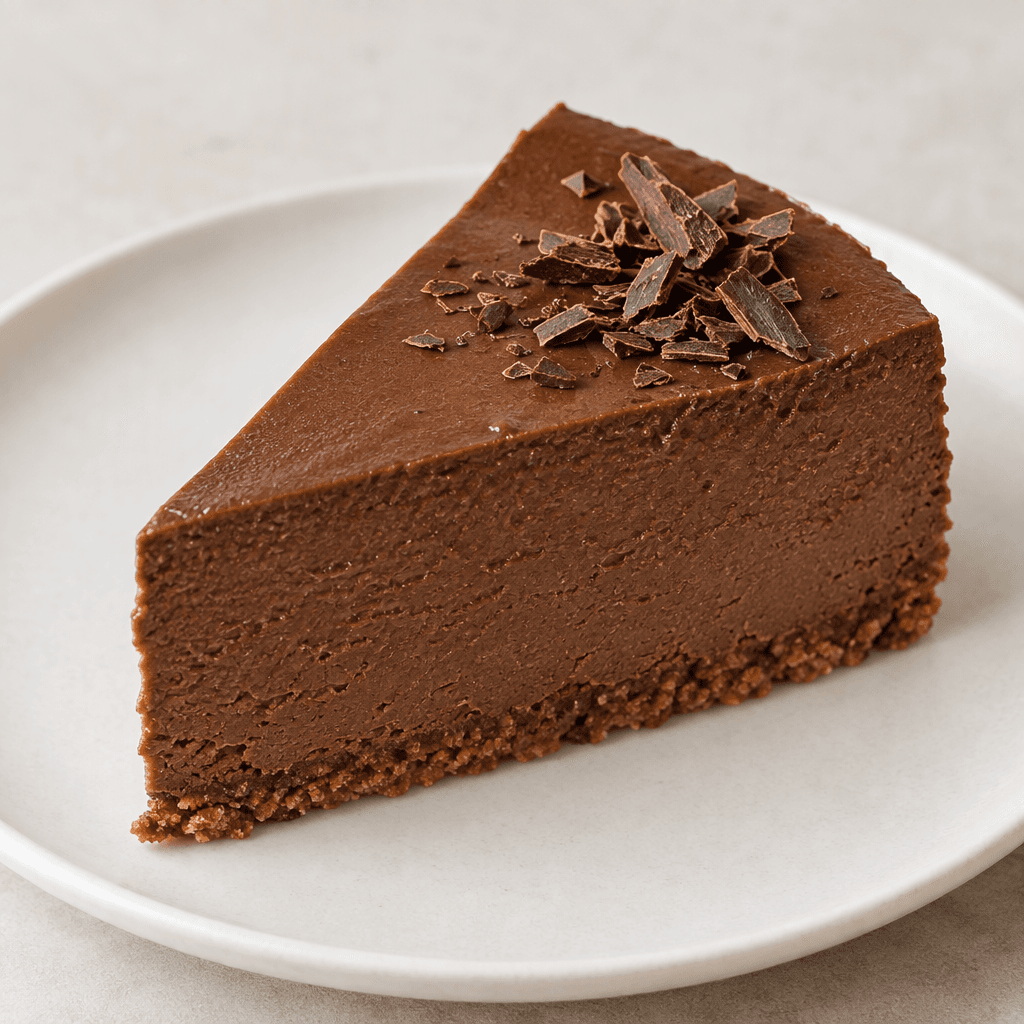
Chocolate Cheesecake Calories
Rich chocolate flavor, creamy cheesecake
In season: Spring · Summer · Autumn · Winter
CALORIES
GI
POTASSIUM
FIBER
Quick answer
1 slice (medium) of Chocolate Cheesecake (90 g) has 306 calories. That works out to 340 calories per 100 g. It contains 28.8 g of carbs, 5.6 g of protein, 18 g of fat and 1.9 g of fiber. Its 0.2 mg of Copper covers 18% of the Daily Value. Its glycemic index is 45 (medium), so it raises blood sugar at a moderate pace.
What is Chocolate Cheesecake?
Chocolate cheesecake pairs a crumb crust with a rich, creamy filling flavoured with chocolate. Modern baked cheesecake is especially associated with American bakeries, though recipes vary in their choice of cheese, crust and chocolate.
Its smooth, dense texture and deep chocolate taste make a modest slice feel like a substantial dessert. In the US and elsewhere, it is often served chilled in cafés or at celebrations; at home, it goes well with coffee, berries or a little extra chocolate. At 340 calories per 100 g, it is an energy-dense treat, so a smaller slice with fresh fruit is a simple way to keep dessert lighter.
Chocolate Cheesecake Nutrition Facts
Selected: 100 g
340
KCAL / 100G
Carbs
32g
· 12% DV
Protein
6.2g
· 12% DV
Fat
20g
· 26% DV
Fiber
2.1g
· 8% DV
DV is the share of the daily value covered, on a 2,000 kcal reference diet.
Calories come from: Carbs 38% · Protein 7% · Fat 55%
Chocolate Cheesecake Vitamins & Minerals
Vitamins
B2
0.18mg · 14% DV
Biotin
4.2µg · 14% DV
Vitamin A
120µg · 13% DV
B5
0.5mg · 10% DV
Minerals
Phosphorus
110mg · 16% DV
Selenium
7µg · 13% DV
Calcium
95mg · 10% DV
Zinc
1mg · 9% DV
How Nutritious Is Chocolate Cheesecake?
Nutrient density
Low
How many vitamins, minerals and how much fiber this food carries per calorie. A high score means a lot of nutrition for few calories.
Satiety score
Low
An EatBetter score computed from fiber, protein and calorie density. A high score means staying full longer on the same calories.
Both scores are calculated per 100 g and do not change with the selected portion. The satiety score is EatBetter's own calculation, not a clinical measure.
Chocolate Cheesecake Glycemic Index
GLYCEMIC INDEX
GLYCEMIC LOAD
Accounts for portion size — a more realistic measure than GI alone.
How to Burn Off Chocolate Cheesecake
To burn the 340 calories in 100 g:
🚶
Walking (5 km/h)
🏃
Running (8 km/h)
🚴
Cycling
🏊
Swimming
Times are calculated with the MET equation for a 70 kg adult. Actual burn varies with your weight, age and pace.
Is Chocolate Cheesecake Processed?
NOVA 3
Processed
1. Unprocessed
2. Minimally Processed
3. Processed
4. Ultra-Processed
NOVA classifies foods into 4 groups by industrial processing. NOVA 1 (unprocessed) is the healthiest.
Does Chocolate Cheesecake Contain Allergens?
Contains these allergens:
Which Diets Is Chocolate Cheesecake Good For?
Vegan
— Not suitable
Vegetarian
— Not suitable
Gluten-Free
— Not suitable
Dairy-Free
— Not suitable
Mediterranean
— Not suitable
Paleo
— Not suitable
Whole30
— Not suitable
DASH
— Not suitable
Keto
— Not suitable
Low FODMAP
— Not suitable
Chocolate Cheesecake Fat Profile
SATURATED
11.2g
MONOUNSATURATED
5.8g
POLYUNSATURATED
1.1g
Omega 6:3 ratio 7.6:1
Above the ideal 4:1 (7.6:1).
Compare Chocolate Cheesecake
Foods Similar to Chocolate Cheesecake
Frequently Asked Questions About Chocolate Cheesecake
How do you make chocolate cheesecake?
Chocolate cheesecake is made by mixing melted chocolate into a cream-cheese filling and baking it over a crumb crust. Use softened ingredients and avoid overbeating the filling; chilling the finished cake thoroughly helps it set and makes cleaner slices.
Does chocolate cheesecake need to be baked?
No, chocolate cheesecake does not always need to be baked. Baked versions usually contain eggs and have a dense, set texture, while no-bake versions firm up in the refrigerator and often have a lighter, mousse-like filling.
Why does chocolate cheesecake crack on top?
Chocolate cheesecake commonly cracks when it is overbaked, whipped until airy, or cooled too quickly. Take it out while the center still has a slight wobble, then let it cool gradually; the residual heat finishes setting the middle.
What kind of chocolate works best in chocolate cheesecake?
Dark or semisweet chocolate gives chocolate cheesecake a deep cocoa flavor without making it overly sweet. Milk chocolate produces a sweeter, milder filling, so adjust added sugar to suit the chocolate rather than treating every type as interchangeable.
How do you get a smooth chocolate cheesecake filling?
For a smooth chocolate cheesecake filling, bring the cream cheese and other chilled ingredients to room temperature before mixing. Beat on low speed only until combined, and let melted chocolate cool slightly before adding so it does not seize or create lumps.
Why is the crust on my chocolate cheesecake crumbly?
A chocolate cheesecake crust crumbles when the crumbs are too coarse, there is not enough melted butter to bind them, or the base was not pressed firmly into the pan. Pack the crumbs tightly and let the crust cool before adding the filling.
Can you freeze chocolate cheesecake?
Yes, chocolate cheesecake freezes well. Chill it first, then wrap whole or individual portions airtight to protect them from freezer odors. Thaw it in the refrigerator; freezing and thawing can soften toppings, so add fresh garnishes afterward.
How long does chocolate cheesecake last in the fridge?
Chocolate cheesecake keeps for several days when covered and refrigerated promptly. Because its filling contains dairy, do not leave it sitting out for extended periods; return uneaten slices to the refrigerator rather than storing them at room temperature.
What should you serve with chocolate cheesecake?
Serve chocolate cheesecake with berries, a lightly sweetened fruit sauce, or plain coffee. Tart raspberries or strawberries balance the rich chocolate filling, while extra chocolate sauce can make an already sweet slice feel heavier.
What is the difference between chocolate cheesecake and chocolate mousse cake?
Chocolate cheesecake has a cream-cheese-based filling, which gives it a tangy, dense texture; chocolate mousse cake relies on an airy chocolate mousse. Cheesecake is commonly baked or chilled on a crumb crust, while mousse cake is usually lighter and layered.
Have another question about Chocolate Cheesecake?
Ask the AI nutrition coach — calories, portions, alternatives and more, answered in seconds in the app.

Scan calories with your camera
Instant AI nutrition analysis

Nutrition data compiled from USDA FoodData Central and scientific sources.