

Ready & Packaged Foods
All →Vegetables & Legumes
All →Desserts & Confectionery
All →Meat & Protein
All →Grains & Bakery
All →Beverages
All →Milk & Dairy
All →

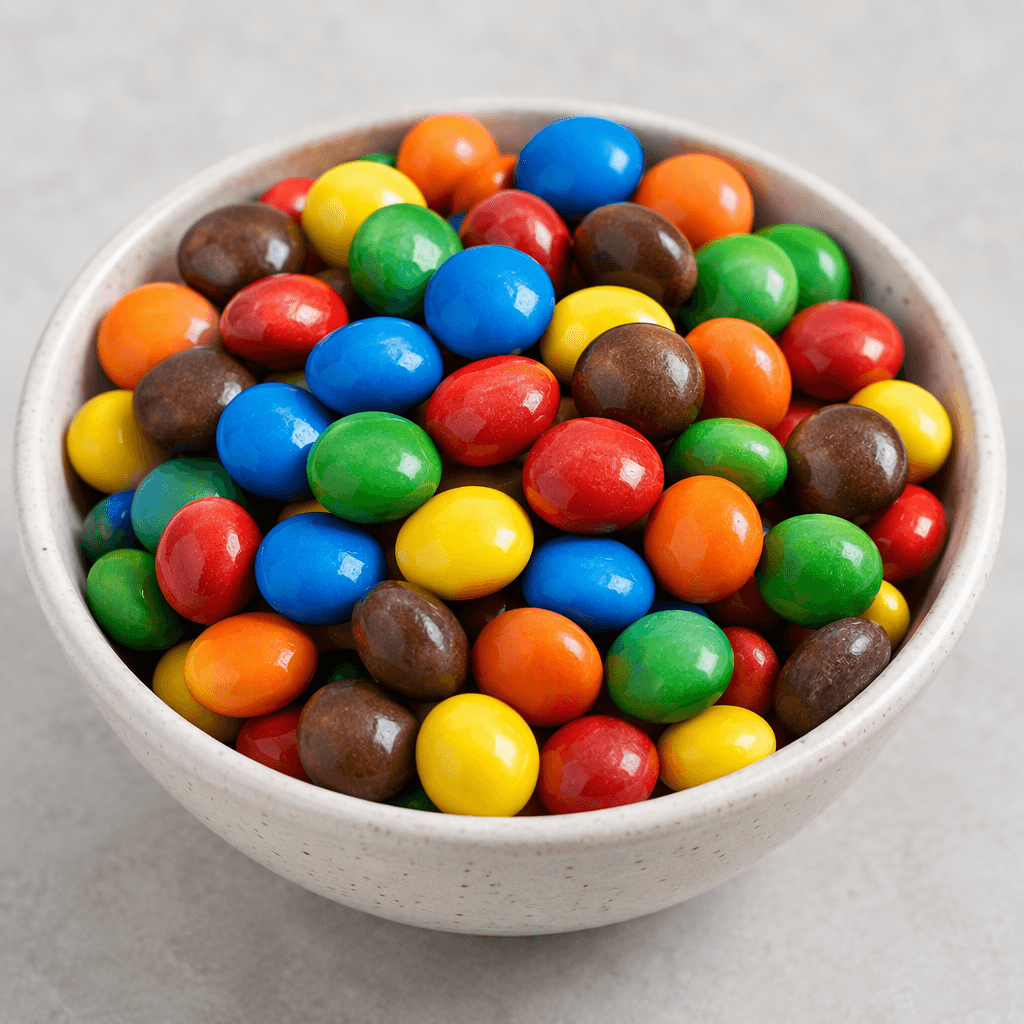
Chocolate Candy Coated Calories
Colorful candy-coated chocolate, high sugar and fat
CALORIES
GI
POTASSIUM
FIBER
Quick answer
1 pack (medium) of Chocolate Candy Coated (35 g) has 168 calories. That works out to 480 calories per 100 g. It contains 25.9 g of carbs, 1.5 g of protein, 6.8 g of fat and 0.7 g of fiber. Its 0.1 mg of Copper covers 8% of the Daily Value. Its glycemic index is 70 (high), so it raises blood sugar quickly.
What is Chocolate Candy Coated?
Chocolate candy-coated sweets are small pieces of chocolate enclosed in a firm, glossy sugar shell, often in a mix of bright colours. They’re commonly eaten by the handful as a casual treat, shared at parties or tucked into lunchboxes; the crisp shell gives way to a softer chocolate centre. They also make a cheerful topping for cakes, biscuits and ice cream. These sweets are high in sugar and fat, with little protein or fibre, so they’re best enjoyed as an occasional treat rather than a filling snack. A small portion alongside coffee or tea can satisfy a sweet craving without making them the centre of a meal.
Chocolate Candy Coated Nutrition Facts
Selected: 100 g
480
KCAL / 100G
Carbs
74g
· 27% DV
Protein
4.2g
· 8% DV
Fat
19.5g
· 25% DV
Fiber
2.1g
· 8% DV
DV is the share of the daily value covered, on a 2,000 kcal reference diet.
Calories come from: Carbs 61% · Protein 3% · Fat 36%
Chocolate Candy Coated Vitamins & Minerals
Vitamins
B2
0.11mg · 8% DV
B12
0.2µg · 8% DV
Biotin
1.5µg · 5% DV
B5
0.2mg · 4% DV
Minerals
Phosphorus
80mg · 11% DV
Zinc
1mg · 9% DV
Magnesium
35mg · 8% DV
Calcium
60mg · 6% DV
How Nutritious Is Chocolate Candy Coated?
Nutrient density
Low
How many vitamins, minerals and how much fiber this food carries per calorie. A high score means a lot of nutrition for few calories.
Satiety score
Low
An EatBetter score computed from fiber, protein and calorie density. A high score means staying full longer on the same calories.
Both scores are calculated per 100 g and do not change with the selected portion. The satiety score is EatBetter's own calculation, not a clinical measure.
Chocolate Candy Coated Glycemic Index
GLYCEMIC INDEX
GLYCEMIC LOAD
Accounts for portion size — a more realistic measure than GI alone.
How to Burn Off Chocolate Candy Coated
To burn the 480 calories in 100 g:
🚶
Walking (5 km/h)
🏃
Running (8 km/h)
🚴
Cycling
🏊
Swimming
Times are calculated with the MET equation for a 70 kg adult. Actual burn varies with your weight, age and pace.
Is Chocolate Candy Coated Processed?
NOVA 4
Ultra-Processed
1. Unprocessed
2. Minimally Processed
3. Processed
4. Ultra-Processed
NOVA classifies foods into 4 groups by industrial processing. NOVA 1 (unprocessed) is the healthiest.
Does Chocolate Candy Coated Contain Allergens?
Contains these allergens:
Which Diets Is Chocolate Candy Coated Good For?
Vegan
— Not suitable
Vegetarian
✓ Suitable
Gluten-Free
— Not suitable
Dairy-Free
— Not suitable
Mediterranean
— Not suitable
Paleo
— Not suitable
Whole30
— Not suitable
DASH
— Not suitable
Keto
— Not suitable
Low FODMAP
— Not suitable
Chocolate Candy Coated Fat Profile
SATURATED
11.5g
MONOUNSATURATED
5.2g
POLYUNSATURATED
0.5g
Omega 6:3 ratio 15:1
Above the ideal 4:1 (15:1).
Compare Chocolate Candy Coated
Foods Similar to Chocolate Candy Coated
Frequently Asked Questions About Chocolate Candy Coated
What are chocolate candy-coated chocolates made of?
Chocolate candy-coated chocolates have a chocolate center surrounded by a hard, brightly colored sugar shell. The shell gives each piece its crisp outer bite and helps keep the chocolate pieces from sticking together.
Are chocolate candy-coated chocolates the same as M&M’s?
They are the same general type of sweet, but they are not necessarily the same product. Brands can differ in their chocolate recipe, shell texture, colors, and manufacturing process.
Can you bake chocolate candy-coated chocolates in cookies?
Yes, you can bake them into cookies, though the shells may crack and the colors can spread in the oven. For brighter, neater decorations, press a few pieces onto the cookies after baking.
Do the different colors of chocolate candy-coated chocolates taste different?
Usually not; the colors are mainly a feature of the sugar shells, while the chocolate centers have the same flavor. A special flavor variation would be identified by the product variety, not simply by its color.
Do chocolate candy-coated chocolates melt in heat?
Yes, the chocolate center can soften or melt in warm conditions even though the sugar shell is hard. Keep the sweets out of direct sun and hot cars to prevent them from becoming misshapen or stuck together.
How should you store chocolate candy-coated chocolates?
Store chocolate candy-coated chocolates in a cool, dry place, away from sunlight, and reseal the package after opening. Humidity can make the shells sticky, while heat can soften the chocolate inside.
Can the colors from chocolate candy-coated chocolates bleed onto frosting?
Yes, moisture in frosting can dissolve some of the colored sugar shell, especially if the pieces sit on it for a long time. Add them shortly before serving to keep the colors brighter and more distinct.
Are chocolate candy-coated chocolates a choking hazard for toddlers?
Yes, their small, hard, round shape can pose a choking risk for toddlers and other young children. Consider the child’s age and chewing ability, and supervise them while they eat.
Can people with diabetes eat chocolate candy-coated chocolates?
Yes, but the sugar in chocolate candy-coated chocolates can raise blood glucose. Keep the portion small and count it as part of the meal’s carbohydrates; follow your individual diabetes meal plan.
Can chocolate candy-coated chocolates cause tooth decay?
Yes, frequent exposure to their sugar can contribute to tooth decay, particularly when the sweets are nibbled throughout the day. Eating them in one sitting rather than grazing reduces how often teeth are exposed to sugar.
Have another question about Chocolate Candy Coated?
Ask the AI nutrition coach — calories, portions, alternatives and more, answered in seconds in the app.

Scan calories with your camera
Instant AI nutrition analysis

Nutrition data compiled from USDA FoodData Central and scientific sources.