

Ready & Packaged Foods
All →Vegetables & Legumes
All →Desserts & Confectionery
All →Meat & Protein
All →Grains & Bakery
All →Beverages
All →Milk & Dairy
All →

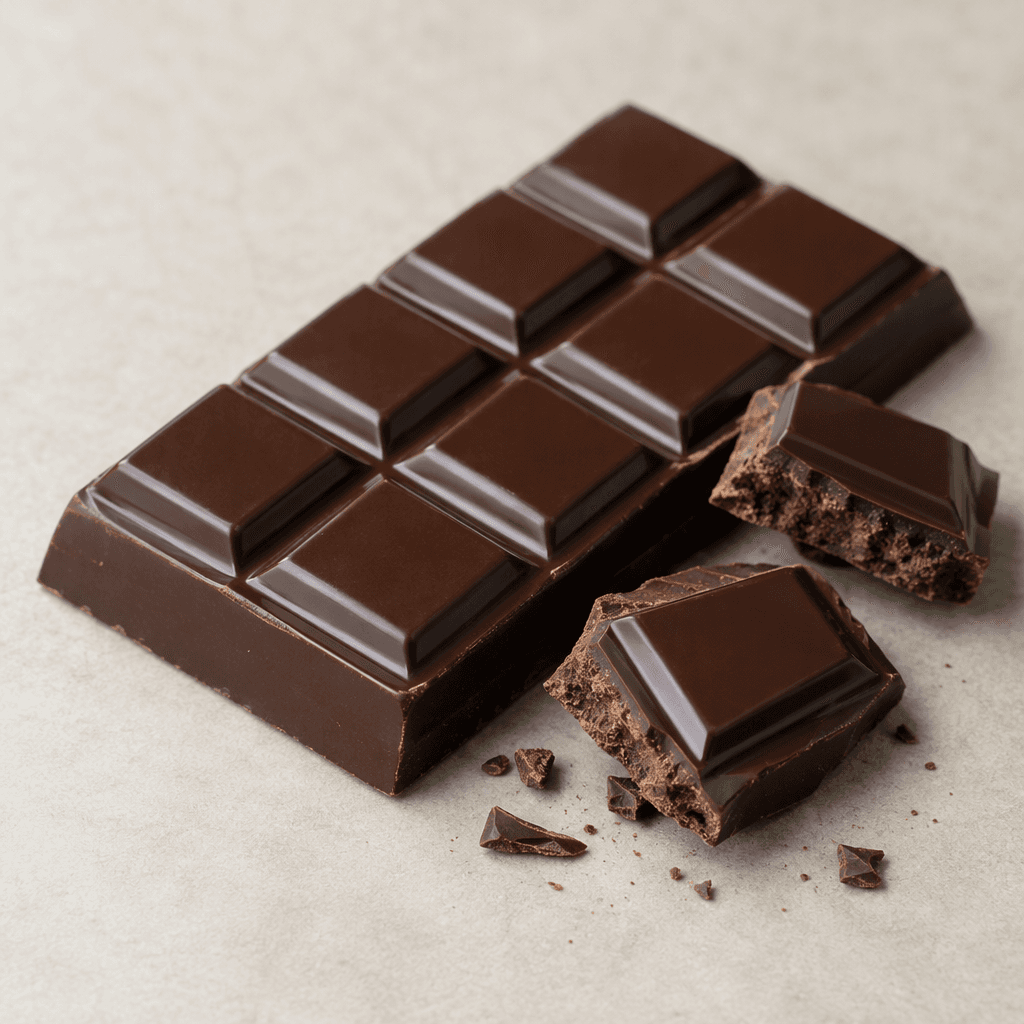
Chocolate Bar Calories
Sweet, energy-dense, cocoa-based
In season: Winter · Spring · Summer · Autumn
CALORIES
GI
POTASSIUM
FIBER
Quick answer
1 piece (medium) of Chocolate Bar (40 g) has 214 calories. That works out to 535 calories per 100 g. It contains 23.8 g of carbs, 2.9 g of protein, 12.1 g of fat and 1.4 g of fiber. Its 0.3 mg of Copper covers 31% of the Daily Value. Its glycemic index is 49 (medium), so it raises blood sugar at a moderate pace.
What is Chocolate Bar?
A chocolate bar is a solid, segmented confection usually made with cocoa mass, cocoa butter and sugar; some varieties also contain milk, fillings or added ingredients. The balance of cocoa and sweetness varies, from darker bars to sweeter, creamier ones.
It has a sweet, cocoa-forward flavour and a firm snap that softens and melts in the mouth. Around the world, it is eaten as a quick snack, shared in squares, or chopped into baking and desserts. Chocolate bars are energy-dense, with much of their energy coming from fat and carbohydrates; they provide comparatively modest amounts of protein and fibre. For a lighter snack, enjoy a small piece with fruit or alongside unsweetened tea or coffee.
Chocolate Bar Nutrition Facts
Selected: 100 g
535
KCAL / 100G
Carbs
59.4g
· 22% DV
Protein
7.3g
· 15% DV
Fat
30.2g
· 39% DV
Fiber
3.4g
· 12% DV
DV is the share of the daily value covered, on a 2,000 kcal reference diet.
Calories come from: Carbs 44% · Protein 5% · Fat 51%
Chocolate Bar Vitamins & Minerals
Vitamins
B2
0.25mg · 19% DV
B12
0.2µg · 8% DV
Biotin
2µg · 7% DV
B1
0.07mg · 6% DV
Minerals
Copper
1mg · 111% DV
Phosphorus
180mg · 26% DV
Magnesium
60mg · 14% DV
Calcium
110mg · 11% DV
How Nutritious Is Chocolate Bar?
Nutrient density
Low
How many vitamins, minerals and how much fiber this food carries per calorie. A high score means a lot of nutrition for few calories.
Satiety score
Low
An EatBetter score computed from fiber, protein and calorie density. A high score means staying full longer on the same calories.
Both scores are calculated per 100 g and do not change with the selected portion. The satiety score is EatBetter's own calculation, not a clinical measure.
Chocolate Bar Glycemic Index
GLYCEMIC INDEX
GLYCEMIC LOAD
Accounts for portion size — a more realistic measure than GI alone.
How to Burn Off Chocolate Bar
To burn the 535 calories in 100 g:
🚶
Walking (5 km/h)
🏃
Running (8 km/h)
🚴
Cycling
🏊
Swimming
Times are calculated with the MET equation for a 70 kg adult. Actual burn varies with your weight, age and pace.
Is Chocolate Bar Processed?
NOVA 3
Processed
1. Unprocessed
2. Minimally Processed
3. Processed
4. Ultra-Processed
NOVA classifies foods into 4 groups by industrial processing. NOVA 1 (unprocessed) is the healthiest.
Does Chocolate Bar Contain Allergens?
Contains these allergens:
Which Diets Is Chocolate Bar Good For?
Vegan
— Not suitable
Vegetarian
✓ Suitable
Gluten-Free
— Not suitable
Dairy-Free
— Not suitable
Mediterranean
— Not suitable
Paleo
— Not suitable
Whole30
— Not suitable
DASH
— Not suitable
Keto
— Not suitable
Low FODMAP
— Not suitable
Chocolate Bar Fat Profile
SATURATED
18.5g
MONOUNSATURATED
8.2g
POLYUNSATURATED
1.2g
Omega 6:3 ratio 20:1
Above the ideal 4:1 (20:1).
Compare Chocolate Bar
Foods Similar to Chocolate Bar
Frequently Asked Questions About Chocolate Bar
What is a chocolate bar made of?
A chocolate bar is typically made from cocoa solids, cocoa butter and sugar; milk chocolate also includes milk ingredients. Recipes vary, and bars may contain fillings or additions such as nuts, caramel or crisped grains, so check the product’s ingredient list if you need specifics.
Does a chocolate bar contain caffeine?
Yes, a chocolate bar contains some caffeine because cocoa naturally contains it. The amount varies with the type and cocoa content, and dark chocolate generally contains more than milk chocolate. Chocolate also contains the related stimulant theobromine.
Why won't my chocolate bar melt smoothly?
A chocolate bar can turn thick or grainy if it overheats or comes into contact with even a little water. Chop it evenly, melt it gently over barely simmering water, and keep the bowl and utensils completely dry.
How long does an opened chocolate bar last?
An opened chocolate bar can keep for weeks or longer when wrapped tightly and stored in a cool, dry place, though its flavor may fade over time. Keep it away from strong odors and heat, and discard it if it develops an unusual smell or taste.
Can you use a chocolate bar instead of chocolate chips in cookies?
Yes, a chopped chocolate bar works in place of chocolate chips in cookies. Bar pieces often melt into less uniform pools, while chips are designed to hold their shape better; chop the bar into similarly sized pieces for more even distribution.
Is a chocolate bar the same as a candy bar?
Not always. A chocolate bar may be plain chocolate, while “candy bar” often means a bar with chocolate plus a filling or layers such as nougat, caramel or nuts. Usage varies by country, so the name alone does not tell you its ingredients.
Can you put a chocolate bar in the fridge?
You can refrigerate a chocolate bar, but a cool, dry cupboard is usually better. Fridge moisture can cause sugar bloom, and nearby foods can transfer odors. If heat makes refrigeration necessary, seal the bar well and let it warm before unwrapping.
Can you eat a chocolate bar with white spots?
Usually, yes: white spots or a pale coating are often fat or sugar bloom caused by temperature changes or moisture, not mold. The chocolate may taste or feel different, but discard it if it is damp, smells off or shows fuzzy growth.
Can a chocolate bar keep you awake?
It can, especially if you eat it close to bedtime and are sensitive to caffeine or theobromine. A chocolate bar contains less caffeine than many caffeinated drinks, but cocoa’s stimulants may still affect sleep for some people.
Can chocolate bars be used for baking?
Yes, chocolate bars can be chopped, melted or grated for baking. Plain bars are easiest to use; filled bars can add unexpected sweetness or texture, so choose one that suits the recipe and adjust added sugar if needed.
Have another question about Chocolate Bar?
Ask the AI nutrition coach — calories, portions, alternatives and more, answered in seconds in the app.

Scan calories with your camera
Instant AI nutrition analysis

Nutrition data compiled from USDA FoodData Central and scientific sources.