

Ready & Packaged Foods
All →Vegetables & Legumes
All →Desserts & Confectionery
All →Meat & Protein
All →Grains & Bakery
All →Beverages
All →Milk & Dairy
All →

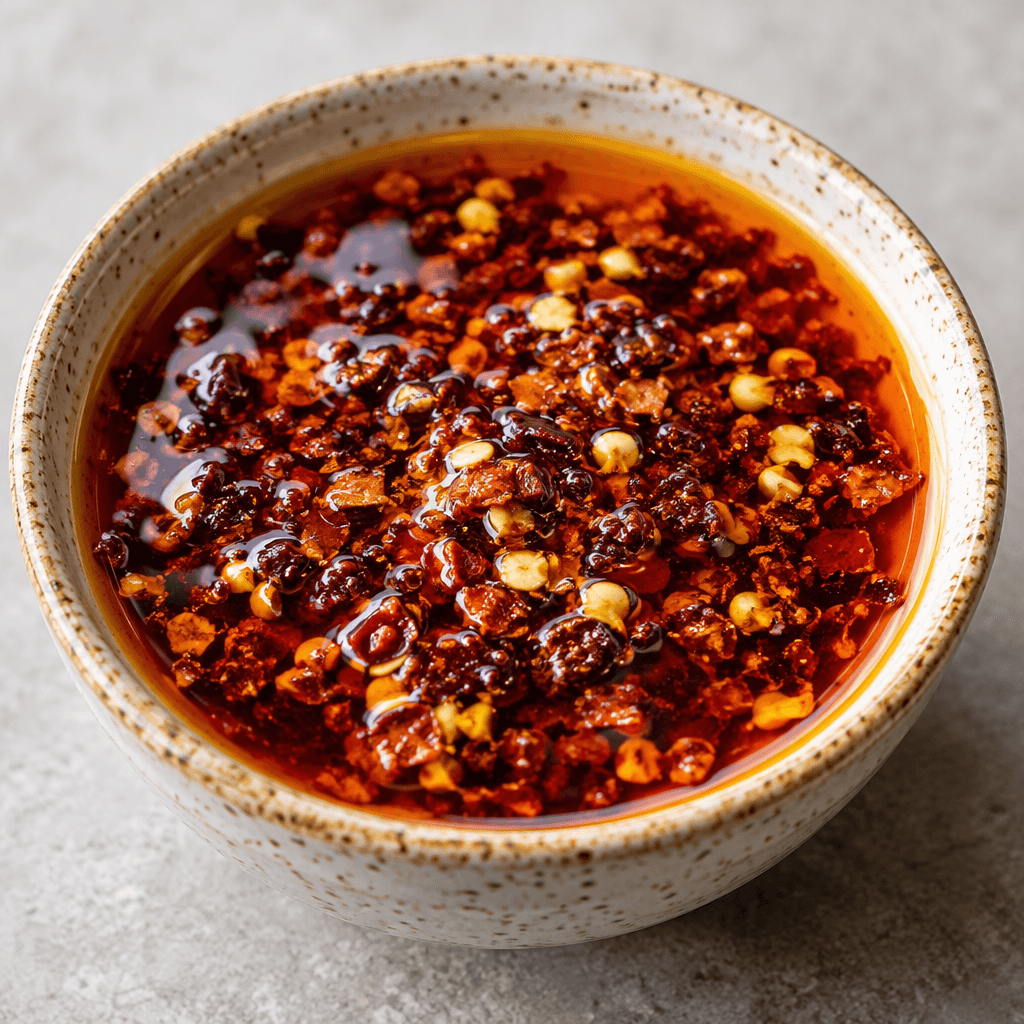
Chili Oil Calories
Spicy oil, adds flavor to dishes, high energy
In season: Spring · Summer · Autumn · Winter
CALORIES
GI
POTASSIUM
FIBER
Quick answer
1 tablespoon (medium) of Chili Oil (14 g) has 126 calories. That works out to 900 calories per 100 g. It contains 0 g of carbs, 0 g of protein, 14 g of fat and 0 g of fiber. Its 8.4 µg of Vitamin K covers 7% of the Daily Value. Its glycemic index is 0 (low), so it raises blood sugar slowly.
What is Chili Oil?
Chili oil is a seasoned oil infused with dried chillies, often with flakes and seeds left in the bottle or bowl. Recipes vary: some are simply oil and chilli, while others include aromatics and spices. It is especially familiar in Chinese cooking, including Sichuan-style dishes, and is now used widely as a table condiment.
Its heat can range from gently warming to fiery, with a rich, glossy texture and bursts of chilli from the solids. Drizzle it over noodles, dumplings, eggs, soups or roasted vegetables, or stir a little into a dipping sauce. It is almost entirely fat, so a small amount brings plenty of flavour and energy. Start with a little and add more to taste; a cooling, fresh accompaniment can balance the heat.
Chili Oil Nutrition Facts
Selected: 100 g
900
KCAL / 100G
Carbs
0g
· 0% DV
Protein
0g
· 0% DV
Fat
100g
· 128% DV
Fiber
0g
· 0% DV
DV is the share of the daily value covered, on a 2,000 kcal reference diet.
Calories come from: Carbs 0% · Protein 0% · Fat 100%
Chili Oil Vitamins & Minerals
Vitamins
Vitamin K
60µg · 50% DV
Vitamin E
5mg · 33% DV
Vitamin A
10µg · 1% DV
B1
0mg · 0% DV
Minerals
Calcium
1mg · 0% DV
Iron
0mg · 0% DV
Magnesium
1mg · 0% DV
Zinc
0mg · 0% DV
How Nutritious Is Chili Oil?
Nutrient density
Low
How many vitamins, minerals and how much fiber this food carries per calorie. A high score means a lot of nutrition for few calories.
Satiety score
Low
An EatBetter score computed from fiber, protein and calorie density. A high score means staying full longer on the same calories.
Both scores are calculated per 100 g and do not change with the selected portion. The satiety score is EatBetter's own calculation, not a clinical measure.
Chili Oil Glycemic Index
GLYCEMIC INDEX
GLYCEMIC LOAD
Accounts for portion size — a more realistic measure than GI alone.
How to Burn Off Chili Oil
To burn the 900 calories in 100 g:
🚶
Walking (5 km/h)
🏃
Running (8 km/h)
🚴
Cycling
🏊
Swimming
Times are calculated with the MET equation for a 70 kg adult. Actual burn varies with your weight, age and pace.
Is Chili Oil Processed?
NOVA 3
Processed
1. Unprocessed
2. Minimally Processed
3. Processed
4. Ultra-Processed
NOVA classifies foods into 4 groups by industrial processing. NOVA 1 (unprocessed) is the healthiest.
Does Chili Oil Contain Allergens?
No known major allergens
Which Diets Is Chili Oil Good For?
Vegan
✓ Suitable
Vegetarian
✓ Suitable
Gluten-Free
✓ Suitable
Dairy-Free
— Not suitable
Mediterranean
✓ Suitable
Paleo
✓ Suitable
Whole30
— Not suitable
DASH
— Not suitable
Keto
✓ Suitable
Low FODMAP
— Not suitable
Chili Oil Fat Profile
SATURATED
14g
MONOUNSATURATED
72g
POLYUNSATURATED
14g
Omega 6:3 ratio 65:1
Above the ideal 4:1 (65:1).
Compare Chili Oil
Foods Similar to Chili Oil
Frequently Asked Questions About Chili Oil
What is chili oil made of?
Chili oil is usually made by infusing cooking oil with dried chilies or chili flakes. Recipes may also include ingredients such as garlic, Sichuan peppercorns, or sesame, so its flavor and heat vary by style.
How do you make chili oil at home?
To make chili oil at home, put dried chili flakes in a heatproof bowl and pour hot, smoking-free oil over them. Avoid overheating the oil or scorching the flakes, then let the mixture cool before transferring it to a clean, covered jar.
How do you use chili oil on noodles?
Chili oil can be stirred into cooked noodles or spooned over them just before serving. Start with a small amount, then add soy sauce, vinegar, or other seasonings to balance its heat and bring the dish together.
What is the difference between chili oil and chili crisp?
Chili oil is primarily flavored oil, while chili crisp includes crunchy solids such as fried chili, garlic, or shallots. Both add heat, but chili crisp also brings a crisp texture to noodles, rice, and other dishes.
Does chili oil need to be refrigerated?
Commercial chili oil can usually be stored as directed on its packaging. Refrigerate homemade chili oil if it contains fresh garlic or other moist ingredients; oil made only with dried ingredients can generally be kept sealed in a cool, dark place.
Can you fry food in chili oil?
Yes, you can cook with chili oil, but it is better for gentle sautéing or finishing than for very high-heat frying. Chili particles can burn quickly and make the oil taste bitter, so add it late or use it as a drizzle.
Which chilies are best for making chili oil?
Dried chili flakes are a convenient choice for homemade chili oil, while whole dried chilies can give it a more layered aroma. Choose the variety for the heat and flavor you want, and combine mild and hot chilies for balance.
Why does homemade chili oil taste bitter?
Homemade chili oil often tastes bitter because the oil was too hot or the chili flakes burned. Pour hot, not smoking, oil over the flakes, or briefly warm them over low heat and remove them as soon as they darken.
Can you put chili oil on pizza?
Yes, chili oil works as a finishing drizzle on pizza. Add it after baking so the chili solids do not scorch, and use a light hand—the oil adds both concentrated heat and richness to each slice.
Is chili oil healthy?
Chili oil can add flavor in a small amount, but it is energy-dense because it is mostly oil. The chili may also trigger heartburn or reflux symptoms in some people, so reduce the amount if it bothers you.
Have another question about Chili Oil?
Ask the AI nutrition coach — calories, portions, alternatives and more, answered in seconds in the app.

Scan calories with your camera
Instant AI nutrition analysis

Nutrition data compiled from USDA FoodData Central and scientific sources.