

Ready & Packaged Foods
All →Vegetables & Legumes
All →Desserts & Confectionery
All →Meat & Protein
All →Grains & Bakery
All →Beverages
All →Milk & Dairy
All →

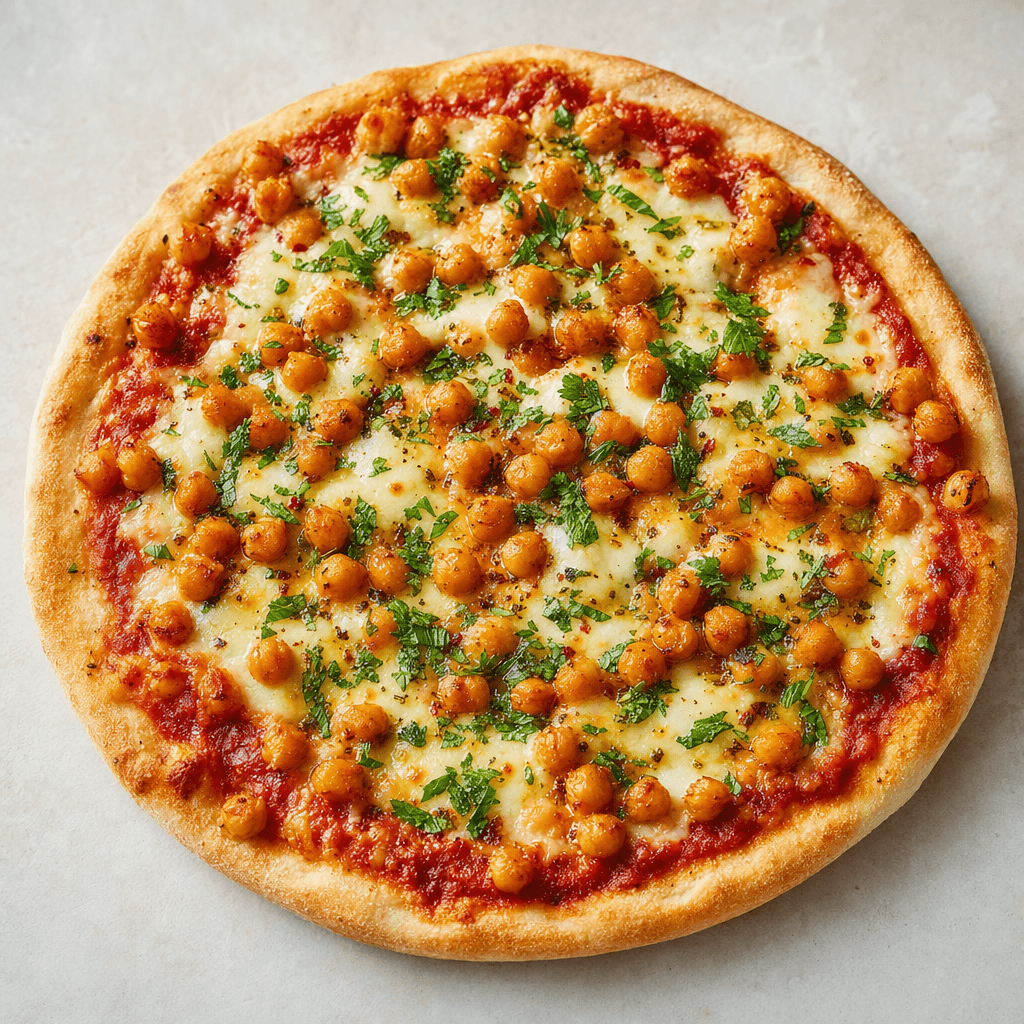
Chickpea pizza Calories
Detailed nutrition analysis with calories, glycemic index, vitamins and minerals.
CALORIES · 100 G
GI
POTASSIUM · 100 G
FIBER · 100 G
Quick answer
1 slice (medium) of Chickpea pizza (90 g) has 189 calories. That works out to 210 calories per 100 g. It contains 25.2 g of carbs, 7.7 g of protein, 5.9 g of fat and 4.7 g of fiber. Its 0.2 mg of Copper covers 22% of the Daily Value. Its glycemic index is 45 (medium), so it raises blood sugar at a moderate pace.
Chickpea pizza Nutrition Facts
Selected: 1 slice (medium) · 90 g
189
KCAL / 90G
Carbs
25.2g
· 9% DV
Protein
7.7g
· 15% DV
Fat
5.9g
· 8% DV
Fiber
4.7g
· 17% DV
DV is the share of the daily value covered, on a 2,000 kcal reference diet.
Calories come from: Carbs 55% · Protein 17% · Fat 28%
Chickpea pizza nutrition facts table · 1 slice (medium) (90 g)
| Nutrient | Amount | % DV |
|---|---|---|
| Calories | 189 kcal | |
| Total fat | 5.9 g | 8% |
| Saturated fat | 0.99 g | 5% |
| Trans fat | 0 g | |
| Sodium | 306 mg | 13% |
| Total carbohydrate | 25.2 g | 9% |
| Fiber | 4.7 g | 17% |
| Protein | 7.7 g | 15% |
Calories: Calories measure energy. Average daily need is 2,000 kcal. Excess calories are stored as fat, too few cause weight loss.
Carbs: Your body's primary energy source. The brain runs exclusively on carbs. Daily need: 275g.
Protein: Essential for muscle repair and cell growth. Daily need: 50g. Keeps you full and boosts metabolism.
Fat: Needed for hormone production and vitamin absorption. Daily need: 78g. Limit saturated fats, choose unsaturated.
Fiber: Critical for digestive health and satiety. Daily need: 28g. Stabilizes blood sugar, lowers cholesterol.

Log this food in EatBetter
100,000+ people use it
- Get your daily calorie target
- Snap your meal, log it in seconds
- See every vitamin and mineral

📸 Scan the code to get the app free.

How Many Calories in 1 Slice of Chickpea pizza?
| Serving | Amount | Calories |
|---|---|---|
| 1 slice (medium) | 90 g | 189 kcal |
| 1 slice (thin) | 60 g | 126 kcal |
| 100 g | 100 g | 210 kcal |
| 1 slice (thick) | 130 g | 273 kcal |
| 1 serving (medium) | 150 g | 315 kcal |
| 1 piece (large) | 180 g | 378 kcal |
| 2 slice (medium) | 180 g | 378 kcal |
| 1 piece (whole) | 350 g | 735 kcal |
Calculated from 210 calories per 100 g.
Frequently Asked Questions About Chickpea pizza
What is chickpea pizza made of?
Chickpea pizza is made with chickpeas in the crust, as a topping, or both. Some recipes use chickpea flour mixed into a batter for the base, while others use a conventional pizza dough topped with cooked chickpeas.
Can you make chickpea pizza with chickpea flour?
Yes, chickpea pizza can be made with chickpea flour. It is often mixed with water and seasonings to make a batter-style base; this differs from using chickpeas as a topping on regular pizza dough.
Does chickpea pizza taste like chickpeas?
Yes, chickpea pizza can have a mild, nutty chickpea flavor, especially when the crust is made mainly from chickpea flour. Tomato sauce, herbs, vegetables, and cheese can balance that taste without masking it completely.
How do you stop chickpea pizza crust from falling apart?
To keep chickpea pizza crust together, make sure the batter is thick enough and cook the base until it has set before adding toppings or lifting it. Follow the recipe’s binder instructions, since some versions use egg while others rely on the batter and cooking method.
Can you make chickpea pizza with canned chickpeas?
Yes, canned chickpeas work as a topping for chickpea pizza. Drain and rinse them, then let them dry well before adding them so they do not bring excess liquid to the crust.
What toppings go well on chickpea pizza?
Tomato sauce, roasted vegetables, olives, herbs, and cheese pair well with chickpea pizza. If you are adding whole chickpeas, combine them with vegetables such as peppers or spinach and avoid piling on so much topping that the crust becomes soggy.
How is chickpea pizza different from regular pizza?
Chickpea pizza includes chickpeas in its base or toppings, while regular pizza usually has a wheat-based crust without chickpeas. A chickpea-flour base tends to have a different, denser texture and a nuttier flavor than traditional dough.
How should you store leftover chickpea pizza?
Store leftover chickpea pizza in a covered container in the refrigerator once it has cooled. Eat it within a few days, and reheat slices in an oven or skillet if you want the crust to stay firmer than it would in a microwave.
Can chickpea pizza be made without eggs?
Yes, chickpea pizza can be made without eggs. Many chickpea-flour crust recipes use a water-based batter, while some recipes rely on egg for binding; choose an egg-free recipe and cook the base until it is set before adding toppings.
Is chickpea pizza a healthy meal?
Chickpea pizza can be part of a balanced meal, particularly when it includes vegetables and a moderate amount of cheese. Chickpeas add fiber and plant protein, while large amounts of cheese or processed meat can make the meal higher in salt and saturated fat.
Chickpea pizza Vitamins & Minerals
Vitamins
B1
0.12mg · 10% DV
Folate
34.2µg · 9% DV
B6
0.12mg · 7% DV
Biotin
1.8µg · 6% DV
Minerals
Copper
0.2mg · 22% DV
Manganese
0.34mg · 15% DV
Phosphorus
99mg · 14% DV
Sodium
306mg · 13% DV
Potassium ⭐
234mg · 7% DV
Chickpea pizza Glycemic Index
GLYCEMIC INDEX
GLYCEMIC LOAD
Accounts for portion size — a more realistic measure than GI alone.
How to Burn Off Chickpea pizza
To burn the 189 calories in 1 slice (medium) (90 g):
🚶
Walking (5 km/h)
🏃
Running (8 km/h)
🚴
Cycling
🏊
Swimming
Times are calculated with the MET equation for a 70 kg adult. Actual burn varies with your weight, age and pace.
What is Chickpea pizza?
Chickpea pizza is a modern take on Italian-style pizza, bringing chickpeas into the crust, the topping, or both, depending on the recipe. It may be made with chickpea flour or with whole chickpeas alongside familiar ingredients such as tomato, vegetables and cheese; plant-based versions are also easy to make.
Serve it hot as a casual lunch or dinner, with a green salad or a simple dip. Chickpeas add protein and fibre: per 100 g, this pizza provides 8.5 g of protein and 5.2 g of fibre. For a lighter slice, load up on vegetables and go easy on richer toppings.
How Nutritious Is Chickpea pizza?
Nutrient density
High
How many vitamins, minerals and how much fiber this food carries per calorie. A high score means a lot of nutrition for few calories.
Satiety score
Medium
An EatBetter score computed from fiber, protein and calorie density. A high score means staying full longer on the same calories.
Both scores are calculated per 100 g and do not change with the selected portion. The satiety score is EatBetter's own calculation, not a clinical measure.
Is Chickpea pizza Processed?
NOVA 3
Processed
1. Unprocessed
2. Minimally Processed
3. Processed
4. Ultra-Processed
NOVA classifies foods into 4 groups by industrial processing. NOVA 1 (unprocessed) is the healthiest.
Does Chickpea pizza Contain Allergens?
No known major allergens
Which Diets Is Chickpea pizza Good For?
Vegan
✓ Suitable
Vegetarian
✓ Suitable
Gluten-Free
✓ Suitable
Dairy-Free
— Not suitable
Mediterranean
✓ Suitable
Paleo
— Not suitable
Whole30
— Not suitable
DASH
— Not suitable
Keto
— Not suitable
Low FODMAP
— Not suitable
Chickpea pizza Fat Profile
SATURATED
0.99g
MONOUNSATURATED
1.53g
POLYUNSATURATED
1.17g
Omega 6:3 ratio 12.4:1
Above the ideal 4:1 (12.4:1).
Compare Chickpea pizza
Foods Similar to Chickpea pizza
Have another question about Chickpea pizza?
Ask the AI nutrition coach — calories, portions, alternatives and more, answered in seconds in the app.

Scan calories with your camera
Instant AI nutrition analysis

Nutrition data compiled from USDA FoodData Central and scientific sources.