

Ready & Packaged Foods
All →Vegetables & Legumes
All →Desserts & Confectionery
All →Meat & Protein
All →Grains & Bakery
All →Beverages
All →Milk & Dairy
All →

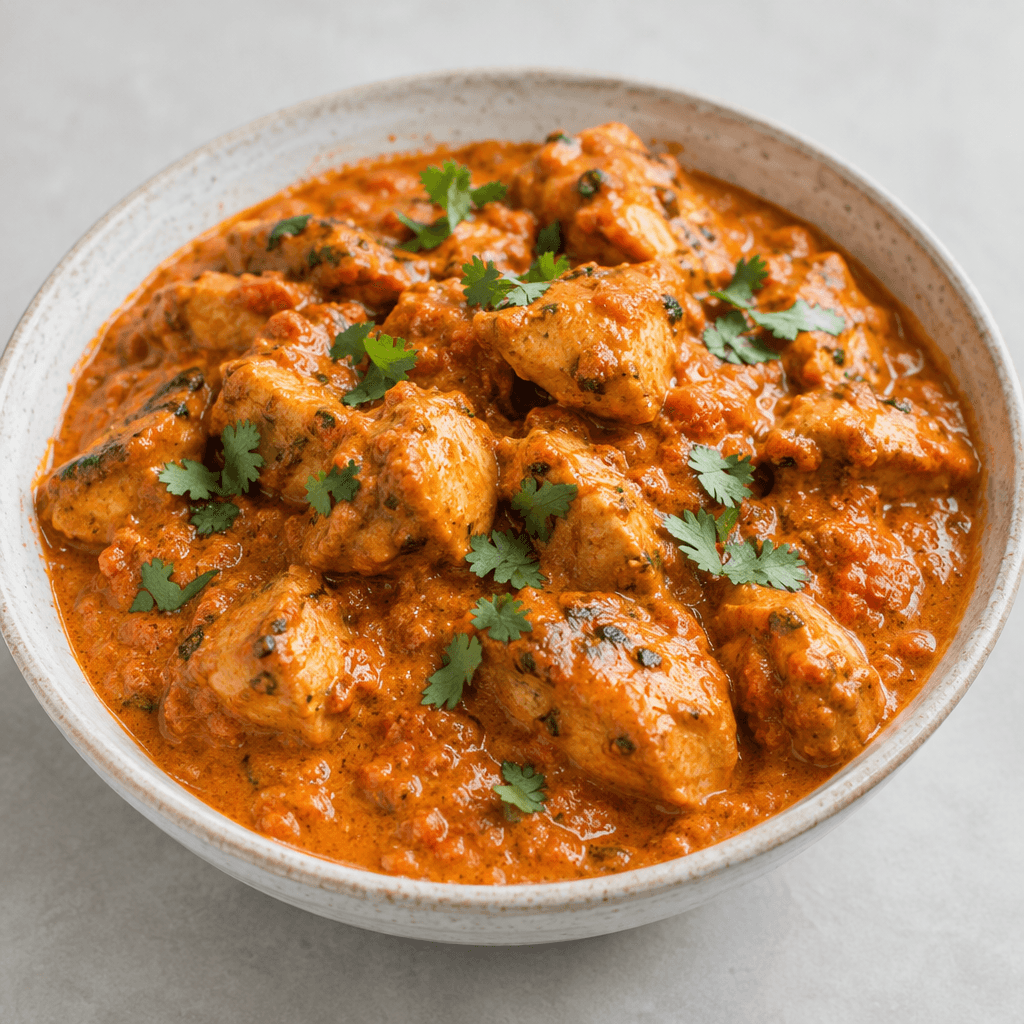
Chicken Tikka Masala Calories
Spiced Indian chicken dish in creamy tomato sauce
In season: Spring · Summer · Autumn · Winter
CALORIES
GI
POTASSIUM
FIBER
Quick answer
1 serving (medium) of Chicken Tikka Masala (200 g) has 290 calories. That works out to 145 calories per 100 g. It contains 13 g of carbs, 23.6 g of protein, 14.4 g of fat and 2.4 g of fiber. Its 8.2 mg of B3 covers 51% of the Daily Value. Its glycemic index is 45 (low), so it raises blood sugar slowly.
What is Chicken Tikka Masala?
Chicken Tikka Masala combines pieces of spiced, grilled chicken with a creamy tomato sauce. Its tikka roots are Indian, while the saucy curry familiar today is often associated with British-Indian cooking; its precise origin is debated. Recipes vary, but the sauce is typically warmly spiced and mildly tangy.
It is commonly served with basmati rice or naan, either at a restaurant or as a home-cooked curry. The chicken makes it a protein-providing main dish—about 11.8 g per 100 g—while the creamy sauce adds richness. For a lighter plate, serve a moderate portion with vegetables, or choose rice rather than bread alongside it.
Chicken Tikka Masala Nutrition Facts
Selected: 100 g
145
KCAL / 100G
Carbs
6.5g
· 2% DV
Protein
11.8g
· 24% DV
Fat
7.2g
· 9% DV
Fiber
1.2g
· 4% DV
DV is the share of the daily value covered, on a 2,000 kcal reference diet.
Calories come from: Carbs 19% · Protein 34% · Fat 47%
Chicken Tikka Masala Vitamins & Minerals
Vitamins
B3
4.1mg · 26% DV
B6
0.32mg · 19% DV
B5
0.7mg · 14% DV
B2
0.13mg · 10% DV
Minerals
Sodium
390mg · 17% DV
Phosphorus
120mg · 17% DV
Selenium
8.5µg · 15% DV
Zinc
1mg · 9% DV
How Nutritious Is Chicken Tikka Masala?
Nutrient density
Medium
How many vitamins, minerals and how much fiber this food carries per calorie. A high score means a lot of nutrition for few calories.
Satiety score
Medium
An EatBetter score computed from fiber, protein and calorie density. A high score means staying full longer on the same calories.
Both scores are calculated per 100 g and do not change with the selected portion. The satiety score is EatBetter's own calculation, not a clinical measure.
Chicken Tikka Masala Glycemic Index
GLYCEMIC INDEX
GLYCEMIC LOAD
Accounts for portion size — a more realistic measure than GI alone.
How to Burn Off Chicken Tikka Masala
To burn the 145 calories in 100 g:
🚶
Walking (5 km/h)
🏃
Running (8 km/h)
🚴
Cycling
🏊
Swimming
Times are calculated with the MET equation for a 70 kg adult. Actual burn varies with your weight, age and pace.
Is Chicken Tikka Masala Processed?
NOVA 3
Processed
1. Unprocessed
2. Minimally Processed
3. Processed
4. Ultra-Processed
NOVA classifies foods into 4 groups by industrial processing. NOVA 1 (unprocessed) is the healthiest.
Does Chicken Tikka Masala Contain Allergens?
Contains these allergens:
Which Diets Is Chicken Tikka Masala Good For?
Vegan
— Not suitable
Vegetarian
— Not suitable
Gluten-Free
— Not suitable
Dairy-Free
— Not suitable
Mediterranean
✓ Suitable
Paleo
— Not suitable
Whole30
— Not suitable
DASH
— Not suitable
Keto
— Not suitable
Low FODMAP
— Not suitable
Chicken Tikka Masala Fat Profile
SATURATED
2.1g
MONOUNSATURATED
2.7g
POLYUNSATURATED
1.1g
Omega 6:3 ratio 3.1:1
Below the ideal 4:1 — a good omega balance.
Compare Chicken Tikka Masala
Foods Similar to Chicken Tikka Masala
Frequently Asked Questions About Chicken Tikka Masala
What is chicken tikka masala?
Chicken tikka masala is a dish of marinated chicken cooked with a spiced tomato-based sauce, often finished with cream or yogurt. The chicken is commonly grilled or seared first, giving the sauce a smoky, roasted flavor.
Where did chicken tikka masala originate?
Chicken tikka masala’s exact origin is disputed. It is strongly associated with British Indian cuisine, and competing stories place its creation in the United Kingdom or on the Indian subcontinent; it is not generally treated as a single, settled regional classic.
Is chicken tikka masala spicy?
Chicken tikka masala can be mild or quite hot, depending on the recipe. Creamy sauce may soften the chili heat, but it does not guarantee a mild dish. When ordering, ask for a mild version if you prefer less heat.
What is the difference between chicken tikka masala and butter chicken?
Chicken tikka masala often has a more pronounced roasted-chicken and spice flavor, while butter chicken is typically richer, silkier, and more buttery. Recipes overlap, but the two dishes are not simply different names for the same curry.
What is chicken tikka masala usually served with?
Chicken tikka masala is commonly served with basmati rice, naan, or another flatbread. Rice soaks up the tomato-cream sauce, while naan can be used to scoop it up; a fresh salad makes a lighter accompaniment.
How do you make chicken tikka masala at home?
Marinate chicken in yogurt and spices, then grill or sear it. For the sauce, cook onion with garlic, ginger, spices, and tomatoes, then stir in the chicken and finish with cream or yogurt. Simmer until the chicken is cooked through.
Can you make chicken tikka masala less spicy?
Yes, you can make chicken tikka masala milder by reducing the chili and choosing a mild paprika rather than hot chili powder. Keep the aromatic spices, such as cumin and coriander, for flavor, and add the cream gradually to balance the sauce.
Can chicken tikka masala be made with chicken breast?
Yes, chicken breast works in chicken tikka masala, though it can dry out faster than thigh meat. Cut it into even pieces, avoid overcooking it during the initial sear, and let it finish gently in the sauce.
How long does leftover chicken tikka masala keep?
Keep leftover chicken tikka masala covered in the refrigerator and eat it within a few days. Reheat it until thoroughly hot throughout, stirring the sauce as it warms; do not leave the cooked dish sitting out for an extended time.
Can you freeze chicken tikka masala?
Yes, chicken tikka masala can be frozen in a sealed container once cooled. Thaw it in the refrigerator and reheat it gently, stirring well. The creamy sauce may separate slightly after freezing, but mixing it as it warms can improve its texture.
Have another question about Chicken Tikka Masala?
Ask the AI nutrition coach — calories, portions, alternatives and more, answered in seconds in the app.

Scan calories with your camera
Instant AI nutrition analysis

Nutrition data compiled from USDA FoodData Central and scientific sources.