

Ready & Packaged Foods
All →Vegetables & Legumes
All →Desserts & Confectionery
All →Meat & Protein
All →Grains & Bakery
All →Beverages
All →Milk & Dairy
All →

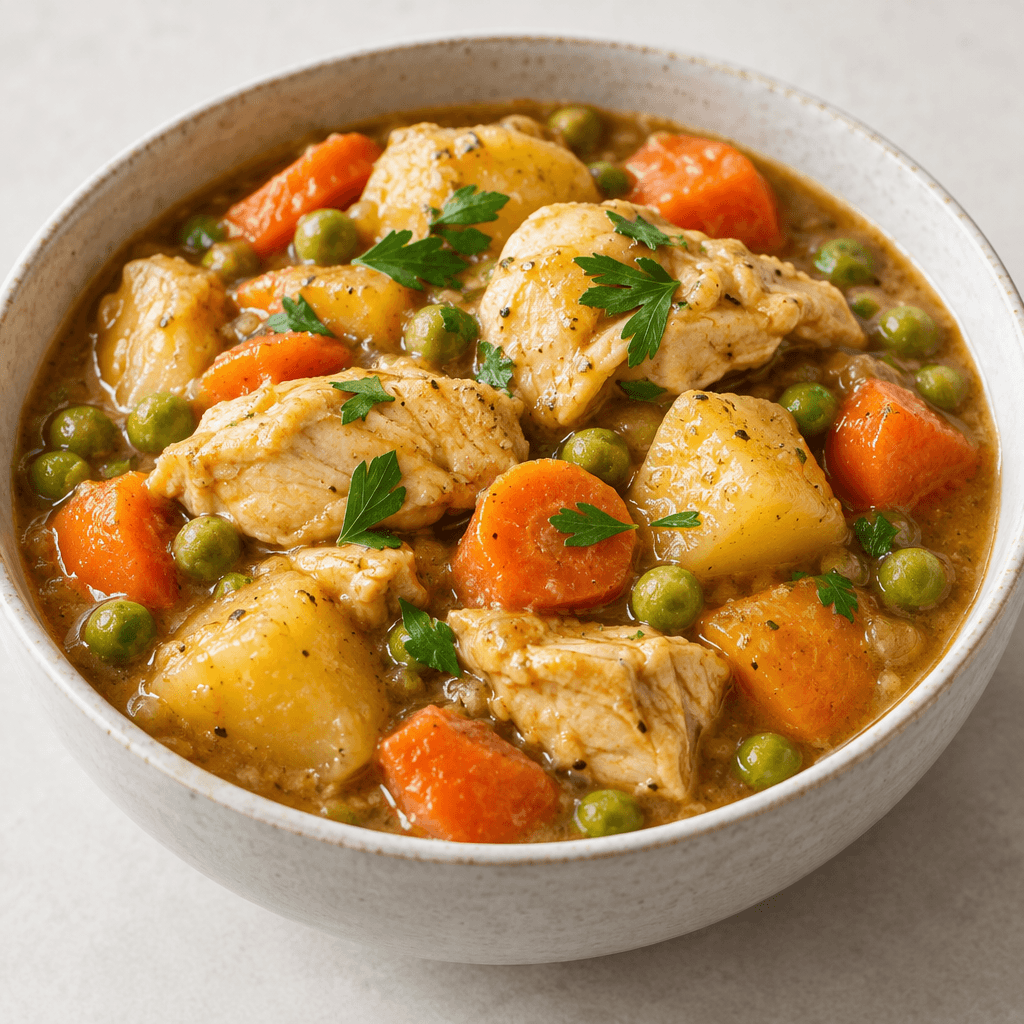
Chicken Stew Calories
Rich in protein and vitamins, hearty chicken stew with vegetables
In season: Autumn · Winter
CALORIES
GI
POTASSIUM
FIBER
Quick answer
1 serving (medium) of Chicken Stew (250 g) has 238 calories. That works out to 95 calories per 100 g. It contains 14 g of carbs, 21.3 g of protein, 10.3 g of fat and 3 g of fiber. Its 18.8 µg of Selenium covers 34% of the Daily Value. Its glycemic index is 45 (low), so it raises blood sugar slowly.
What is Chicken Stew?
Chicken stew brings tender chicken together with vegetables in a savoury, thickened broth. Recipes vary widely around the world; this version includes potato, carrot and peas, simmered until tender and often finished with herbs. It is a familiar home-cooked meal rather than a dish tied to one single tradition.
The chicken stays soft while the vegetables lend gentle sweetness, making the stew satisfying on its own or served with bread, rice or mashed potatoes. It provides protein, with 8.5 g per 100 g, alongside some fibre from the vegetables. For a lighter bowl, use a modest amount of oil and add extra vegetables; a squeeze of lemon or chopped parsley can brighten the flavour at the table.
Chicken Stew Nutrition Facts
Selected: 100 g
95
KCAL / 100G
Carbs
5.6g
· 2% DV
Protein
8.5g
· 17% DV
Fat
4.1g
· 5% DV
Fiber
1.2g
· 4% DV
DV is the share of the daily value covered, on a 2,000 kcal reference diet.
Calories come from: Carbs 24% · Protein 36% · Fat 40%
Chicken Stew Vitamins & Minerals
Vitamins
B3
2.1mg · 13% DV
B6
0.18mg · 11% DV
B5
0.5mg · 10% DV
B2
0.09mg · 7% DV
Minerals
Selenium
7.5µg · 14% DV
Sodium
290mg · 13% DV
Phosphorus
85mg · 12% DV
Zinc
1mg · 9% DV
How Nutritious Is Chicken Stew?
Nutrient density
High
How many vitamins, minerals and how much fiber this food carries per calorie. A high score means a lot of nutrition for few calories.
Satiety score
Medium
An EatBetter score computed from fiber, protein and calorie density. A high score means staying full longer on the same calories.
Both scores are calculated per 100 g and do not change with the selected portion. The satiety score is EatBetter's own calculation, not a clinical measure.
Chicken Stew Glycemic Index
GLYCEMIC INDEX
GLYCEMIC LOAD
Accounts for portion size — a more realistic measure than GI alone.
How to Burn Off Chicken Stew
To burn the 95 calories in 100 g:
🚶
Walking (5 km/h)
🏃
Running (8 km/h)
🚴
Cycling
🏊
Swimming
Times are calculated with the MET equation for a 70 kg adult. Actual burn varies with your weight, age and pace.
Is Chicken Stew Processed?
NOVA 2
Minimally Processed
1. Unprocessed
2. Minimally Processed
3. Processed
4. Ultra-Processed
NOVA classifies foods into 4 groups by industrial processing. NOVA 1 (unprocessed) is the healthiest.
Does Chicken Stew Contain Allergens?
No known major allergens
Which Diets Is Chicken Stew Good For?
Vegan
— Not suitable
Vegetarian
— Not suitable
Gluten-Free
✓ Suitable
Dairy-Free
— Not suitable
Mediterranean
✓ Suitable
Paleo
✓ Suitable
Whole30
— Not suitable
DASH
— Not suitable
Keto
— Not suitable
Low FODMAP
— Not suitable
Chicken Stew Fat Profile
SATURATED
1.1g
MONOUNSATURATED
1.5g
POLYUNSATURATED
0.3g
Omega 6:3 ratio 5.8:1
Above the ideal 4:1 (5.8:1).
Compare Chicken Stew
Foods Similar to Chicken Stew
Frequently Asked Questions About Chicken Stew
How do you make chicken stew?
Chicken stew is made by browning chicken with onion, then simmering it with vegetables and stock until tender. Add potatoes, carrots and peas for a classic version, and keep the heat gentle so the chicken cooks through without drying out.
What goes well with chicken stew?
Chicken stew pairs well with crusty bread, rice, mashed potatoes or egg noodles. Bread is especially useful for soaking up the thick gravy, while a crisp green salad can balance the richness of the meal.
What ingredients are in chicken stew?
Chicken stew commonly contains chicken, onion, carrots, potatoes, stock and herbs; peas are a frequent addition. Recipes vary, and some include tomatoes, garlic or celery, so there is no single fixed ingredient list.
Which chicken pieces are best for chicken stew?
Bone-in thighs or drumsticks work especially well in chicken stew because they stay moist during simmering and add flavor to the broth. Boneless thighs are convenient, while chicken breast is leaner but can become dry if overcooked.
How is chicken stew different from chicken soup?
Chicken stew is generally thicker and more substantial than chicken soup, with less liquid and larger pieces of chicken and vegetables. Soup is usually served as a broth-forward dish, while stew has a gravy-like consistency.
How do you keep chicken from drying out in chicken stew?
Keep chicken stew at a gentle simmer rather than a rapid boil, and avoid cooking the chicken longer than needed. Thigh meat is more forgiving than breast; if using breast, add it later in the cooking process.
How can you thicken chicken stew without flour?
You can thicken chicken stew without flour by mashing some of its cooked potatoes into the gravy or simmering it uncovered to reduce the liquid. Either method thickens the sauce while keeping the stew’s existing flavors.
Can you freeze chicken stew?
Yes, chicken stew freezes well in airtight, freezer-safe containers. Cool it before freezing and leave a little room for expansion; thaw it in the refrigerator and reheat it thoroughly. Potatoes may become softer after freezing.
How long does chicken stew last in the fridge?
Chicken stew keeps for about 3–4 days in the refrigerator when stored in a covered container. Refrigerate it promptly after cooking, and reheat only the portion you plan to eat until it is steaming hot throughout.
Can you make chicken stew in a slow cooker?
Yes, chicken stew can be made in a slow cooker by combining the chicken, vegetables, seasonings and stock, then cooking until the chicken is fully cooked and tender. Add quick-cooking vegetables later if you want them to keep their shape.
Have another question about Chicken Stew?
Ask the AI nutrition coach — calories, portions, alternatives and more, answered in seconds in the app.

Scan calories with your camera
Instant AI nutrition analysis

Nutrition data compiled from USDA FoodData Central and scientific sources.