

Ready & Packaged Foods
All →Vegetables & Legumes
All →Desserts & Confectionery
All →Meat & Protein
All →Grains & Bakery
All →Beverages
All →Milk & Dairy
All →

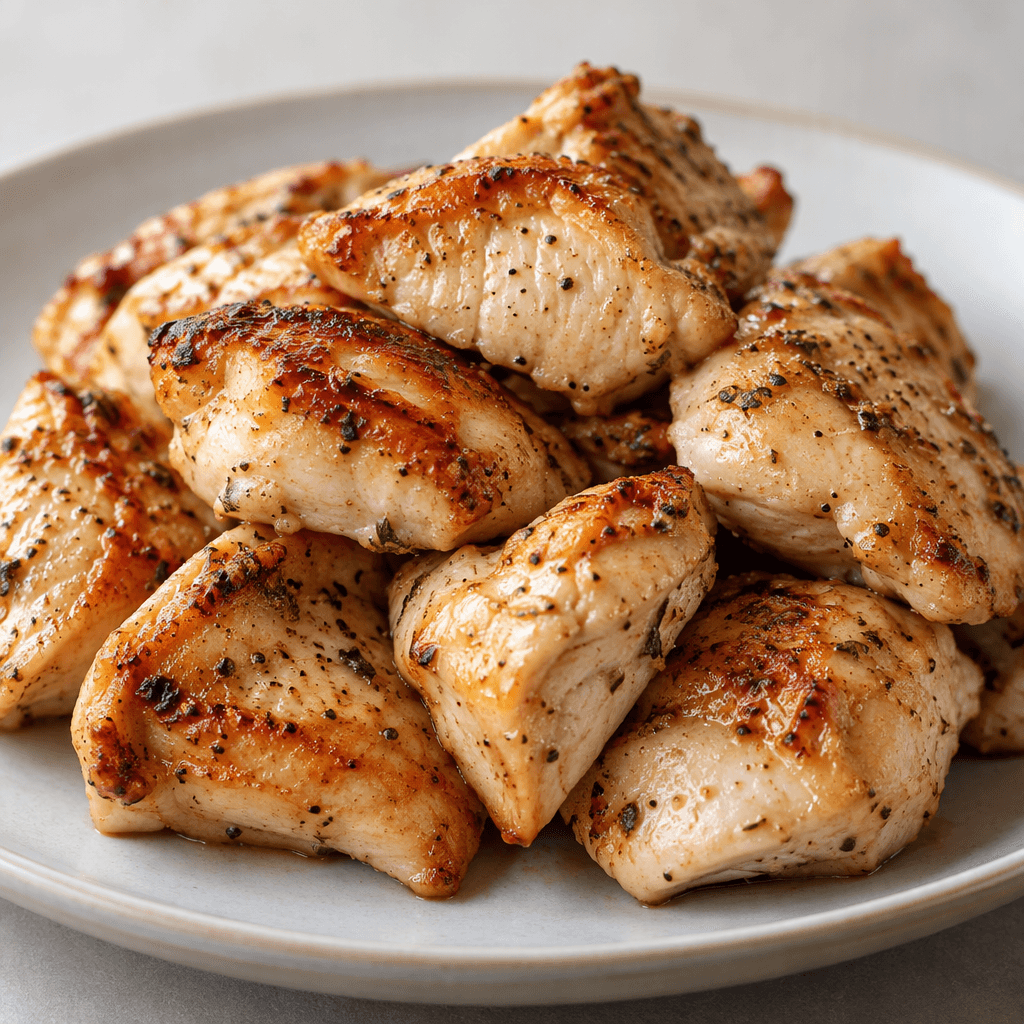
Chicken sautéed with low oil Calories
Chicken sautéed with low oil is a protein-rich, low-fat, healthy main dish.
In season: Spring · Summer · Autumn · Winter
CALORIES
GI
POTASSIUM
FIBER
Quick answer
1 serving (medium) of Chicken sautéed with low oil (150 g) has 180 calories. That works out to 120 calories per 100 g. It contains 1.8 g of carbs, 33.8 g of protein, 4.8 g of fat and 0 g of fiber. Its 13.1 mg of B3 covers 82% of the Daily Value. Its glycemic index is 0 (low), so it raises blood sugar slowly.
What is Chicken sautéed with low oil?
Chicken sautéed with low oil is a simple Turkish-style home-cooked dish: pieces of chicken are quickly cooked in a pan with a small amount of oil, often alongside onion, peppers or tomato. The vegetables and seasonings vary by household. The chicken stays tender, while the pan juices and softened vegetables make the dish savoury and easy to pair with other foods.
In Turkey it is commonly served for lunch or dinner with rice, bulgur or a salad, sometimes with yoghurt on the side. It is protein-forward and relatively low in fat; a 100 g portion provides 22.5 g of protein. For a lighter plate, use only enough oil to cook the chicken and add extra vegetables.
Chicken sautéed with low oil Nutrition Facts
Selected: 100 g
120
KCAL / 100G
Carbs
1.2g
· 0% DV
Protein
22.5g
· 45% DV
Fat
3.2g
· 4% DV
Fiber
0g
· 0% DV
DV is the share of the daily value covered, on a 2,000 kcal reference diet.
Calories come from: Carbs 4% · Protein 73% · Fat 23%
Chicken sautéed with low oil Vitamins & Minerals
Vitamins
B3
8.7mg · 54% DV
B6
0.5mg · 29% DV
B5
1.1mg · 22% DV
B12
0.3µg · 13% DV
Minerals
Selenium
16µg · 29% DV
Phosphorus
185mg · 26% DV
Zinc
1mg · 9% DV
Potassium ⭐
270mg · 8% DV
How Nutritious Is Chicken sautéed with low oil?
Nutrient density
High
How many vitamins, minerals and how much fiber this food carries per calorie. A high score means a lot of nutrition for few calories.
Satiety score
Medium
An EatBetter score computed from fiber, protein and calorie density. A high score means staying full longer on the same calories.
Both scores are calculated per 100 g and do not change with the selected portion. The satiety score is EatBetter's own calculation, not a clinical measure.
Chicken sautéed with low oil Glycemic Index
GLYCEMIC INDEX
GLYCEMIC LOAD
Accounts for portion size — a more realistic measure than GI alone.
How to Burn Off Chicken sautéed with low oil
To burn the 120 calories in 100 g:
🚶
Walking (5 km/h)
🏃
Running (8 km/h)
🚴
Cycling
🏊
Swimming
Times are calculated with the MET equation for a 70 kg adult. Actual burn varies with your weight, age and pace.
Is Chicken sautéed with low oil Processed?
NOVA 2
Minimally Processed
1. Unprocessed
2. Minimally Processed
3. Processed
4. Ultra-Processed
NOVA classifies foods into 4 groups by industrial processing. NOVA 1 (unprocessed) is the healthiest.
Does Chicken sautéed with low oil Contain Allergens?
No known major allergens
Which Diets Is Chicken sautéed with low oil Good For?
Vegan
— Not suitable
Vegetarian
— Not suitable
Gluten-Free
✓ Suitable
Dairy-Free
— Not suitable
Mediterranean
✓ Suitable
Paleo
✓ Suitable
Whole30
— Not suitable
DASH
— Not suitable
Keto
✓ Suitable
Low FODMAP
— Not suitable
Chicken sautéed with low oil Fat Profile
SATURATED
0.9g
MONOUNSATURATED
1.1g
POLYUNSATURATED
0.5g
Omega 6:3 ratio 6.3:1
Above the ideal 4:1 (6.3:1).
Compare Chicken sautéed with low oil
Foods Similar to Chicken sautéed with low oil
Frequently Asked Questions About Chicken sautéed with low oil
How do you keep chicken sautéed with low oil from sticking to the pan?
Chicken sautéed with low oil is less likely to stick when the pan is properly hot before the chicken goes in. Pat the pieces dry, add a thin coating of oil, and leave them undisturbed briefly so they can brown before turning.
Can you use frozen chicken for chicken sautéed with low oil?
Thaw chicken completely in the refrigerator before making chicken sautéed with low oil. Frozen or partly frozen pieces release extra water and cook unevenly, making it harder to brown the meat safely and keep the vegetables from becoming watery.
What seasoning works best for chicken sautéed with low oil?
Garlic, black pepper, paprika, and dried herbs such as oregano work well in chicken sautéed with low oil. Add delicate herbs near the end, and season gradually if you are also using salty stock, soy sauce, or a prepared seasoning blend.
Should you cook the vegetables or chicken first for chicken sautéed with low oil?
Brown the chicken first for chicken sautéed with low oil, then set it aside while you cook vegetables that need longer, such as onions or peppers. Return the chicken to the pan to finish cooking, so the vegetables do not overcook while the meat browns.
Can chicken sautéed with low oil be made in an air fryer?
Chicken sautéed with low oil is designed for a pan, but its seasoned chicken pieces can be cooked in an air fryer. Cook the vegetables separately or add them only if your appliance allows enough space for the chicken to cook without overcrowding.
How do you reheat chicken sautéed with low oil without drying it out?
Reheat chicken sautéed with low oil gently in a covered pan with a small splash of water or broth. Stir occasionally and stop as soon as it is steaming hot throughout; prolonged reheating makes lean chicken dry and chewy.
Can chicken sautéed with low oil be prepared ahead for meal prep?
Yes, chicken sautéed with low oil can be prepared ahead and divided into meal-sized portions after cooking. Cool it promptly, refrigerate it in sealed containers, and reheat only the portion you plan to eat to preserve texture and avoid repeated warming.
Is chicken sautéed with low oil good for weight loss?
Chicken sautéed with low oil can fit a weight-loss meal because it uses little added oil and pairs well with vegetables. Keep an eye on calorie-dense additions such as creamy sauces and large servings of rice, rather than relying on the dish name alone.
Can you make chicken sautéed with low oil without tomatoes?
Yes, chicken sautéed with low oil can be made without tomatoes. Use onions, peppers, or mushrooms for moisture and flavor, and add a small splash of water or broth if the pan becomes too dry before the chicken is cooked through.
What is the difference between chicken sautéed with low oil and chicken stir-fry?
Chicken sautéed with low oil is a home-style pan dish cooked with a small amount of oil, often with onion, pepper, or tomato. Stir-fry usually uses higher heat, frequent tossing, and quickly cooked vegetables, often with a sauce inspired by East Asian cooking.
Have another question about Chicken sautéed with low oil?
Ask the AI nutrition coach — calories, portions, alternatives and more, answered in seconds in the app.

Scan calories with your camera
Instant AI nutrition analysis

Nutrition data compiled from USDA FoodData Central and scientific sources.