

Ready & Packaged Foods
All →Vegetables & Legumes
All →Desserts & Confectionery
All →Meat & Protein
All →Grains & Bakery
All →Beverages
All →Milk & Dairy
All →

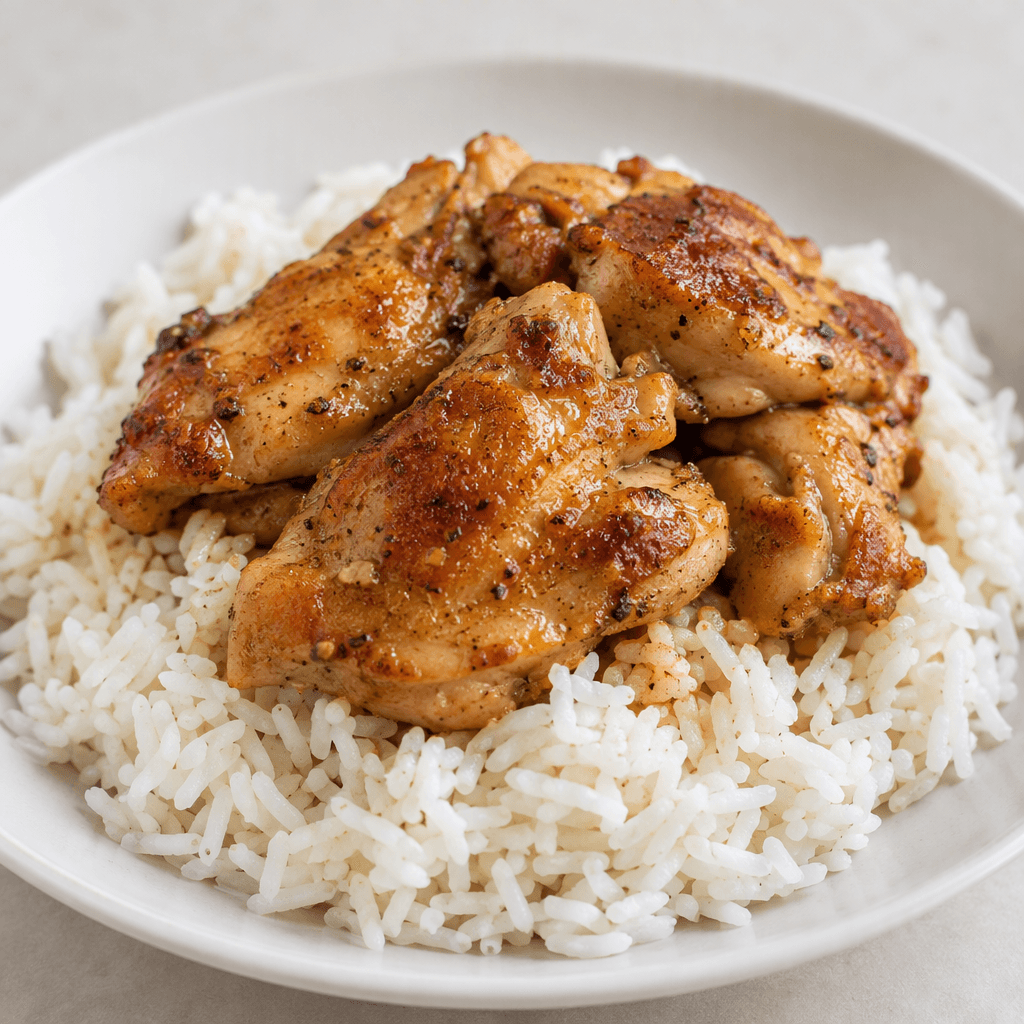
Chicken on rice Calories
Balanced protein and carbs, filling main dish
In season: Spring · Summer · Autumn · Winter
CALORIES
GI
POTASSIUM
FIBER
Quick answer
1 serving (medium) of Chicken on rice (250 g) has 363 calories. That works out to 145 calories per 100 g. It contains 46.3 g of carbs, 25.5 g of protein, 8 g of fat and 1.8 g of fiber. Its 7.8 mg of B3 covers 48% of the Daily Value. Its glycemic index is 65 (medium), so it raises blood sugar at a moderate pace.
What is Chicken on rice?
Chicken on rice is a familiar Turkish-style meal of cooked chicken served over rice pilaf. The chicken may be boiled and shredded or cooked in pieces, while the rice is often prepared with a little fat and seasoned simply. Recipes and presentation vary from home to home and across the country.
The soft, separate grains make a mild, comforting base for the savoury chicken. In Turkey it is commonly served as a filling lunch or dinner, often with pickles, salad or ayran; elsewhere, it works just as well as an easy one-plate meal. It brings protein and carbohydrates together, with 10.2 g of protein per 100 g. For a lighter serving, use less fat in the rice and add a generous side of fresh vegetables.
Chicken on rice Nutrition Facts
Selected: 100 g
145
KCAL / 100G
Carbs
18.5g
· 7% DV
Protein
10.2g
· 20% DV
Fat
3.2g
· 4% DV
Fiber
0.7g
· 3% DV
DV is the share of the daily value covered, on a 2,000 kcal reference diet.
Calories come from: Carbs 52% · Protein 28% · Fat 20%
Chicken on rice Vitamins & Minerals
Vitamins
B3
3.1mg · 19% DV
B6
0.23mg · 14% DV
B5
0.6mg · 12% DV
B1
0.09mg · 8% DV
Minerals
Phosphorus
95mg · 14% DV
Selenium
7µg · 13% DV
Zinc
1mg · 9% DV
Sodium
160mg · 7% DV
How Nutritious Is Chicken on rice?
Nutrient density
Medium
How many vitamins, minerals and how much fiber this food carries per calorie. A high score means a lot of nutrition for few calories.
Satiety score
Medium
An EatBetter score computed from fiber, protein and calorie density. A high score means staying full longer on the same calories.
Both scores are calculated per 100 g and do not change with the selected portion. The satiety score is EatBetter's own calculation, not a clinical measure.
Chicken on rice Glycemic Index
GLYCEMIC INDEX
GLYCEMIC LOAD
Accounts for portion size — a more realistic measure than GI alone.
How to Burn Off Chicken on rice
To burn the 145 calories in 100 g:
🚶
Walking (5 km/h)
🏃
Running (8 km/h)
🚴
Cycling
🏊
Swimming
Times are calculated with the MET equation for a 70 kg adult. Actual burn varies with your weight, age and pace.
Is Chicken on rice Processed?
NOVA 2
Minimally Processed
1. Unprocessed
2. Minimally Processed
3. Processed
4. Ultra-Processed
NOVA classifies foods into 4 groups by industrial processing. NOVA 1 (unprocessed) is the healthiest.
Does Chicken on rice Contain Allergens?
No known major allergens
Which Diets Is Chicken on rice Good For?
Vegan
— Not suitable
Vegetarian
— Not suitable
Gluten-Free
— Not suitable
Dairy-Free
— Not suitable
Mediterranean
✓ Suitable
Paleo
— Not suitable
Whole30
— Not suitable
DASH
— Not suitable
Keto
— Not suitable
Low FODMAP
— Not suitable
Chicken on rice Fat Profile
SATURATED
0.8g
MONOUNSATURATED
1.1g
POLYUNSATURATED
0.5g
Omega 6:3 ratio 5:1
Above the ideal 4:1 (5:1).
Compare Chicken on rice
Foods Similar to Chicken on rice
Frequently Asked Questions About Chicken on rice
What is Chicken on rice?
Chicken on rice is a meal of cooked chicken served over rice, rather than a single fixed recipe. The Turkish-style version usually pairs plain rice pilaf with boiled or cooked, shredded chicken and may be served with pickles or yogurt drink.
How do you make Chicken on rice at home?
Cook the chicken until tender, prepare rice separately, then arrange the chicken over the rice to serve. Cooking the rice with some chicken broth adds flavor. Shredding the chicken while warm helps it spread evenly across the plate.
What type of rice is best for Chicken on rice?
Long-grain or medium-grain rice that stays separate after cooking works well for Chicken on rice. Turkish-style rice pilaf often uses baldo rice; rinsing it before cooking and letting the finished pilaf rest helps keep the grains distinct.
What sauce goes with Chicken on rice?
Chicken on rice does not require a sauce, but a spoonful of broth from cooking the chicken keeps the meat moist and adds flavor. Turkish-style servings are often kept simple, with pickles or a yogurt drink on the side rather than a creamy sauce.
Is Chicken on rice the same as chicken biryani?
No, Chicken on rice is not necessarily chicken biryani. In the Turkish-style dish, chicken is placed over simply cooked rice; biryani is a spiced South Asian dish in which the rice and chicken are cooked together or layered with aromatics.
What should you serve with Chicken on rice?
Pickles, a crisp salad, or yogurt make good sides for Chicken on rice. For the Turkish-style plate, pickled peppers and ayran are common accompaniments; their sharp, refreshing flavors balance the mild rice and chicken.
Can you prepare Chicken on rice ahead of time?
Yes, you can prepare Chicken on rice ahead by cooking the chicken and rice separately and refrigerating them promptly. Store them in covered containers, then reheat thoroughly before serving; keeping them separate helps the rice retain a better texture.
How long does Chicken on rice keep in the refrigerator?
Chicken on rice keeps for a few days when refrigerated promptly in a covered container. Cool and store it soon after cooking rather than leaving it out, and reheat only the portion you plan to eat until it is hot throughout.
Can you freeze Chicken on rice?
Yes, Chicken on rice can be frozen in airtight containers. The rice may soften after thawing, so freezing the chicken and rice separately often gives a better texture. Thaw it in the refrigerator and reheat thoroughly before eating.
Is Chicken on rice a good meal for weight loss?
Chicken on rice can fit into a weight-loss eating plan because it combines filling protein with rice, but generous portions or oily rice can make the meal more energy-dense. A moderate serving with vegetables is a practical way to balance the plate.
Have another question about Chicken on rice?
Ask the AI nutrition coach — calories, portions, alternatives and more, answered in seconds in the app.

Scan calories with your camera
Instant AI nutrition analysis

Nutrition data compiled from USDA FoodData Central and scientific sources.