

Ready & Packaged Foods
All →Vegetables & Legumes
All →Desserts & Confectionery
All →Meat & Protein
All →Grains & Bakery
All →Beverages
All →Milk & Dairy
All →

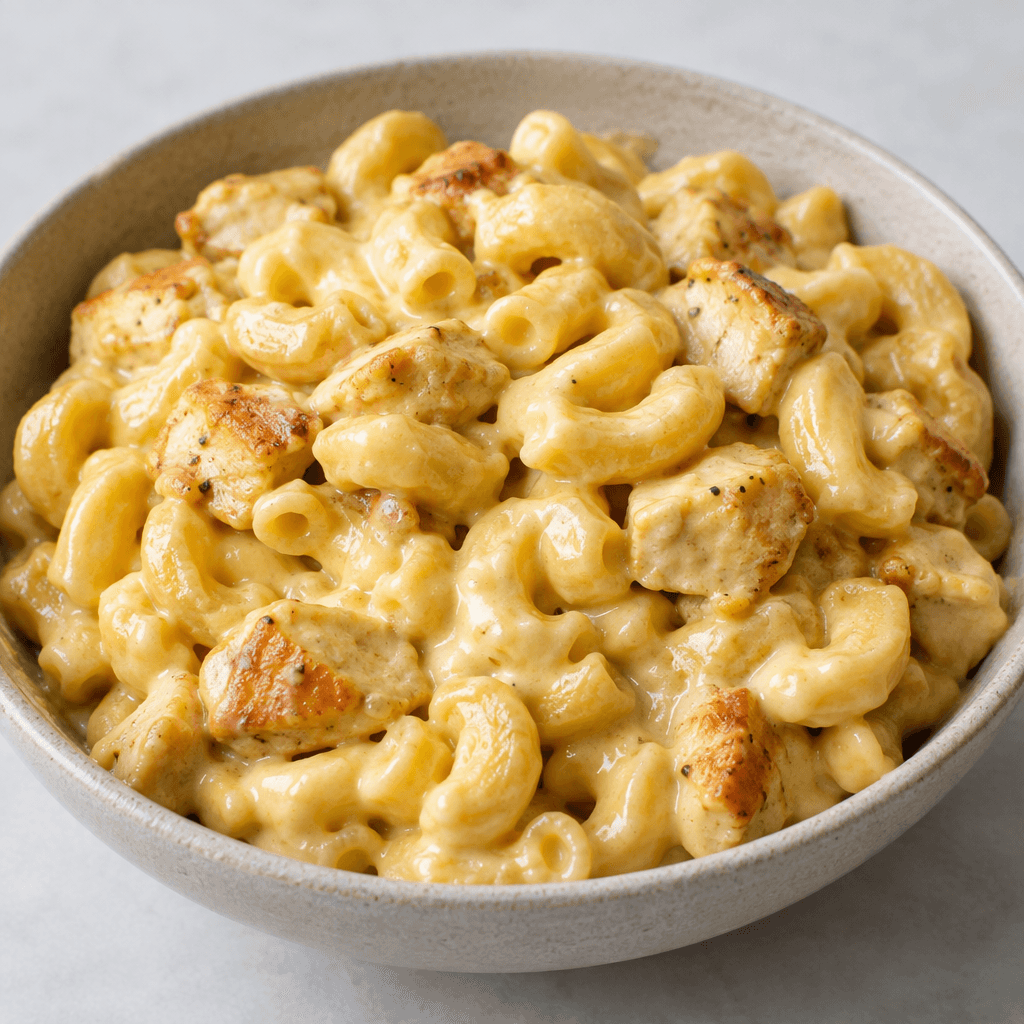
Chicken Mac and Cheese Calories
Protein and calcium source, hearty main dish
In season: Autumn · Winter
CALORIES · 100 G
GI
POTASSIUM · 100 G
FIBER · 100 G
Quick answer
1 serving (medium) of Chicken Mac and Cheese (200 g) has 370 calories. That works out to 185 calories per 100 g. It contains 37 g of carbs, 20.4 g of protein, 14.4 g of fat and 2.2 g of fiber. Its 240 mg of Phosphorus covers 34% of the Daily Value. Its glycemic index is 55 (medium), so it raises blood sugar at a moderate pace.
Chicken Mac and Cheese Nutrition Facts
Selected: 1 serving (medium) · 200 g
370
KCAL / 200G
Carbs
37g
· 13% DV
Protein
20.4g
· 41% DV
Fat
14.4g
· 18% DV
Fiber
2.2g
· 8% DV
DV is the share of the daily value covered, on a 2,000 kcal reference diet.
Calories come from: Carbs 41% · Protein 23% · Fat 36%
Chicken Mac and Cheese nutrition facts table · 1 serving (medium) (200 g)
| Nutrient | Amount | % DV |
|---|---|---|
| Calories | 370 kcal | |
| Total fat | 14.4 g | 18% |
| Saturated fat | 6.2 g | 31% |
| Trans fat | 0.16 g | |
| Sodium | 680 mg | 30% |
| Total carbohydrate | 37 g | 13% |
| Fiber | 2.2 g | 8% |
| Protein | 20.4 g | 41% |
Calories: Calories measure energy. Average daily need is 2,000 kcal. Excess calories are stored as fat, too few cause weight loss.
Carbs: Your body's primary energy source. The brain runs exclusively on carbs. Daily need: 275g.
Protein: Essential for muscle repair and cell growth. Daily need: 50g. Keeps you full and boosts metabolism.
Fat: Needed for hormone production and vitamin absorption. Daily need: 78g. Limit saturated fats, choose unsaturated.
Fiber: Critical for digestive health and satiety. Daily need: 28g. Stabilizes blood sugar, lowers cholesterol.

Log this food in EatBetter
100,000+ people use it
- Get your daily calorie target
- Snap your meal, log it in seconds
- See every vitamin and mineral

📸 Scan the code to get the app free.

How Many Calories in 1 Serving of Chicken Mac and Cheese?
| Serving | Amount | Calories |
|---|---|---|
| 1 serving (medium) | 200 g | 370 kcal |
| 100 g | 100 g | 185 kcal |
| 1 piece (small) | 100 g | 185 kcal |
| 1 serving (small) | 120 g | 222 kcal |
| 1 piece (medium) | 150 g | 278 kcal |
| 1 cup (medium) | 180 g | 333 kcal |
| 1 cup (large) | 240 g | 444 kcal |
| 1 piece (large) | 250 g | 463 kcal |
| 1 serving (large) | 300 g | 555 kcal |
Calculated from 185 calories per 100 g.
Frequently Asked Questions About Chicken Mac and Cheese
What is chicken mac and cheese?
Chicken mac and cheese is a pasta dish made with macaroni, chicken, and a creamy cheese sauce. It can be cooked on the stovetop or baked, and recipes often add a crisp breadcrumb topping or extra cheese.
What pasta shape works best for chicken mac and cheese?
Elbow macaroni is the classic choice for chicken mac and cheese because its hollow curves hold the sauce. Small shells, cavatappi, and similar ridged shapes also work well, especially when you want sauce to cling to every bite.
Can you make chicken mac and cheese with rotisserie chicken?
Yes, cooked rotisserie chicken is a convenient addition to chicken mac and cheese. Remove the skin and bones, shred or chop the meat, then fold it in near the end so it warms through without becoming stringy or dry.
What cheese melts best in chicken mac and cheese?
Cheddar melts well and gives chicken mac and cheese its familiar sharp, savory flavor. For a smoother sauce, combine it with a mild melting cheese and grate the cheese yourself; pre-shredded cheese can make the sauce less silky.
Why is my chicken mac and cheese dry?
Chicken mac and cheese can turn dry when the pasta absorbs too much sauce, the chicken is overcooked, or the dish spends too long in the oven. Keep the pasta slightly firm and make the sauce looser than you want the finished dish.
Can chicken mac and cheese be made ahead?
Yes, you can assemble chicken mac and cheese ahead and refrigerate it before baking. Keep the topping separate until just before it goes into the oven, and loosen the mixture with a splash of milk if the pasta has absorbed the sauce.
Is baked or stovetop chicken mac and cheese better?
Stovetop chicken mac and cheese is creamier and quicker to serve, while the baked version develops a browned top and firmer texture. Choose the stovetop method for a soft sauce, or bake it when you want a crisp topping.
How should leftover chicken mac and cheese be stored?
Refrigerate leftover chicken mac and cheese promptly in a covered, airtight container. Because it contains cooked chicken and dairy, do not leave it sitting out for an extended period, and reheat only the portion you plan to eat.
How do you reheat chicken mac and cheese without drying it out?
Reheat chicken mac and cheese gently with a small splash of milk, stirring occasionally. Use low heat on the stovetop or cover it in the microwave; uncovered, high-heat reheating can make the sauce separate and the chicken tough.
What should you serve with chicken mac and cheese?
Serve chicken mac and cheese with a crisp green salad, steamed greens, or roasted vegetables. Their fresh, lightly acidic flavors balance the rich cheese sauce and make the meal feel less heavy.
Chicken Mac and Cheese Vitamins & Minerals
Vitamins
B12
0.76µg · 32% DV
B3
4.2mg · 26% DV
B5
1.3mg · 26% DV
B2
0.28mg · 22% DV
Minerals
Phosphorus
240mg · 34% DV
Sodium
680mg · 30% DV
Calcium
280mg · 28% DV
Selenium
13µg · 24% DV
Potassium ⭐
240mg · 7% DV
Chicken Mac and Cheese Glycemic Index
GLYCEMIC INDEX
GLYCEMIC LOAD
Accounts for portion size — a more realistic measure than GI alone.
How to Burn Off Chicken Mac and Cheese
To burn the 370 calories in 1 serving (medium) (200 g):
🚶
Walking (5 km/h)
🏃
Running (8 km/h)
🚴
Cycling
🏊
Swimming
Times are calculated with the MET equation for a 70 kg adult. Actual burn varies with your weight, age and pace.
What is Chicken Mac and Cheese?
Chicken Mac and Cheese brings pasta and a rich cheese sauce together with pieces of chicken. It is a hearty take on the classic macaroni and cheese, a comfort-food favourite in the United States and a familiar dish across North America. The sauce is typically creamy and smooth, while the chicken adds a savoury, substantial bite.
It works well as a complete main meal, served hot on its own or alongside a crisp salad or steamed vegetables. With 10.2 g of protein per 100 g, it offers a useful protein contribution as well as energy from the pasta and sauce. For a lighter plate, serve a smaller portion with plenty of vegetables, or use less cheese sauce when preparing it at home.
How Nutritious Is Chicken Mac and Cheese?
Nutrient density
Low
How many vitamins, minerals and how much fiber this food carries per calorie. A high score means a lot of nutrition for few calories.
Satiety score
Medium
An EatBetter score computed from fiber, protein and calorie density. A high score means staying full longer on the same calories.
Both scores are calculated per 100 g and do not change with the selected portion. The satiety score is EatBetter's own calculation, not a clinical measure.
Is Chicken Mac and Cheese Processed?
NOVA 3
Processed
1. Unprocessed
2. Minimally Processed
3. Processed
4. Ultra-Processed
NOVA classifies foods into 4 groups by industrial processing. NOVA 1 (unprocessed) is the healthiest.
Does Chicken Mac and Cheese Contain Allergens?
Contains these allergens:
Which Diets Is Chicken Mac and Cheese Good For?
Vegan
— Not suitable
Vegetarian
— Not suitable
Gluten-Free
— Not suitable
Dairy-Free
— Not suitable
Mediterranean
✓ Suitable
Paleo
— Not suitable
Whole30
— Not suitable
DASH
— Not suitable
Keto
— Not suitable
Low FODMAP
— Not suitable
Chicken Mac and Cheese Fat Profile
SATURATED
6.2g
MONOUNSATURATED
4.2g
POLYUNSATURATED
1.2g
Omega 6:3 ratio 9:1
Above the ideal 4:1 (9:1).
Compare Chicken Mac and Cheese
Foods Similar to Chicken Mac and Cheese
Have another question about Chicken Mac and Cheese?
Ask the AI nutrition coach — calories, portions, alternatives and more, answered in seconds in the app.

Scan calories with your camera
Instant AI nutrition analysis

Nutrition data compiled from USDA FoodData Central and scientific sources.