

Ready & Packaged Foods
All →Vegetables & Legumes
All →Desserts & Confectionery
All →Meat & Protein
All →Grains & Bakery
All →Beverages
All →Milk & Dairy
All →

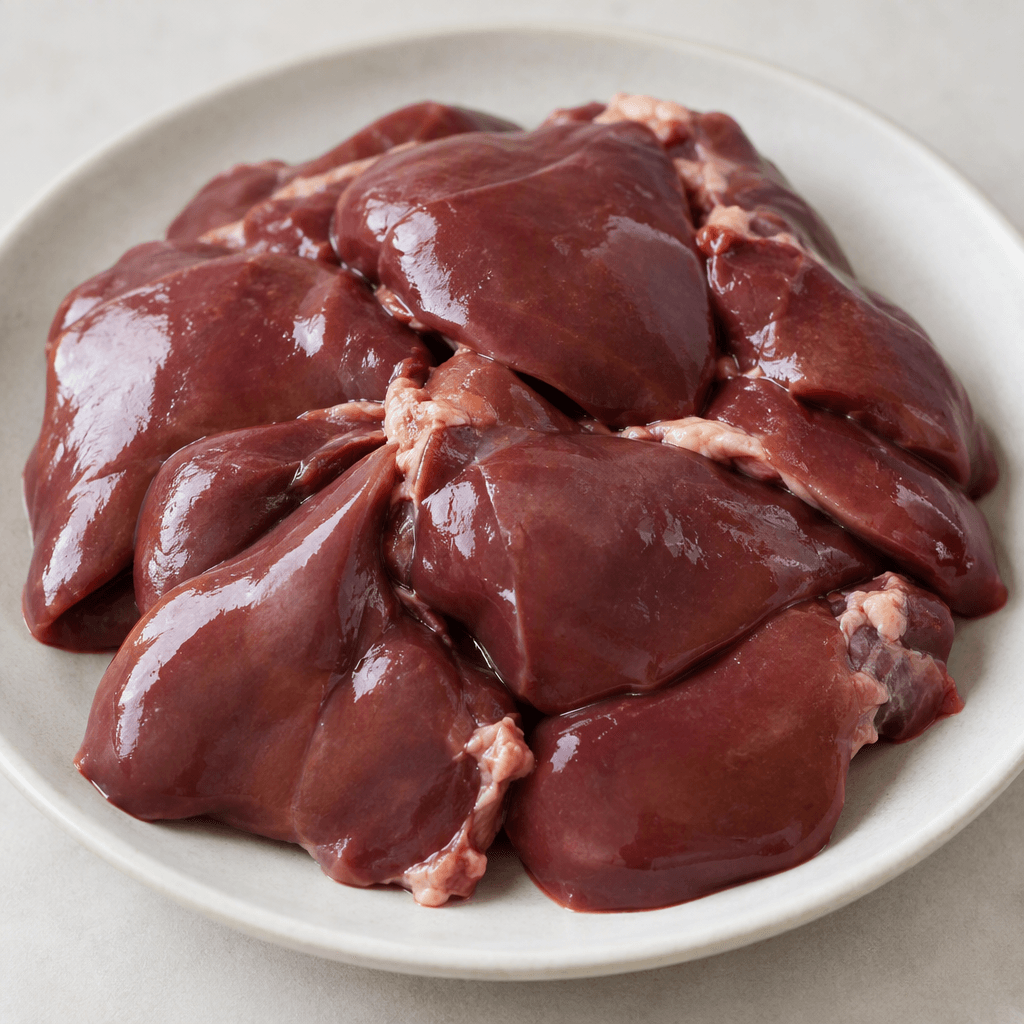
Chicken Liver Calories
Extremely rich in iron and vitamin B12, high in protein.
In season: Spring · Summer · Autumn · Winter
CALORIES
GI
POTASSIUM
FIBER
Quick answer
1 piece (medium) of Chicken Liver (50 g) has 60 calories. That works out to 119 calories per 100 g. It contains 0.4 g of carbs, 8.5 g of protein, 2.4 g of fat and 0 g of fiber. Its 8.3 µg of B12 covers 346% of the Daily Value. Its glycemic index is 0 (low), so it raises blood sugar slowly.
What is Chicken Liver?
Chicken liver is the rich, tender edible organ of a chicken, sold whole or in pieces and cooked in cuisines around the world. It is often pan-fried or sautéed with onions and seasonings, and can also be blended into pâté or served as part of a warm meal.
Its flavour is savoury and distinctive, while the texture stays soft when it is not overcooked. In Turkish cooking, fried chicken liver is commonly paired with sumac-dressed onion, parsley and bread; elsewhere, it may appear on toast or alongside vegetables. It provides plenty of protein and is especially notable for its iron and vitamin B12. For a lighter plate, sauté it with modest oil and serve with a crisp salad.
Chicken Liver Nutrition Facts
Selected: 100 g
119
KCAL / 100G
Carbs
0.7g
· 0% DV
Protein
16.9g
· 34% DV
Fat
4.8g
· 6% DV
Fiber
0g
· 0% DV
DV is the share of the daily value covered, on a 2,000 kcal reference diet.
Calories come from: Carbs 2% · Protein 60% · Fat 38%
Chicken Liver Vitamins & Minerals
Vitamins
B12
16.6µg · 692% DV
Vitamin A
3290µg · 366% DV
Biotin
80µg · 267% DV
B2
2.3mg · 177% DV
Minerals
Selenium
54µg · 98% DV
Iron
9mg · 50% DV
Phosphorus
297mg · 42% DV
Zinc
4mg · 36% DV
How Nutritious Is Chicken Liver?
Nutrient density
Very high
How many vitamins, minerals and how much fiber this food carries per calorie. A high score means a lot of nutrition for few calories.
Satiety score
Medium
An EatBetter score computed from fiber, protein and calorie density. A high score means staying full longer on the same calories.
Both scores are calculated per 100 g and do not change with the selected portion. The satiety score is EatBetter's own calculation, not a clinical measure.
Chicken Liver Glycemic Index
GLYCEMIC INDEX
GLYCEMIC LOAD
Accounts for portion size — a more realistic measure than GI alone.
How to Burn Off Chicken Liver
To burn the 119 calories in 100 g:
🚶
Walking (5 km/h)
🏃
Running (8 km/h)
🚴
Cycling
🏊
Swimming
Times are calculated with the MET equation for a 70 kg adult. Actual burn varies with your weight, age and pace.
Is Chicken Liver Processed?
NOVA 1
Unprocessed
1. Unprocessed
2. Minimally Processed
3. Processed
4. Ultra-Processed
NOVA classifies foods into 4 groups by industrial processing. NOVA 1 (unprocessed) is the healthiest.
Does Chicken Liver Contain Allergens?
No known major allergens
Which Diets Is Chicken Liver Good For?
Vegan
— Not suitable
Vegetarian
— Not suitable
Gluten-Free
✓ Suitable
Dairy-Free
— Not suitable
Mediterranean
✓ Suitable
Paleo
✓ Suitable
Whole30
— Not suitable
DASH
— Not suitable
Keto
✓ Suitable
Low FODMAP
— Not suitable
Chicken Liver Fat Profile
SATURATED
1.6g
MONOUNSATURATED
1.2g
POLYUNSATURATED
1.1g
Omega 6:3 ratio 5:1
Above the ideal 4:1 (5:1).
Compare Chicken Liver
Foods Similar to Chicken Liver
Frequently Asked Questions About Chicken Liver
How do you cook chicken liver so it stays tender?
Cook chicken liver quickly in a hot pan, turning the pieces until they are fully cooked but not dried out. Patting it dry first helps it brown instead of steam; avoid crowding the pan, which releases moisture.
Can you make pâté with chicken liver?
Yes, chicken liver is commonly used to make pâté. Cook it fully, then blend it with butter or another fat and seasonings until smooth; chill the pâté promptly and keep it refrigerated.
Is chicken liver safe to eat if it is still pink?
Colour alone cannot reliably show whether chicken liver is safe. Check that the centre reaches 74 °C (165 °F) with a food thermometer; if you cannot verify that, cook it longer rather than serving it pink.
Should you soak chicken liver in milk before cooking?
No, soaking chicken liver in milk is optional, not a safety step. Some cooks use it to soften the flavour, but pat the liver dry afterward so it browns properly, and cook it thoroughly.
How can you tell if raw chicken liver has gone bad?
Discard chicken liver that smells sour or strongly unpleasant, feels unusually slimy, or has discoloured patches. Fresh liver is moist and glossy, but appearance cannot rule out harmful bacteria, so keep it cold and cook it fully.
Can you freeze chicken liver?
Yes, freeze chicken liver while it is fresh in an airtight, freezer-safe package. Thaw it in the refrigerator rather than on the counter, and use it promptly after thawing; do not refreeze it raw once thawed.
Is chicken liver high in cholesterol?
Yes, chicken liver contains a substantial amount of dietary cholesterol. For most people, saturated fat in the overall diet has a stronger effect on blood cholesterol, but people managing cholesterol may want to discuss frequent liver meals with a clinician.
Is chicken liver a good source of iron?
Yes, chicken liver is rich in iron and vitamin B12, nutrients involved in making healthy blood cells. It can contribute to an iron-containing diet, but it does not replace testing or treatment for diagnosed iron-deficiency anaemia.
Can you eat chicken liver during pregnancy?
It is best to avoid chicken liver during pregnancy because liver can contain high amounts of preformed vitamin A, which may harm fetal development in excess. Ask your maternity-care professional for advice if you have already eaten it.
Why does chicken liver taste metallic?
Chicken liver can taste metallic because it contains iron-rich blood pigments, and its flavour becomes stronger when it is overcooked or not very fresh. Trim visible connective tissue, use fresh liver, and cook it briefly but completely.
Have another question about Chicken Liver?
Ask the AI nutrition coach — calories, portions, alternatives and more, answered in seconds in the app.

Scan calories with your camera
Instant AI nutrition analysis

Nutrition data compiled from USDA FoodData Central and scientific sources.