

Ready & Packaged Foods
All →Vegetables & Legumes
All →Desserts & Confectionery
All →Meat & Protein
All →Grains & Bakery
All →Beverages
All →Milk & Dairy
All →

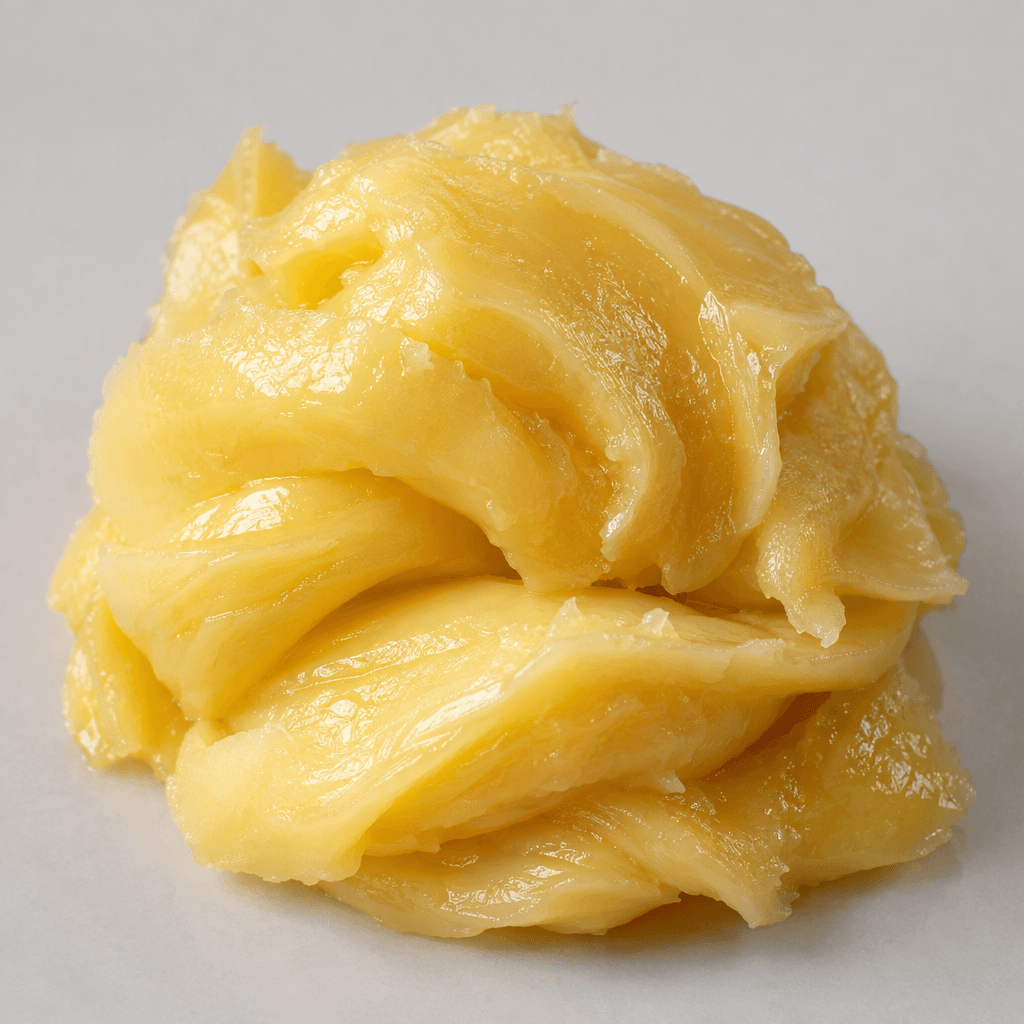
Chicken fat Calories
Animal fat, high energy, saturated and unsaturated fatty acids
In season: Spring · Summer · Autumn · Winter
CALORIES
GI
POTASSIUM
FIBER
Quick answer
1 tablespoon (medium) of Chicken fat (13 g) has 117 calories. That works out to 900 calories per 100 g. It contains 0 g of carbs, 0 g of protein, 13 g of fat and 0 g of fiber. Its glycemic index is 0 (low), so it raises blood sugar slowly.
What is Chicken fat?
Chicken fat is the fat from a chicken, often collected as it cooks or rendered from the skin and trimmings. Once cooled, it can turn pale gold and soft, with a smooth, glossy texture; it is also known as schmaltz in some food traditions.
Its savoury, gently chicken-like flavour brings richness to cooking. It can be used to roast vegetables, fry onions, or add depth to soups, gravies and rice. In Jewish cooking, schmaltz has a long-standing place in dishes such as chopped liver; elsewhere, cooks often save the fat from a roast or stock. Chicken fat is energy-dense and consists almost entirely of fat, so a little goes a long way. Use it where its savoury flavour complements the dish, or combine it with a lighter cooking oil.
Chicken fat Nutrition Facts
Selected: 100 g
900
KCAL / 100G
Carbs
0g
· 0% DV
Protein
0g
· 0% DV
Fat
100g
· 128% DV
Fiber
0g
· 0% DV
DV is the share of the daily value covered, on a 2,000 kcal reference diet.
Calories come from: Carbs 0% · Protein 0% · Fat 100%
Chicken fat Vitamins & Minerals
Vitamins
Vitamin E
2mg · 13% DV
Vitamin A
50µg · 6% DV
Vitamin D
1µg · 5% DV
B12
0.1µg · 4% DV
Minerals
Sodium
40mg · 2% DV
Selenium
1µg · 2% DV
Calcium
5mg · 1% DV
Iodine
1µg · 1% DV
How Nutritious Is Chicken fat?
Nutrient density
Low
How many vitamins, minerals and how much fiber this food carries per calorie. A high score means a lot of nutrition for few calories.
Satiety score
Low
An EatBetter score computed from fiber, protein and calorie density. A high score means staying full longer on the same calories.
Both scores are calculated per 100 g and do not change with the selected portion. The satiety score is EatBetter's own calculation, not a clinical measure.
Chicken fat Glycemic Index
GLYCEMIC INDEX
GLYCEMIC LOAD
Accounts for portion size — a more realistic measure than GI alone.
How to Burn Off Chicken fat
To burn the 900 calories in 100 g:
🚶
Walking (5 km/h)
🏃
Running (8 km/h)
🚴
Cycling
🏊
Swimming
Times are calculated with the MET equation for a 70 kg adult. Actual burn varies with your weight, age and pace.
Is Chicken fat Processed?
NOVA 2
Minimally Processed
1. Unprocessed
2. Minimally Processed
3. Processed
4. Ultra-Processed
NOVA classifies foods into 4 groups by industrial processing. NOVA 1 (unprocessed) is the healthiest.
Does Chicken fat Contain Allergens?
No known major allergens
Which Diets Is Chicken fat Good For?
Vegan
— Not suitable
Vegetarian
— Not suitable
Gluten-Free
✓ Suitable
Dairy-Free
— Not suitable
Mediterranean
✓ Suitable
Paleo
✓ Suitable
Whole30
— Not suitable
DASH
— Not suitable
Keto
✓ Suitable
Low FODMAP
— Not suitable
Chicken fat Fat Profile
SATURATED
30g
MONOUNSATURATED
45g
POLYUNSATURATED
20g
Omega 6:3 ratio 66.7:1
Above the ideal 4:1 (66.7:1).
Compare Chicken fat
Foods Similar to Chicken fat
Frequently Asked Questions About Chicken fat
Is chicken fat the same as schmaltz?
Schmaltz is rendered chicken fat, especially in Ashkenazi Jewish cooking. The word usually refers to chicken fat that has been slowly melted and strained, sometimes with onion; raw fat from chicken is not yet schmaltz.
How do you render chicken fat at home?
Cut chicken skin and fatty trimmings into small pieces, then warm them gently in a heavy pan. When the fat has melted, strain out the crisp solids and let the liquid fat cool before storing it in a clean, covered container.
What does chicken fat taste like?
Chicken fat has a savory, distinctly chicken-like flavor and a rich mouthfeel. Rendered carefully, it can add depth to rice, vegetables, or roasted foods; browned skin bits left in it make the flavor stronger.
Can you cook rice with chicken fat?
Yes, chicken fat works well for cooking rice. Stir a small amount into the pan while sautéing the rice before adding liquid; it gives the grains a savory flavor that pairs especially well with chicken dishes.
Can chicken fat replace butter or oil in a recipe?
Chicken fat can replace butter or cooking oil in some savory recipes, but it brings a meaty flavor and sets more firmly when cool. It is not a neutral substitute for delicate baking or sweet dishes.
How should you store chicken fat?
Keep chicken fat in a clean, tightly covered container in the refrigerator, and use a clean, dry utensil each time. Keep water and food crumbs out of the container, since they can encourage spoilage.
Can you freeze chicken fat?
Yes, chicken fat freezes well. Divide it into portions in airtight, freezer-safe containers so you can thaw only what you need. Thaw it in the refrigerator and avoid refreezing fat that has already been thawed.
Can chicken fat be used to roast potatoes?
Yes, chicken fat makes flavorful roast potatoes. Toss the potatoes with melted fat before roasting so they are lightly coated; the result will have a savory, chicken-rich taste rather than the neutral flavor of vegetable oil.
Is chicken fat healthy to eat?
Chicken fat contains both saturated and unsaturated fatty acids, but it is still a concentrated cooking fat. Use it as one of several fats in your cooking rather than relying on it as your only everyday fat.
Can you reuse chicken fat after frying?
You can reuse chicken fat if it has not burned or picked up food debris: let it cool, strain it, and refrigerate it in a clean covered container. Discard it if it smells rancid or looks moldy.
Have another question about Chicken fat?
Ask the AI nutrition coach — calories, portions, alternatives and more, answered in seconds in the app.

Scan calories with your camera
Instant AI nutrition analysis

Nutrition data compiled from USDA FoodData Central and scientific sources.