

Ready & Packaged Foods
All →Vegetables & Legumes
All →Desserts & Confectionery
All →Meat & Protein
All →Grains & Bakery
All →Beverages
All →Milk & Dairy
All →

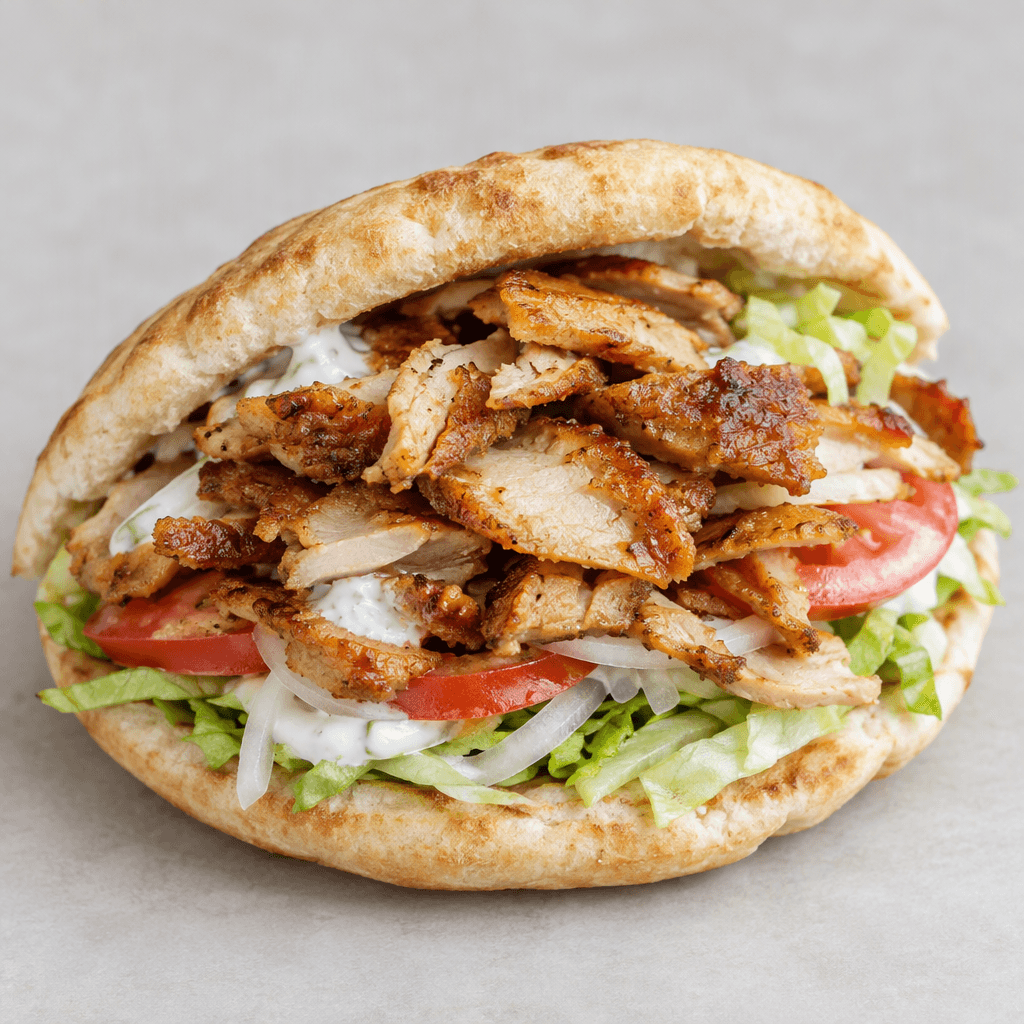
Chicken Döner Calories
Popular street food, protein source
In season: Spring · Summer · Autumn · Winter
CALORIES
GI
POTASSIUM
FIBER
Quick answer
1 serving (medium) of Chicken Döner (120 g) has 216 calories. That works out to 180 calories per 100 g. It contains 4.2 g of carbs, 21.6 g of protein, 12 g of fat and 0.6 g of fiber. Its 8.6 mg of B3 covers 54% of the Daily Value. Its glycemic index is 0 (low), so it raises blood sugar slowly.
What is Chicken Döner?
Chicken Döner is made by seasoning chicken, cooking it on a vertical spit and shaving off thin slices as the outside browns. It is a familiar street-food favourite in Turkey and is also served in döner shops around the world.
The meat is juicy with lightly crisp edges, and is commonly tucked into flatbread with salad and a creamy or tangy sauce. In Turkey, it may also come as a plate with rice or salad; elsewhere, wraps and sandwiches are popular. It provides a substantial amount of protein, with 18 g per 100 g. For a lighter meal, ask for less sauce or have it with extra salad.
Chicken Döner Nutrition Facts
Selected: 100 g
180
KCAL / 100G
Carbs
3.5g
· 1% DV
Protein
18g
· 36% DV
Fat
10g
· 13% DV
Fiber
0.5g
· 2% DV
DV is the share of the daily value covered, on a 2,000 kcal reference diet.
Calories come from: Carbs 8% · Protein 41% · Fat 51%
Chicken Döner Vitamins & Minerals
Vitamins
B3
7.2mg · 45% DV
B6
0.45mg · 26% DV
B5
0.9mg · 18% DV
Biotin
4µg · 13% DV
Minerals
Phosphorus
165mg · 24% DV
Sodium
420mg · 18% DV
Selenium
10µg · 18% DV
Zinc
1mg · 9% DV
How Nutritious Is Chicken Döner?
Nutrient density
High
How many vitamins, minerals and how much fiber this food carries per calorie. A high score means a lot of nutrition for few calories.
Satiety score
Medium
An EatBetter score computed from fiber, protein and calorie density. A high score means staying full longer on the same calories.
Both scores are calculated per 100 g and do not change with the selected portion. The satiety score is EatBetter's own calculation, not a clinical measure.
Chicken Döner Glycemic Index
GLYCEMIC INDEX
GLYCEMIC LOAD
Accounts for portion size — a more realistic measure than GI alone.
How to Burn Off Chicken Döner
To burn the 180 calories in 100 g:
🚶
Walking (5 km/h)
🏃
Running (8 km/h)
🚴
Cycling
🏊
Swimming
Times are calculated with the MET equation for a 70 kg adult. Actual burn varies with your weight, age and pace.
Is Chicken Döner Processed?
NOVA 3
Processed
1. Unprocessed
2. Minimally Processed
3. Processed
4. Ultra-Processed
NOVA classifies foods into 4 groups by industrial processing. NOVA 1 (unprocessed) is the healthiest.
Does Chicken Döner Contain Allergens?
No known major allergens
Which Diets Is Chicken Döner Good For?
Vegan
— Not suitable
Vegetarian
— Not suitable
Gluten-Free
✓ Suitable
Dairy-Free
— Not suitable
Mediterranean
✓ Suitable
Paleo
✓ Suitable
Whole30
— Not suitable
DASH
— Not suitable
Keto
✓ Suitable
Low FODMAP
— Not suitable
Chicken Döner Fat Profile
SATURATED
2.5g
MONOUNSATURATED
4.1g
POLYUNSATURATED
1.2g
Omega 6:3 ratio 6.4:1
Above the ideal 4:1 (6.4:1).
Compare Chicken Döner
Foods Similar to Chicken Döner
Frequently Asked Questions About Chicken Döner
What is Chicken Döner made of?
Chicken Döner is made from thin pieces of chicken, usually seasoned or marinated and stacked on a vertical spit. The rotating stack cooks on the outside, and the browned meat is shaved off in thin slices as it is served.
How is Chicken Döner different from shawarma?
Chicken Döner and shawarma both use seasoned meat cooked on a rotating vertical spit, but they come from different culinary traditions. Their spice blends, marinades, breads, and toppings vary; shawarma often uses Middle Eastern seasonings, while Chicken Döner is associated with Turkish cuisine.
Is Chicken Döner the same as chicken gyro?
No. Chicken Döner is Turkish, while gyro is Greek; both are commonly cooked on a vertical spit, but their seasoning and traditional accompaniments differ. Gyro is often served with tzatziki, whereas Chicken Döner may come in flatbread with salad and other sauces.
Can Chicken Döner be pink inside?
No, Chicken Döner should be fully cooked, not pink or translucent in the middle. Thin slices from a spit can vary in color, so the safest check is that the chicken is thoroughly cooked throughout before it is served.
Which cut of chicken works best for Chicken Döner?
Chicken thighs usually work best for Chicken Döner because their extra fat helps the meat stay juicy during cooking. Breast meat can also be used, but it dries out more easily, so avoid overcooking it and consider mixing it with thigh meat.
How do you make Chicken Döner at home without a rotisserie?
You can make Chicken Döner at home by marinating thin chicken slices, stacking them tightly in a loaf pan, and baking until fully cooked. Slice the cooked stack thinly, then briefly brown the slices in a hot pan for crisp edges.
What should you serve with Chicken Döner?
Chicken Döner pairs well with flatbread, rice, chopped salad, pickled vegetables, or grilled tomatoes and peppers. For a Turkish-style meal, serve it with ayran; adding fresh vegetables can balance the savory meat and creamy sauces.
Can you freeze Chicken Döner?
Yes, cooked Chicken Döner can be frozen in an airtight container or freezer bag. Freeze the meat separately from lettuce, tomato, bread, and sauces, then thaw it in the refrigerator and reheat it thoroughly before serving.
How do you keep Chicken Döner from drying out?
Keep Chicken Döner juicy by using thigh meat, marinating it, and avoiding prolonged cooking. If reheating sliced meat, warm it briefly in a covered pan with a small splash of water or stock rather than leaving it exposed to high heat.
Is Chicken Döner a good choice after a workout?
Chicken Döner can work as a post-workout meal because it provides protein, which supports muscle repair. Pair it with a carbohydrate source such as bread or rice and some vegetables; the amount to eat depends on your training and appetite.
Have another question about Chicken Döner?
Ask the AI nutrition coach — calories, portions, alternatives and more, answered in seconds in the app.

Scan calories with your camera
Instant AI nutrition analysis

Nutrition data compiled from USDA FoodData Central and scientific sources.