

Ready & Packaged Foods
All →Vegetables & Legumes
All →Desserts & Confectionery
All →Meat & Protein
All →Grains & Bakery
All →Beverages
All →Milk & Dairy
All →

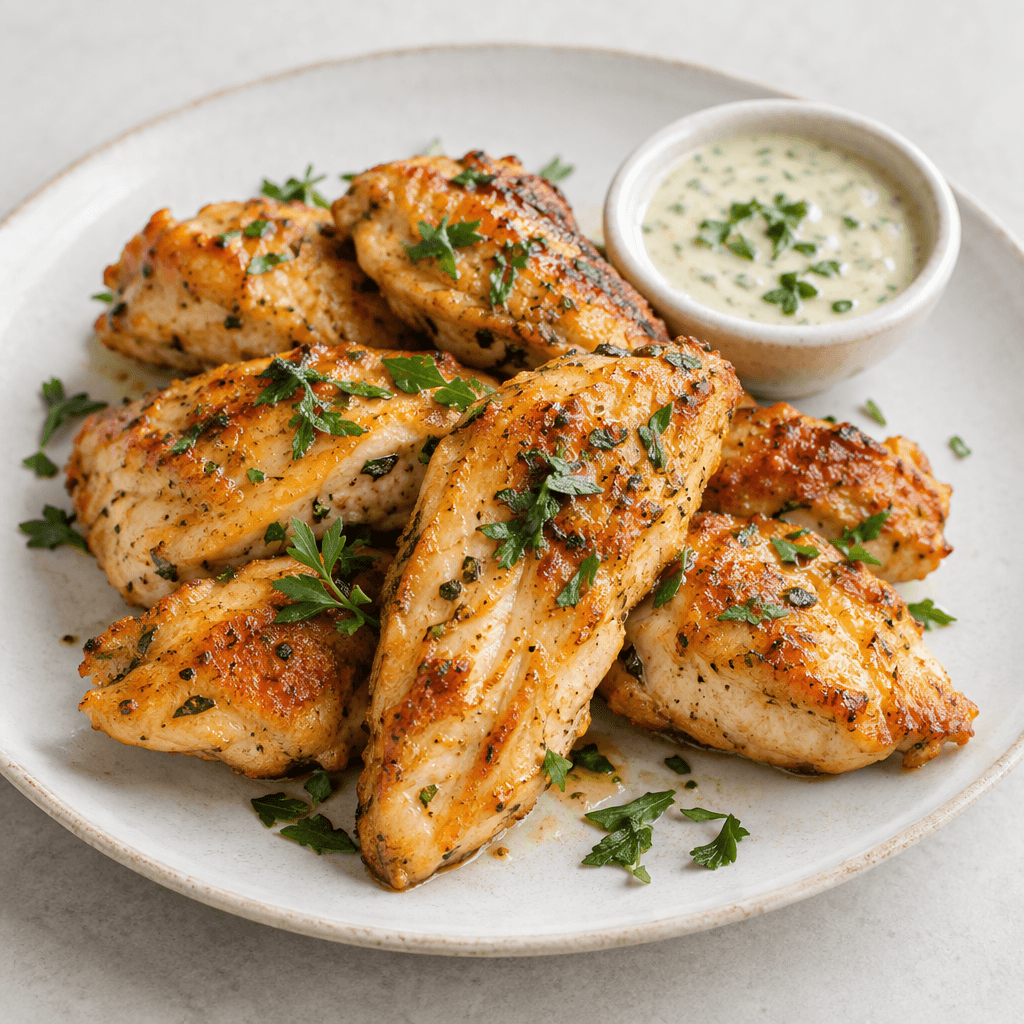
Chicken dish Calories
Protein source, versatile preparation, can be low-fat
In season: Spring · Summer · Autumn · Winter
CALORIES
GI
POTASSIUM
FIBER
Quick answer
1 piece (medium) of Chicken dish (150 g) has 248 calories. That works out to 165 calories per 100 g. It contains 0.8 g of carbs, 33.8 g of protein, 10.5 g of fat and 0 g of fiber. Its 12.8 mg of B3 covers 80% of the Daily Value. Its glycemic index is 0 (low), so it raises blood sugar slowly.
What is Chicken dish?
Chicken dish is a broad name for meals made by cooking chicken, often in pieces, with herbs, spices or a sauce. There is no single recipe or place of origin: roasting, pan-cooking and simmering are common approaches in kitchens around the world, with seasonings shaped by local traditions.
The meat can be tender and juicy, while browned edges add a savoury, lightly roasted flavour; the sauce and herbs bring the character of the particular recipe. Serve it with vegetables, salad, potatoes, rice or bread for an easy lunch or dinner. With 22.5 g of protein per 100 g, it can anchor a protein-rich meal. For a lighter version, choose skinless chicken and use a modest amount of oil or sauce.
Chicken dish Nutrition Facts
Selected: 100 g
165
KCAL / 100G
Carbs
0.5g
· 0% DV
Protein
22.5g
· 45% DV
Fat
7g
· 9% DV
Fiber
0g
· 0% DV
DV is the share of the daily value covered, on a 2,000 kcal reference diet.
Calories come from: Carbs 1% · Protein 58% · Fat 41%
Chicken dish Vitamins & Minerals
Vitamins
B3
8.5mg · 53% DV
B6
0.5mg · 29% DV
B5
0.9mg · 18% DV
B12
0.3µg · 13% DV
Minerals
Phosphorus
180mg · 26% DV
Selenium
14µg · 25% DV
Zinc
1mg · 9% DV
Potassium ⭐
250mg · 7% DV
How Nutritious Is Chicken dish?
Nutrient density
High
How many vitamins, minerals and how much fiber this food carries per calorie. A high score means a lot of nutrition for few calories.
Satiety score
Medium
An EatBetter score computed from fiber, protein and calorie density. A high score means staying full longer on the same calories.
Both scores are calculated per 100 g and do not change with the selected portion. The satiety score is EatBetter's own calculation, not a clinical measure.
Chicken dish Glycemic Index
GLYCEMIC INDEX
GLYCEMIC LOAD
Accounts for portion size — a more realistic measure than GI alone.
How to Burn Off Chicken dish
To burn the 165 calories in 100 g:
🚶
Walking (5 km/h)
🏃
Running (8 km/h)
🚴
Cycling
🏊
Swimming
Times are calculated with the MET equation for a 70 kg adult. Actual burn varies with your weight, age and pace.
Is Chicken dish Processed?
NOVA 2
Minimally Processed
1. Unprocessed
2. Minimally Processed
3. Processed
4. Ultra-Processed
NOVA classifies foods into 4 groups by industrial processing. NOVA 1 (unprocessed) is the healthiest.
Does Chicken dish Contain Allergens?
No known major allergens
Which Diets Is Chicken dish Good For?
Vegan
— Not suitable
Vegetarian
— Not suitable
Gluten-Free
✓ Suitable
Dairy-Free
— Not suitable
Mediterranean
✓ Suitable
Paleo
✓ Suitable
Whole30
— Not suitable
DASH
— Not suitable
Keto
✓ Suitable
Low FODMAP
— Not suitable
Chicken dish Fat Profile
SATURATED
2g
MONOUNSATURATED
2.5g
POLYUNSATURATED
1.2g
Omega 6:3 ratio 10:1
Above the ideal 4:1 (10:1).
Compare Chicken dish
Foods Similar to Chicken dish
Frequently Asked Questions About Chicken dish
What goes well with a chicken dish?
A chicken dish pairs well with rice, potatoes, pasta, or roasted vegetables. For a lighter plate, add a crisp salad or steamed greens. Choose sides that complement the dish’s sauce and seasoning rather than overpowering them.
How do you keep a chicken dish from drying out?
Keep a chicken dish moist by avoiding overcooking and using enough liquid or sauce during cooking. Chicken breast dries out faster than thighs, so check it early; resting the cooked pieces briefly also helps retain their juices.
How long does a cooked chicken dish last in the fridge?
A cooked chicken dish generally keeps for 3–4 days in the refrigerator. Refrigerate it in a covered container within two hours of cooking, and reheat only the portion you plan to eat.
What temperature should a chicken dish reach to be safe?
A chicken dish is safe when the thickest piece of chicken reaches 74°C (165°F) at its center. Check with a food thermometer; browned edges or clear-looking juices alone do not reliably confirm that the chicken is fully cooked.
Which chicken cuts work best in a chicken dish?
Chicken breast cooks quickly and is relatively lean, while thighs tend to stay juicier in longer-cooked dishes. Use pieces of similar size so they cook evenly, and adjust the cooking time to the cut rather than relying on one fixed timing.
Can you freeze a chicken dish?
Yes, most chicken dishes freeze well, especially stews and dishes with broth or tomato sauce. Cool the food promptly, pack it in airtight portions, and thaw it in the refrigerator; cream-based sauces may separate or turn grainy.
What herbs and spices are best for a chicken dish?
Garlic, black pepper, paprika, thyme, and rosemary are versatile choices for a chicken dish. Use cumin or chili for a warmer, bolder flavor, or lemon and fresh herbs when you want the chicken to taste brighter.
Can you cook a chicken dish from frozen chicken?
Yes, you can cook a chicken dish with frozen chicken, but it will take longer and may cook unevenly if the pieces are stuck together. Separate the pieces when possible and verify that the thickest part reaches 74°C (165°F); don’t use a slow cooker for frozen chicken.
Should you wash chicken before making a chicken dish?
No, don’t wash chicken before making a chicken dish. Rinsing can splash bacteria onto the sink, counters, and utensils; cooking the chicken thoroughly kills harmful bacteria, while washing adds a cross-contamination risk.
How can you make a chicken dish with crispier skin?
For a chicken dish with crispier skin, pat the skin dry before cooking and leave space between the pieces so steam can escape. Roast or pan-sear uncovered; a wet sauce added early will soften the skin.
Have another question about Chicken dish?
Ask the AI nutrition coach — calories, portions, alternatives and more, answered in seconds in the app.

Scan calories with your camera
Instant AI nutrition analysis

Nutrition data compiled from USDA FoodData Central and scientific sources.