

Ready & Packaged Foods
All →Vegetables & Legumes
All →Desserts & Confectionery
All →Meat & Protein
All →Grains & Bakery
All →Beverages
All →Milk & Dairy
All →

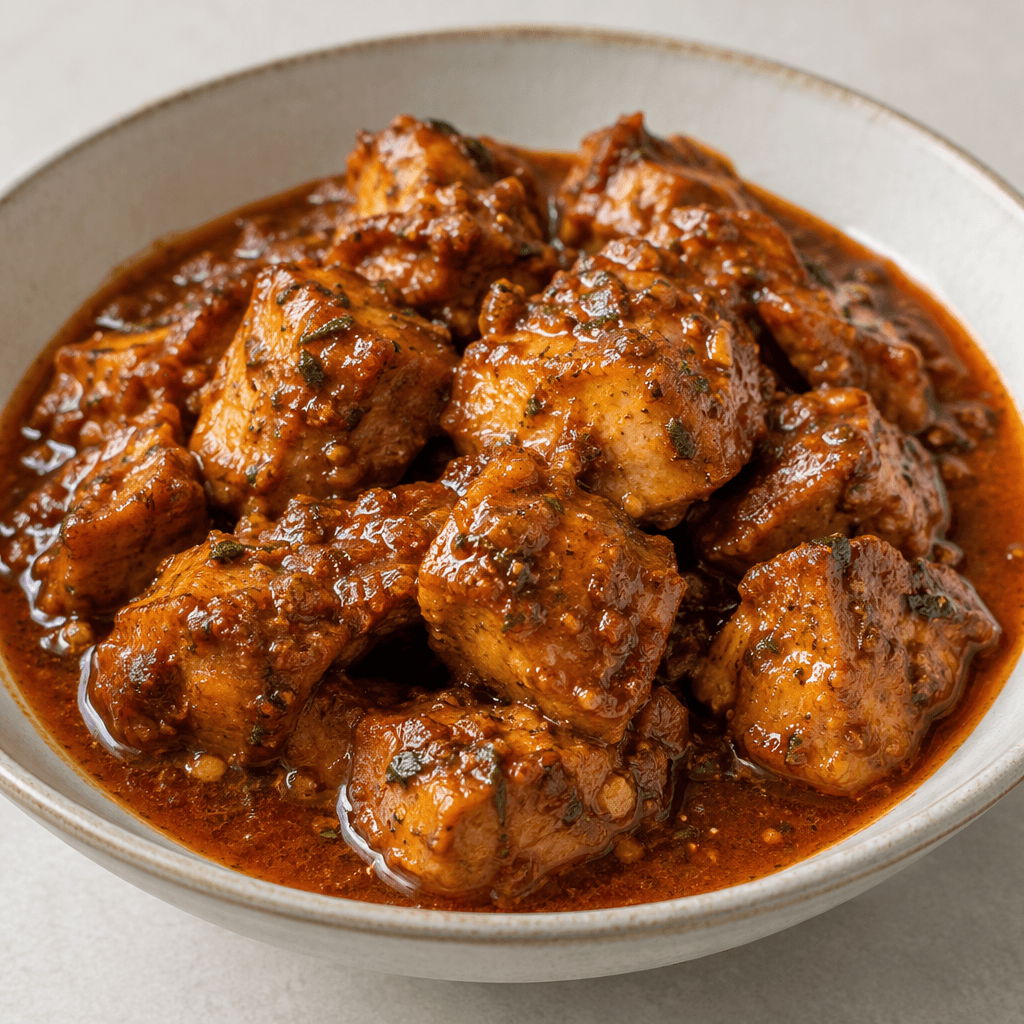
Chicken curry with sauce Calories
Protein-rich, spicy, popular Asian dish
In season: Spring · Summer · Autumn · Winter
CALORIES
GI
POTASSIUM
FIBER
Quick answer
1 serving (medium) of Chicken curry with sauce (180 g) has 252 calories. That works out to 140 calories per 100 g. It contains 11.7 g of carbs, 24.3 g of protein, 11.2 g of fat and 2.2 g of fiber. Its 7.6 mg of B3 covers 47% of the Daily Value. Its glycemic index is 45 (low), so it raises blood sugar slowly.
What is Chicken curry with sauce?
Chicken curry with sauce brings together pieces of chicken and a thick sauce seasoned with curry spices. Curry dishes have deep roots across South Asian cuisines, but recipes and styles vary widely; this version is one of many found in homes and restaurants around the world.
The chicken is tender, while the sauce is savoury, aromatic and often gently spicy, though its heat depends on the recipe. It is commonly served with rice, flatbread or vegetables, making an easy main meal. With 13.5 g of protein per 100 g, it can be a protein-rich choice. For a lighter plate, use a modest amount of sauce and pair it with plenty of vegetables.
Chicken curry with sauce Nutrition Facts
Selected: 100 g
140
KCAL / 100G
Carbs
6.5g
· 2% DV
Protein
13.5g
· 27% DV
Fat
6.2g
· 8% DV
Fiber
1.2g
· 4% DV
DV is the share of the daily value covered, on a 2,000 kcal reference diet.
Calories come from: Carbs 19% · Protein 40% · Fat 41%
Chicken curry with sauce Vitamins & Minerals
Vitamins
B3
4.2mg · 26% DV
B6
0.38mg · 22% DV
B5
0.85mg · 17% DV
Biotin
3.5µg · 12% DV
Minerals
Phosphorus
120mg · 17% DV
Sodium
340mg · 15% DV
Selenium
7.5µg · 14% DV
Zinc
1mg · 9% DV
How Nutritious Is Chicken curry with sauce?
Nutrient density
High
How many vitamins, minerals and how much fiber this food carries per calorie. A high score means a lot of nutrition for few calories.
Satiety score
Medium
An EatBetter score computed from fiber, protein and calorie density. A high score means staying full longer on the same calories.
Both scores are calculated per 100 g and do not change with the selected portion. The satiety score is EatBetter's own calculation, not a clinical measure.
Chicken curry with sauce Glycemic Index
GLYCEMIC INDEX
GLYCEMIC LOAD
Accounts for portion size — a more realistic measure than GI alone.
How to Burn Off Chicken curry with sauce
To burn the 140 calories in 100 g:
🚶
Walking (5 km/h)
🏃
Running (8 km/h)
🚴
Cycling
🏊
Swimming
Times are calculated with the MET equation for a 70 kg adult. Actual burn varies with your weight, age and pace.
Is Chicken curry with sauce Processed?
NOVA 3
Processed
1. Unprocessed
2. Minimally Processed
3. Processed
4. Ultra-Processed
NOVA classifies foods into 4 groups by industrial processing. NOVA 1 (unprocessed) is the healthiest.
Does Chicken curry with sauce Contain Allergens?
No known major allergens
Which Diets Is Chicken curry with sauce Good For?
Vegan
— Not suitable
Vegetarian
— Not suitable
Gluten-Free
✓ Suitable
Dairy-Free
— Not suitable
Mediterranean
✓ Suitable
Paleo
✓ Suitable
Whole30
— Not suitable
DASH
— Not suitable
Keto
— Not suitable
Low FODMAP
— Not suitable
Chicken curry with sauce Fat Profile
SATURATED
1.7g
MONOUNSATURATED
2.1g
POLYUNSATURATED
1.2g
Omega 6:3 ratio 4.6:1
Above the ideal 4:1 (4.6:1).
Compare Chicken curry with sauce
Foods Similar to Chicken curry with sauce
Frequently Asked Questions About Chicken curry with sauce
What is chicken curry with sauce made of?
Chicken curry with sauce is made with chicken pieces simmered in a seasoned curry sauce. Recipes commonly use curry powder or curry paste with onion, garlic, and a creamy base such as cream, milk, or coconut milk.
How do you make chicken curry with sauce?
Brown bite-sized chicken pieces, then cook them with onion, garlic, and curry seasoning before adding the sauce ingredients. Simmer until the chicken is cooked through and the sauce has thickened; avoid prolonged cooking, which can dry out lean chicken breast.
Is chicken curry with sauce Indian?
Chicken curry with sauce is inspired by curry dishes associated with South Asian cooking, but the creamy, mild versions served in many homes and restaurants around the world are adaptations. There is no single recipe that represents all Indian chicken curries.
What should you serve with chicken curry with sauce?
Rice is a popular side for chicken curry with sauce because it absorbs the gravy. Naan or another flatbread also works well, while steamed vegetables or a crisp salad can balance the richness of a creamy version.
Can you make chicken curry with sauce without cream?
Yes, chicken curry with sauce can be made without cream. Coconut milk, plain yogurt, or a broth-based sauce are alternatives; stir yogurt in over low heat or off the heat to reduce the chance of curdling.
What is the difference between curry powder and curry paste in chicken curry with sauce?
Curry powder is a dry blend of spices, while curry paste is a moist mixture that often includes aromatics such as chili, garlic, and ginger. Either can flavor chicken curry with sauce, but paste may add more moisture and heat.
How do you keep chicken in chicken curry with sauce from getting tough?
Use evenly sized pieces and cook them only until done; small pieces of chicken breast can turn tough if simmered too long. Chicken thighs are more forgiving and usually stay moist in chicken curry with sauce.
Can you freeze chicken curry with sauce?
Yes, chicken curry with sauce can be frozen in airtight portions after it has cooled. Thaw it in the refrigerator and reheat it until steaming hot, stirring well; cream-based sauces may separate slightly but can often be brought back together by stirring.
How long does chicken curry with sauce last in the fridge?
Chicken curry with sauce keeps for about 3–4 days in the refrigerator when refrigerated promptly in a covered container. Reheat only the portion you plan to eat, and make sure it is thoroughly hot throughout.
Is chicken curry with sauce usually spicy?
Chicken curry with sauce can be mild or hot, depending on the curry blend and added chili. For a gentler version, choose a mild seasoning and leave out fresh or dried chili; add heat gradually when cooking for a group.
Have another question about Chicken curry with sauce?
Ask the AI nutrition coach — calories, portions, alternatives and more, answered in seconds in the app.

Scan calories with your camera
Instant AI nutrition analysis

Nutrition data compiled from USDA FoodData Central and scientific sources.