

Ready & Packaged Foods
All →Vegetables & Legumes
All →Desserts & Confectionery
All →Meat & Protein
All →Grains & Bakery
All →Beverages
All →Milk & Dairy
All →

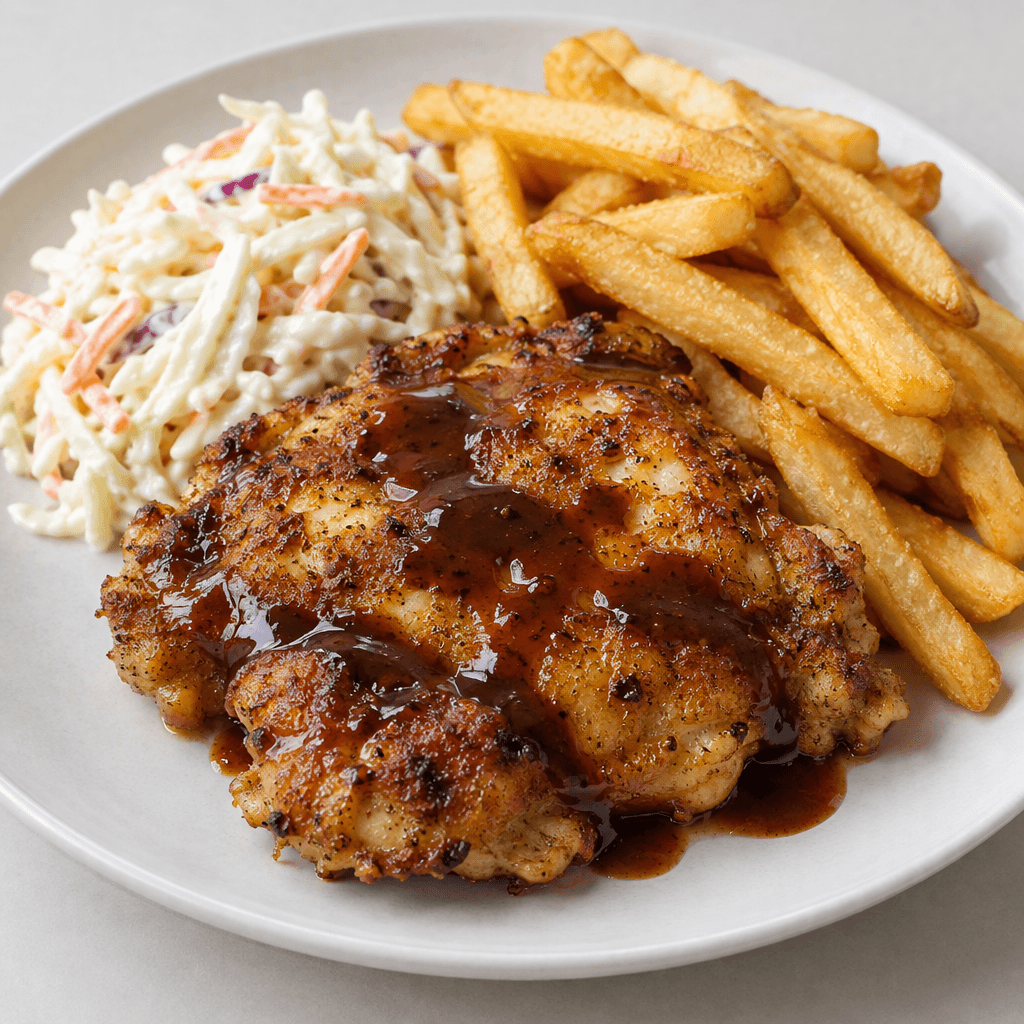
Chicken Chop Calories
High protein, low carb, B vitamins, iron
In season: Spring · Summer · Autumn · Winter
CALORIES
GI
POTASSIUM
FIBER
Quick answer
1 piece (medium) of Chicken Chop (120 g) has 216 calories. That works out to 180 calories per 100 g. It contains 0 g of carbs, 27 g of protein, 12 g of fat and 0 g of fiber. Its 10.2 mg of B3 covers 64% of the Daily Value. Its glycemic index is 0 (low), so it raises blood sugar slowly.
What is Chicken Chop?
Chicken Chop is a portion of chicken, commonly cut from the thigh and served either boneless or with the bone in. It is often seasoned or marinated, then grilled or pan-cooked until browned, with tender meat beneath the surface. The flavour can be kept simple with salt and pepper or built up with herbs, spices and a savoury sauce.
It works well as an everyday lunch or dinner with rice, potatoes, salad or vegetables; in many places it is also served with fries and coleslaw. Chicken Chop is high in protein and contains no carbohydrate. For a lighter plate, grill it and pair it with a generous serving of vegetables instead of fried sides.
Chicken Chop Nutrition Facts
Selected: 100 g
180
KCAL / 100G
Carbs
0g
· 0% DV
Protein
22.5g
· 45% DV
Fat
10g
· 13% DV
Fiber
0g
· 0% DV
DV is the share of the daily value covered, on a 2,000 kcal reference diet.
Calories come from: Carbs 0% · Protein 50% · Fat 50%
Chicken Chop Vitamins & Minerals
Vitamins
B3
8.5mg · 53% DV
B6
0.6mg · 35% DV
B5
1.1mg · 22% DV
Biotin
5µg · 17% DV
Minerals
Phosphorus
180mg · 26% DV
Selenium
13µg · 24% DV
Zinc
1mg · 9% DV
Potassium ⭐
260mg · 8% DV
How Nutritious Is Chicken Chop?
Nutrient density
High
How many vitamins, minerals and how much fiber this food carries per calorie. A high score means a lot of nutrition for few calories.
Satiety score
Medium
An EatBetter score computed from fiber, protein and calorie density. A high score means staying full longer on the same calories.
Both scores are calculated per 100 g and do not change with the selected portion. The satiety score is EatBetter's own calculation, not a clinical measure.
Chicken Chop Glycemic Index
GLYCEMIC INDEX
GLYCEMIC LOAD
Accounts for portion size — a more realistic measure than GI alone.
How to Burn Off Chicken Chop
To burn the 180 calories in 100 g:
🚶
Walking (5 km/h)
🏃
Running (8 km/h)
🚴
Cycling
🏊
Swimming
Times are calculated with the MET equation for a 70 kg adult. Actual burn varies with your weight, age and pace.
Is Chicken Chop Processed?
NOVA 2
Minimally Processed
1. Unprocessed
2. Minimally Processed
3. Processed
4. Ultra-Processed
NOVA classifies foods into 4 groups by industrial processing. NOVA 1 (unprocessed) is the healthiest.
Does Chicken Chop Contain Allergens?
No known major allergens
Which Diets Is Chicken Chop Good For?
Vegan
— Not suitable
Vegetarian
— Not suitable
Gluten-Free
✓ Suitable
Dairy-Free
— Not suitable
Mediterranean
✓ Suitable
Paleo
✓ Suitable
Whole30
— Not suitable
DASH
— Not suitable
Keto
✓ Suitable
Low FODMAP
— Not suitable
Chicken Chop Fat Profile
SATURATED
2.5g
MONOUNSATURATED
3.7g
POLYUNSATURATED
2.1g
Omega 6:3 ratio 11.4:1
Above the ideal 4:1 (11.4:1).
Compare Chicken Chop
Foods Similar to Chicken Chop
Frequently Asked Questions About Chicken Chop
What cut is a chicken chop?
A chicken chop is usually a thigh portion, often flattened and sold boneless, though cuts vary by butcher and region. Check whether yours is bone-in and skin-on before following a recipe, since those details affect cooking time and texture.
How do you keep chicken chops juicy?
Cook chicken chops only until the thickest part reaches 165°F (74°C), then let them rest briefly before cutting. Overcooking is the most common reason they turn dry; an instant-read thermometer is more reliable than judging doneness by browned surfaces.
How do you cook chicken chops in an air fryer?
Air-fry chicken chops in a single layer, turning them partway through, until the thickest part reaches 165°F (74°C). The exact time depends on thickness and whether the pieces are bone-in, so use a thermometer rather than relying on a fixed cooking time.
What is the best marinade for chicken chops?
A marinade of oil, garlic, lemon, and herbs works well for chicken chops, while yogurt and spices give them a tender, savory coating. Marinate them in the refrigerator, and discard any marinade that touched raw chicken unless you boil it before serving.
Can you grill chicken chops without them sticking?
Yes, chicken chops grill more cleanly when the grates are hot and lightly oiled and the meat is turned only after it releases easily. Trim excess marinade to reduce flare-ups, and check that the thickest part reaches 165°F (74°C) before serving.
Are chicken chops the same as chicken thighs?
Chicken chops are often made from thigh meat, but the terms are not always identical. A chop may be a flattened or trimmed thigh portion, and in some shops it may include bone; check the cut instead of assuming every chicken chop is boneless.
Why do chicken chops turn tough?
Chicken chops usually turn tough because they are overcooked or cooked over excessive heat. Thigh meat is forgiving, but it can still lose moisture; cook it to 165°F (74°C), then allow a short rest so the juices settle before serving.
How can you tell when chicken chops are fully cooked?
Chicken chops are safely cooked when the thickest part reaches 165°F (74°C), measured with a food thermometer without touching bone. A browned exterior alone does not prove the center is done, especially with thick or bone-in pieces.
How long do cooked chicken chops last in the fridge?
Cooked chicken chops keep for 3–4 days in a refrigerator at 40°F (4°C) or colder when stored in a covered container. Refrigerate them promptly after the meal, and reheat leftovers until steaming hot throughout.
Can you freeze cooked chicken chops?
Yes, cooked chicken chops freeze well when wrapped tightly or stored in an airtight freezer container. Thaw them in the refrigerator and reheat thoroughly; freezing may soften a crisp browned coating, so the oven or air fryer can help restore its texture.
Have another question about Chicken Chop?
Ask the AI nutrition coach — calories, portions, alternatives and more, answered in seconds in the app.

Scan calories with your camera
Instant AI nutrition analysis

Nutrition data compiled from USDA FoodData Central and scientific sources.