

Ready & Packaged Foods
All →Vegetables & Legumes
All →Desserts & Confectionery
All →Meat & Protein
All →Grains & Bakery
All →Beverages
All →Milk & Dairy
All →

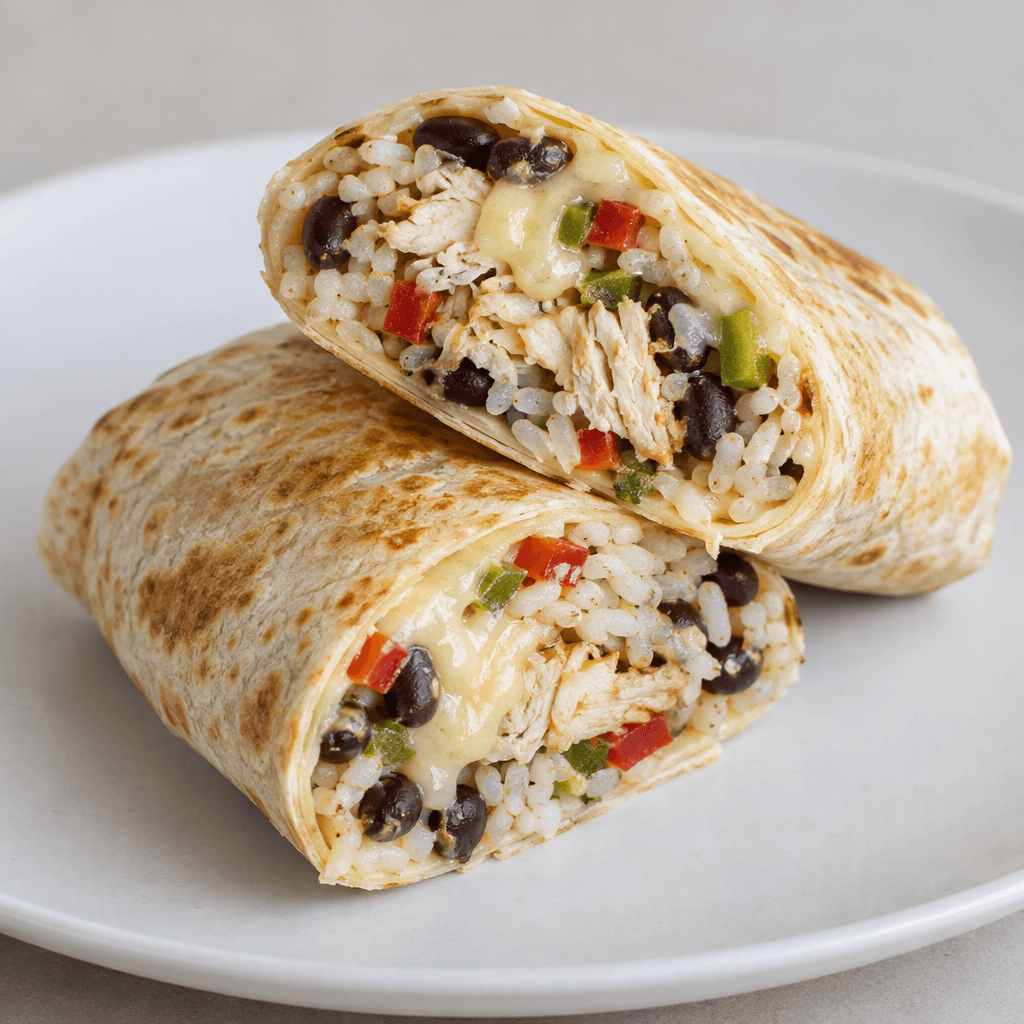
Chicken Burrito Calories
Rich in protein and fiber, contains a variety of vitamins and minerals.
In season: Spring · Summer · Autumn · Winter
CALORIES
GI
POTASSIUM
FIBER
Quick answer
1 piece (medium) of Chicken Burrito (220 g) has 407 calories. That works out to 185 calories per 100 g. It contains 48.4 g of carbs, 25.3 g of protein, 12.1 g of fat and 7 g of fiber. Its 8.4 mg of B3 covers 52% of the Daily Value. Its glycemic index is 55 (medium), so it raises blood sugar at a moderate pace.
What is Chicken Burrito?
A Chicken Burrito takes its cue from burritos popular in northern Mexico: a large flour tortilla wrapped around a filling. This version combines shredded chicken with rice, beans, cheese and vegetables, though fillings and seasonings vary between cooks and regions. Burritos also became a familiar casual meal in the United States, where larger, generously filled versions are common.
The tortilla is soft and easy to hold, with a hearty, savoury centre; it may be served warm, lightly toasted, and cut in half. Enjoy it as a filling lunch or dinner, with salsa, salad or a little lime on the side. Chicken contributes protein, while beans add fibre. For a lighter balance, add extra vegetables and use cheese and creamy sauces sparingly.
Chicken Burrito Nutrition Facts
Selected: 100 g
185
KCAL / 100G
Carbs
22g
· 8% DV
Protein
11.5g
· 23% DV
Fat
5.5g
· 7% DV
Fiber
3.2g
· 11% DV
DV is the share of the daily value covered, on a 2,000 kcal reference diet.
Calories come from: Carbs 48% · Protein 25% · Fat 27%
Chicken Burrito Vitamins & Minerals
Vitamins
B3
3.8mg · 24% DV
B6
0.32mg · 19% DV
B5
0.65mg · 13% DV
Biotin
3.2µg · 11% DV
Minerals
Sodium
390mg · 17% DV
Phosphorus
120mg · 17% DV
Selenium
7.2µg · 13% DV
Zinc
1mg · 9% DV
How Nutritious Is Chicken Burrito?
Nutrient density
Medium
How many vitamins, minerals and how much fiber this food carries per calorie. A high score means a lot of nutrition for few calories.
Satiety score
Medium
An EatBetter score computed from fiber, protein and calorie density. A high score means staying full longer on the same calories.
Both scores are calculated per 100 g and do not change with the selected portion. The satiety score is EatBetter's own calculation, not a clinical measure.
Chicken Burrito Glycemic Index
GLYCEMIC INDEX
GLYCEMIC LOAD
Accounts for portion size — a more realistic measure than GI alone.
How to Burn Off Chicken Burrito
To burn the 185 calories in 100 g:
🚶
Walking (5 km/h)
🏃
Running (8 km/h)
🚴
Cycling
🏊
Swimming
Times are calculated with the MET equation for a 70 kg adult. Actual burn varies with your weight, age and pace.
Is Chicken Burrito Processed?
NOVA 3
Processed
1. Unprocessed
2. Minimally Processed
3. Processed
4. Ultra-Processed
NOVA classifies foods into 4 groups by industrial processing. NOVA 1 (unprocessed) is the healthiest.
Does Chicken Burrito Contain Allergens?
Contains these allergens:
Which Diets Is Chicken Burrito Good For?
Vegan
— Not suitable
Vegetarian
— Not suitable
Gluten-Free
— Not suitable
Dairy-Free
— Not suitable
Mediterranean
✓ Suitable
Paleo
— Not suitable
Whole30
— Not suitable
DASH
— Not suitable
Keto
— Not suitable
Low FODMAP
— Not suitable
Chicken Burrito Fat Profile
SATURATED
1.4g
MONOUNSATURATED
2.1g
POLYUNSATURATED
1g
Omega 6:3 ratio 8:1
Above the ideal 4:1 (8:1).
Compare Chicken Burrito
Foods Similar to Chicken Burrito
Frequently Asked Questions About Chicken Burrito
What is in a chicken burrito?
A chicken burrito usually contains cooked chicken wrapped in a large flour tortilla, often with rice, beans, cheese, and vegetables. Salsa, avocado, or sour cream are common additions, but fillings vary by recipe and region.
How do you wrap a chicken burrito so it stays closed?
Place the chicken burrito filling in a compact strip below the center of a warm tortilla, leaving space at the edges. Fold in both sides, roll it firmly from the bottom, and set it seam-side down; warming the tortilla first makes it less likely to crack.
Is a chicken burrito healthy?
A chicken burrito can be a balanced meal because it can combine protein-rich chicken and fiber-rich beans with vegetables. Its overall nutritional quality depends on the fillings and portions, so going lighter on rich sauces and adding vegetables can make it a more nutritious choice.
What is the difference between a chicken burrito and a chicken chimichanga?
A chicken burrito is wrapped in a tortilla and usually served as is or lightly toasted. A chicken chimichanga is a filled burrito that is typically deep-fried, giving it a crisp exterior and making it a richer preparation.
Can you freeze a chicken burrito?
Yes, chicken burritos freeze well when wrapped individually and sealed in freezer-safe packaging. For better texture, leave out fresh lettuce and watery sauces, then add them after reheating. Thaw in the refrigerator or reheat thoroughly from frozen.
How do you keep a chicken burrito from getting soggy?
To keep a chicken burrito from getting soggy, drain beans and cooked vegetables well, let hot fillings cool slightly, and keep watery salsa or sour cream separate until serving. A layer of cheese or rice between moist ingredients and the tortilla can also help.
What sauce goes best with a chicken burrito?
Salsa is a classic choice for a chicken burrito, while smoky chipotle sauce adds heat and a deeper flavor. Guacamole or a mild yogurt-based sauce works well if you want a creamy contrast; serve sauces on the side to keep the tortilla from softening.
Can you make a chicken burrito without rice?
Yes, you can make a chicken burrito without rice. Add extra beans, grilled peppers, corn, or vegetables to fill it out, or simply use more chicken. The tortilla still wraps the ingredients in the same way.
Why does a chicken burrito fall apart when you eat it?
A chicken burrito usually falls apart when the tortilla is overfilled, cold, or loosely wrapped. Warm the tortilla until pliable, use a moderate amount of filling, fold in the sides before rolling, and let the wrapped burrito rest seam-side down.
What is the difference between a chicken burrito and a chicken taco?
A chicken burrito uses a large tortilla folded around a substantial filling and sealed into a compact wrap. A chicken taco is usually smaller, open or folded rather than fully enclosed, and served with fewer fillings.
Have another question about Chicken Burrito?
Ask the AI nutrition coach — calories, portions, alternatives and more, answered in seconds in the app.

Scan calories with your camera
Instant AI nutrition analysis

Nutrition data compiled from USDA FoodData Central and scientific sources.