

Ready & Packaged Foods
All →Vegetables & Legumes
All →Desserts & Confectionery
All →Meat & Protein
All →Grains & Bakery
All →Beverages
All →Milk & Dairy
All →

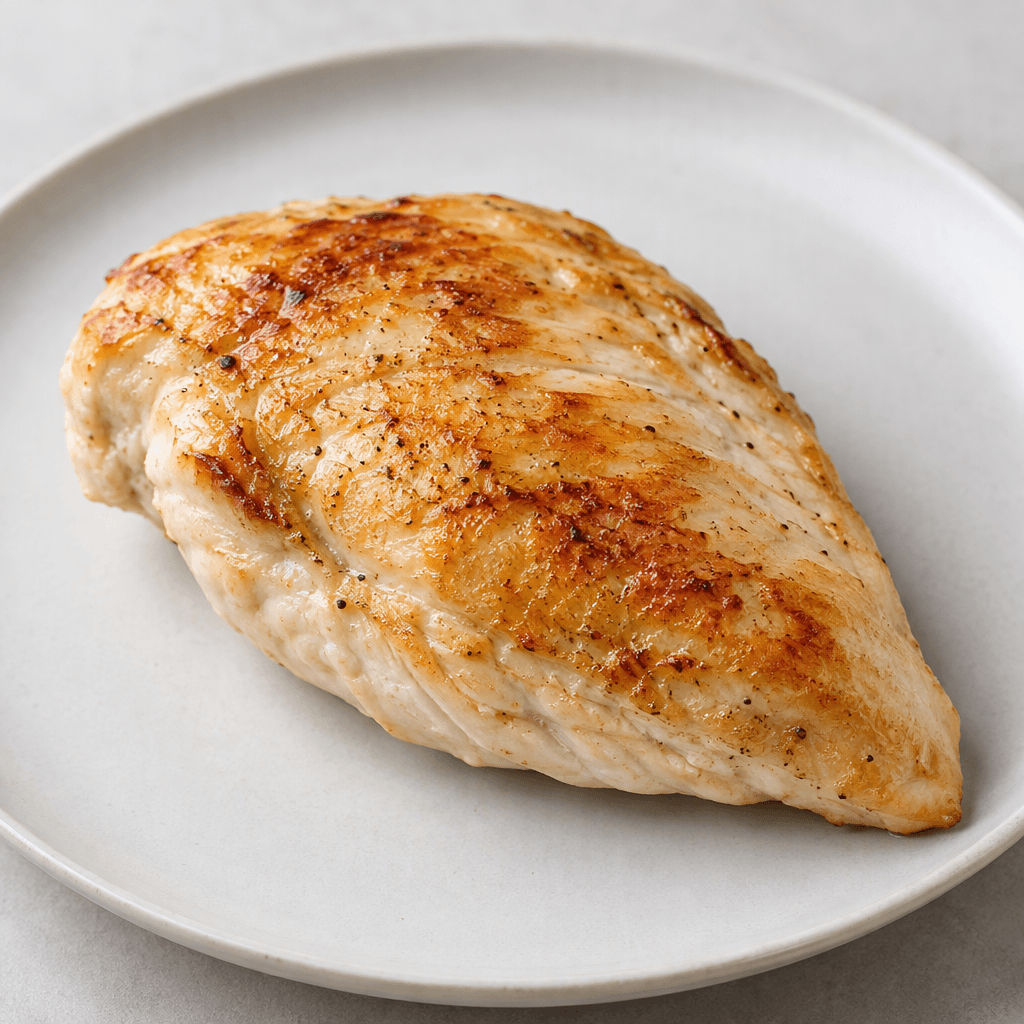
Sauteed Chicken Breast Calories
Lean protein, sautéed in oil, versatile
In season: Spring · Summer · Autumn · Winter
CALORIES
GI
POTASSIUM
FIBER
Quick answer
1 piece (medium) of Sauteed Chicken Breast (120 g) has 174 calories. That works out to 145 calories per 100 g. It contains 0.2 g of carbs, 33 g of protein, 4.2 g of fat and 0 g of fiber. Its 16.2 mg of B3 covers 101% of the Daily Value. Its glycemic index is 0 (low), so it raises blood sugar slowly.
What is Sauteed Chicken Breast?
Sauteed Chicken Breast is boneless chicken breast cooked in a pan with a little oil. It may be kept whole or sliced into strips or bite-sized pieces; at home, cooks often add aromatics or vegetables, though the chicken can also be simply seasoned and browned on its own.
The surface takes on a light golden color while the meat stays tender when it is not overcooked. Serve it with rice, potatoes, or a salad for an easy weeknight meal, or add vegetables to the pan for a more rounded plate. It is a lean, protein-rich choice, with very little carbohydrate, and works well in meal prep as well as freshly cooked meals.
Sauteed Chicken Breast Nutrition Facts
Selected: 100 g
145
KCAL / 100G
Carbs
0.2g
· 0% DV
Protein
27.5g
· 55% DV
Fat
3.5g
· 4% DV
Fiber
0g
· 0% DV
DV is the share of the daily value covered, on a 2,000 kcal reference diet.
Calories come from: Carbs 1% · Protein 77% · Fat 22%
Sauteed Chicken Breast Vitamins & Minerals
Vitamins
B3
13.5mg · 84% DV
B6
0.7mg · 41% DV
B5
1.1mg · 22% DV
B12
0.3µg · 13% DV
Minerals
Selenium
18µg · 33% DV
Phosphorus
210mg · 30% DV
Zinc
1mg · 9% DV
Potassium ⭐
320mg · 9% DV
How Nutritious Is Sauteed Chicken Breast?
Nutrient density
High
How many vitamins, minerals and how much fiber this food carries per calorie. A high score means a lot of nutrition for few calories.
Satiety score
Medium
An EatBetter score computed from fiber, protein and calorie density. A high score means staying full longer on the same calories.
Both scores are calculated per 100 g and do not change with the selected portion. The satiety score is EatBetter's own calculation, not a clinical measure.
Sauteed Chicken Breast Glycemic Index
GLYCEMIC INDEX
GLYCEMIC LOAD
Accounts for portion size — a more realistic measure than GI alone.
How to Burn Off Sauteed Chicken Breast
To burn the 145 calories in 100 g:
🚶
Walking (5 km/h)
🏃
Running (8 km/h)
🚴
Cycling
🏊
Swimming
Times are calculated with the MET equation for a 70 kg adult. Actual burn varies with your weight, age and pace.
Is Sauteed Chicken Breast Processed?
NOVA 2
Minimally Processed
1. Unprocessed
2. Minimally Processed
3. Processed
4. Ultra-Processed
NOVA classifies foods into 4 groups by industrial processing. NOVA 1 (unprocessed) is the healthiest.
Does Sauteed Chicken Breast Contain Allergens?
No known major allergens
Which Diets Is Sauteed Chicken Breast Good For?
Vegan
— Not suitable
Vegetarian
— Not suitable
Gluten-Free
✓ Suitable
Dairy-Free
— Not suitable
Mediterranean
✓ Suitable
Paleo
✓ Suitable
Whole30
— Not suitable
DASH
— Not suitable
Keto
✓ Suitable
Low FODMAP
— Not suitable
Sauteed Chicken Breast Fat Profile
SATURATED
1g
MONOUNSATURATED
1.1g
POLYUNSATURATED
0.5g
Omega 6:3 ratio 7.5:1
Above the ideal 4:1 (7.5:1).
Compare Sauteed Chicken Breast
Foods Similar to Sauteed Chicken Breast
Frequently Asked Questions About Sauteed Chicken Breast
How do you keep sautéed chicken breast juicy?
Keep sautéed chicken breast juicy by cutting it into evenly sized pieces, heating the pan before adding the chicken, and avoiding overcooking. Cook in batches if needed so the pieces brown instead of releasing moisture and steaming in a crowded pan.
How long does sautéed chicken breast take to cook?
Small pieces of sautéed chicken breast often cook in just a few minutes, while thicker pieces take longer. Check the thickest piece: it should be opaque throughout and reach an internal temperature of 165°F (74°C) for safe eating.
Why does sautéed chicken breast turn out dry?
Sautéed chicken breast usually turns dry because it is cooked for too long; lean breast meat loses moisture quickly under heat. Cut pieces evenly, take them off the heat as soon as they are cooked through, and let them rest briefly before serving.
Should you marinate chicken breast before sautéing it?
Marinating chicken breast before sautéing is optional, but it adds flavor and can help the surface stay moist. A short marinade with oil, lemon, herbs, or spices works well; pat off excess liquid before cooking so the chicken browns rather than steams.
What does it mean to sauté chicken breast?
To sauté chicken breast means to cook it quickly in a hot pan with a small amount of fat, turning the pieces so they brown evenly. Unlike deep-frying, sautéing does not submerge the chicken in oil.
Can you sauté chicken breast without oil?
You can sauté chicken breast in a good nonstick pan without added oil, but a small amount of oil helps with browning and reduces sticking. Keep the heat controlled and avoid crowding the pan, which can make the chicken release liquid and steam.
What seasoning goes well with sautéed chicken breast?
Sautéed chicken breast works well with salt, black pepper, garlic, paprika, and dried herbs such as thyme or oregano. Add delicate seasonings near the end so they do not burn in the hot pan, and finish with lemon for a brighter taste.
What should you serve with sautéed chicken breast?
Serve sautéed chicken breast with rice, potatoes, pasta, or roasted vegetables for a filling meal. A crisp salad or steamed greens also pair well, especially when the chicken is seasoned simply or served with a pan sauce.
How long does cooked sautéed chicken breast last in the fridge?
Cooked sautéed chicken breast keeps for three to four days in the refrigerator when stored promptly in a covered container. Refrigerate it within two hours of cooking, and reheat leftovers until steaming hot throughout.
Can you freeze sautéed chicken breast?
Yes, sautéed chicken breast can be frozen in airtight, meal-sized portions once it has cooled. Thaw it in the refrigerator and reheat it thoroughly; freezing may make the texture slightly less tender, particularly if the chicken was already overcooked.
Have another question about Sauteed Chicken Breast?
Ask the AI nutrition coach — calories, portions, alternatives and more, answered in seconds in the app.

Scan calories with your camera
Instant AI nutrition analysis

Nutrition data compiled from USDA FoodData Central and scientific sources.