

Ready & Packaged Foods
All →Vegetables & Legumes
All →Desserts & Confectionery
All →Meat & Protein
All →Grains & Bakery
All →Beverages
All →Milk & Dairy
All →

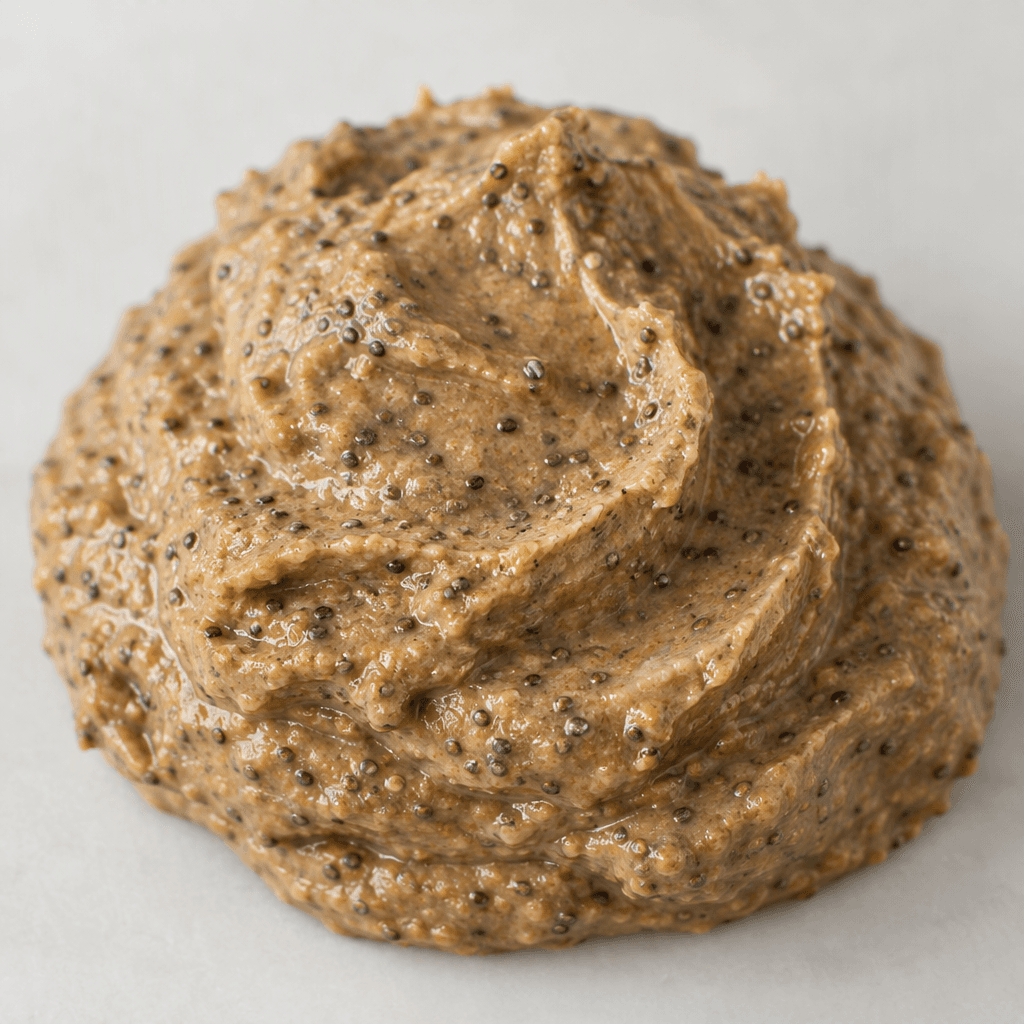
Chia Peanut Butter Calories
Peanut butter with chia seeds, source of protein and fiber
CALORIES
GI
POTASSIUM
FIBER
Quick answer
2 tablespoon (medium) of Chia Peanut Butter (32 g) has 189 calories. That works out to 590 calories per 100 g. It contains 5.4 g of carbs, 7 g of protein, 15.4 g of fat and 2.9 g of fiber. Its 0.4 mg of Copper covers 39% of the Daily Value. Its glycemic index is 14 (low), so it raises blood sugar slowly.
What is Chia Peanut Butter?
Chia Peanut Butter combines ground peanuts with tiny chia seeds in a thick, spreadable paste. It builds on peanut butter, a staple popularised in North America, with chia adding a little texture and fibre. The exact balance of smoothness and crunch depends on how finely the peanuts are ground.
Its roasted, savoury flavour works on toast, in porridge or blended into a smoothie; banana is a particularly easy pairing. In the US and elsewhere, it’s a familiar breakfast or snack spread, while readers in other places can use it much like any nut butter. It provides protein and fibre, with 9 g of fibre per 100 g. Spread a modest layer and add fruit for a simple, balanced snack.
Chia Peanut Butter Nutrition Facts
Selected: 100 g
590
KCAL / 100G
Carbs
17g
· 6% DV
Protein
22g
· 44% DV
Fat
48g
· 62% DV
Fiber
9g
· 32% DV
DV is the share of the daily value covered, on a 2,000 kcal reference diet.
Calories come from: Carbs 12% · Protein 15% · Fat 73%
Chia Peanut Butter Vitamins & Minerals
Vitamins
B3
13mg · 81% DV
Biotin
18µg · 60% DV
Vitamin E
7mg · 47% DV
B1
0.5mg · 42% DV
Minerals
Copper
1mg · 111% DV
Manganese
2mg · 87% DV
Phosphorus
350mg · 50% DV
Magnesium
140mg · 33% DV
How Nutritious Is Chia Peanut Butter?
Nutrient density
Medium
How many vitamins, minerals and how much fiber this food carries per calorie. A high score means a lot of nutrition for few calories.
Satiety score
High
An EatBetter score computed from fiber, protein and calorie density. A high score means staying full longer on the same calories.
Both scores are calculated per 100 g and do not change with the selected portion. The satiety score is EatBetter's own calculation, not a clinical measure.
Chia Peanut Butter Glycemic Index
GLYCEMIC INDEX
GLYCEMIC LOAD
Accounts for portion size — a more realistic measure than GI alone.
How to Burn Off Chia Peanut Butter
To burn the 590 calories in 100 g:
🚶
Walking (5 km/h)
🏃
Running (8 km/h)
🚴
Cycling
🏊
Swimming
Times are calculated with the MET equation for a 70 kg adult. Actual burn varies with your weight, age and pace.
Is Chia Peanut Butter Processed?
NOVA 3
Processed
1. Unprocessed
2. Minimally Processed
3. Processed
4. Ultra-Processed
NOVA classifies foods into 4 groups by industrial processing. NOVA 1 (unprocessed) is the healthiest.
Does Chia Peanut Butter Contain Allergens?
Contains these allergens:
Which Diets Is Chia Peanut Butter Good For?
Vegan
— Not suitable
Vegetarian
✓ Suitable
Gluten-Free
✓ Suitable
Dairy-Free
— Not suitable
Mediterranean
✓ Suitable
Paleo
— Not suitable
Whole30
— Not suitable
DASH
— Not suitable
Keto
— Not suitable
Low FODMAP
— Not suitable
Chia Peanut Butter Fat Profile
SATURATED
8.5g
MONOUNSATURATED
24g
POLYUNSATURATED
13g
Omega 6:3 ratio 6.4:1
Above the ideal 4:1 (6.4:1).
Compare Chia Peanut Butter
Foods Similar to Chia Peanut Butter
Frequently Asked Questions About Chia Peanut Butter
What is chia peanut butter made of?
Chia peanut butter is a spread made by mixing chia seeds into ground peanuts. Recipes and brands may also include salt, oil, or sweeteners, so the exact ingredients vary from one jar or homemade batch to another.
How do you make chia peanut butter at home?
To make chia peanut butter, blend roasted peanuts until creamy, then stir in chia seeds. Blend longer for a smoother spread, or leave the seeds whole for a crunchier texture. Sweeten or salt it only if you want to.
How do you use chia peanut butter?
Spread chia peanut butter on toast, swirl it into oatmeal, or serve it with apple or banana slices. Its thick texture also works in smoothies; blending it with the other ingredients makes the chia seeds less noticeable.
Does chia peanut butter need to be refrigerated?
Homemade chia peanut butter is best kept in a clean, sealed container in the refrigerator. For a store-bought jar, follow its storage directions; natural spreads can separate, so stir before using if oil collects on top.
Is chia peanut butter healthier than regular peanut butter?
Chia peanut butter adds chia seeds and their nutrients to a peanut-based spread, but that alone does not make it healthier for everyone. The ingredients and added sweeteners or salt can differ, and the texture is usually more seed-studded.
Can chia peanut butter replace peanut butter in recipes?
Yes, chia peanut butter can usually replace regular peanut butter in sandwiches, sauces, and many baking recipes. The chia seeds add texture and may make the mixture thicker, so adjust other liquids slightly if the recipe needs a smoother batter.
Can you eat chia peanut butter every day?
Yes, chia peanut butter can be part of everyday meals if you enjoy it and tolerate peanuts. It is rich and filling, so use it as a spread or recipe ingredient rather than adding large amounts on top of an already substantial meal.
Is chia peanut butter good for weight loss?
Chia peanut butter does not cause weight loss by itself. Its thick, satisfying texture can make a small spread feel substantial, but adding generous spoonfuls can increase a meal’s overall energy, so keep portions intentional.
Can chia peanut butter go in smoothies?
Yes, chia peanut butter blends well into smoothies and pairs especially well with banana, berries, or cocoa. Add it with the liquid and blend until the seeds are evenly distributed; otherwise, they can settle or remain clustered.
Can babies eat chia peanut butter?
Babies should only have chia peanut butter when they are developmentally ready for peanut-containing foods and can manage its thick texture safely. Peanut allergy is a serious concern, so ask your child’s clinician about introducing peanuts if your baby has increased allergy risk.
Have another question about Chia Peanut Butter?
Ask the AI nutrition coach — calories, portions, alternatives and more, answered in seconds in the app.

Scan calories with your camera
Instant AI nutrition analysis

Nutrition data compiled from USDA FoodData Central and scientific sources.