

Ready & Packaged Foods
All →Vegetables & Legumes
All →Desserts & Confectionery
All →Meat & Protein
All →Grains & Bakery
All →Beverages
All →Milk & Dairy
All →

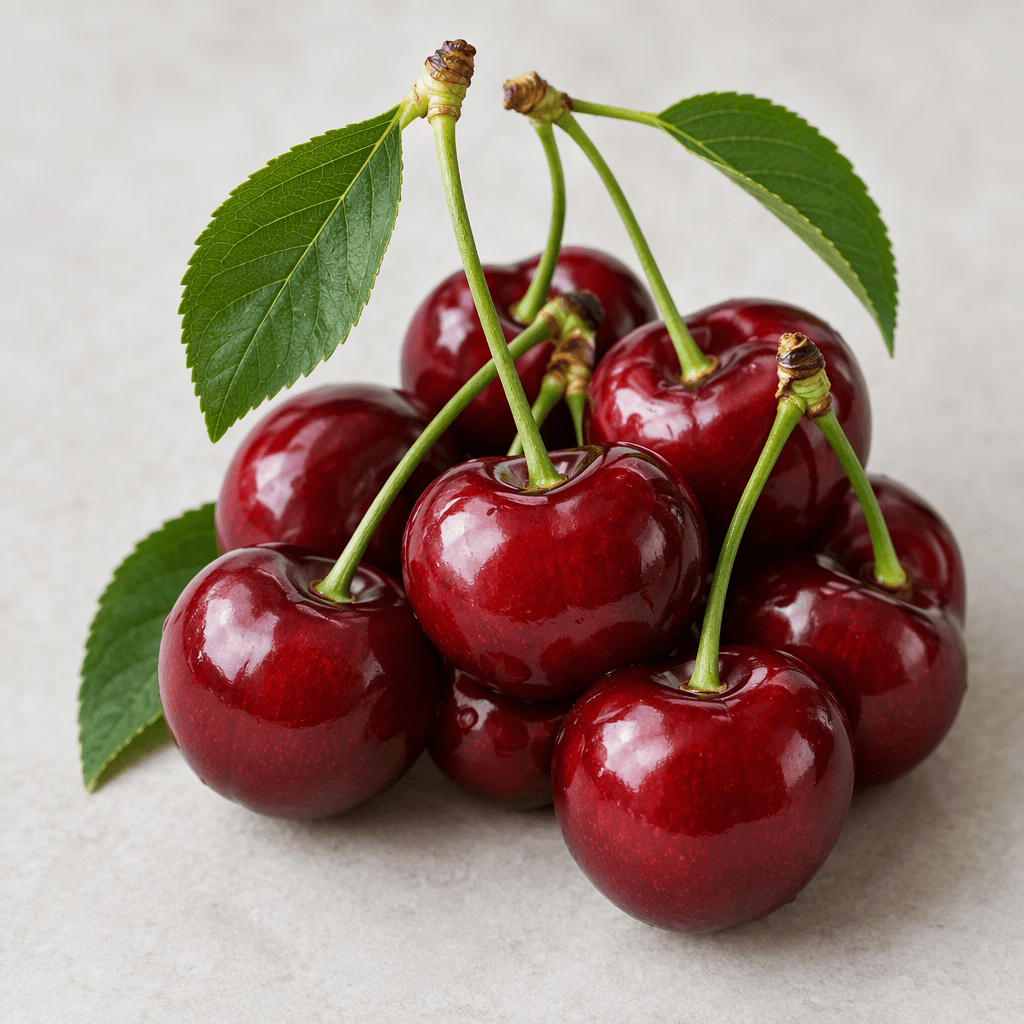
Cherries Calories
Rich in antioxidants, low calorie, source of vitamin C
In season: Spring · Summer
CALORIES
GI
POTASSIUM
FIBER
Quick answer
10 piece (medium) of Cherries (70 g) has 35 calories. That works out to 50 calories per 100 g. It contains 8.4 g of carbs, 0.7 g of protein, 0.2 g of fat and 1.1 g of fiber. Its 4.9 mg of Vitamin C covers 5% of the Daily Value. Its glycemic index is 22 (low), so it raises blood sugar slowly.
What is Cherries?
Cherries are the sweet, juicy fruits of the cherry tree, distinct from the more tart sour cherries often used for cooking. They are grown in many regions and are at their best when ripe, with glossy skins and firm green stems.
In season, people commonly eat them fresh as a snack, add pitted fruit to yoghurt or salads, or bake them into pies and other desserts. They bring natural sweetness and colour, while remaining a light fruit; per 100 g, they provide 50 calories, along with some fibre and vitamin C. Pair cherries with plain yoghurt or a handful of nuts for a simple snack, or use them to sweeten a dessert with less added sugar.
Cherries Nutrition Facts
Selected: 100 g
50
KCAL / 100G
Carbs
12g
· 4% DV
Protein
1g
· 2% DV
Fat
0.3g
· 0% DV
Fiber
1.6g
· 6% DV
DV is the share of the daily value covered, on a 2,000 kcal reference diet.
Calories come from: Carbs 88% · Protein 7% · Fat 5%
Cherries Vitamins & Minerals
Vitamins
Vitamin C
7mg · 8% DV
B2
0.05mg · 4% DV
B5
0.2mg · 4% DV
B1
0.03mg · 3% DV
Minerals
Potassium ⭐
173mg · 5% DV
Magnesium
11mg · 3% DV
Phosphorus
21mg · 3% DV
Calcium
13mg · 1% DV
How Nutritious Is Cherries?
Nutrient density
High
How many vitamins, minerals and how much fiber this food carries per calorie. A high score means a lot of nutrition for few calories.
Satiety score
Medium
An EatBetter score computed from fiber, protein and calorie density. A high score means staying full longer on the same calories.
Both scores are calculated per 100 g and do not change with the selected portion. The satiety score is EatBetter's own calculation, not a clinical measure.
Cherries Glycemic Index
GLYCEMIC INDEX
GLYCEMIC LOAD
Accounts for portion size — a more realistic measure than GI alone.
How to Burn Off Cherries
To burn the 50 calories in 100 g:
🚶
Walking (5 km/h)
🏃
Running (8 km/h)
🚴
Cycling
🏊
Swimming
Times are calculated with the MET equation for a 70 kg adult. Actual burn varies with your weight, age and pace.
Is Cherries Processed?
NOVA 1
Unprocessed
1. Unprocessed
2. Minimally Processed
3. Processed
4. Ultra-Processed
NOVA classifies foods into 4 groups by industrial processing. NOVA 1 (unprocessed) is the healthiest.
Does Cherries Contain Allergens?
No known major allergens
Which Diets Is Cherries Good For?
Vegan
✓ Suitable
Vegetarian
✓ Suitable
Gluten-Free
✓ Suitable
Dairy-Free
— Not suitable
Mediterranean
✓ Suitable
Paleo
✓ Suitable
Whole30
— Not suitable
DASH
— Not suitable
Keto
— Not suitable
Low FODMAP
— Not suitable
Cherries Fat Profile
SATURATED
0.07g
MONOUNSATURATED
0.05g
POLYUNSATURATED
0.08g
Omega 6:3 ratio 7:1
Above the ideal 4:1 (7:1).
Compare Cherries
Foods Similar to Cherries
Frequently Asked Questions About Cherries
Are cherries good for you?
Yes, cherries provide antioxidant compounds and vitamin C, along with some fiber. They can be part of a nutritious diet eaten whole, rather than relying on sweetened cherry products for the same benefits.
How should you store cherries?
Store cherries unwashed and dry in the refrigerator. Remove any damaged fruit, and wash the cherries just before eating; extra moisture during storage can encourage spoilage.
How can you tell if cherries are ripe?
Ripe cherries are usually plump, firm, and glossy, with smooth, unbroken skins. Green, firmly attached stems often signal freshness, but color varies by variety, so a dark shade alone does not prove ripeness.
Can you freeze cherries?
Yes, cherries freeze well. Wash and dry them thoroughly, then freeze them whole or pitted; spreading them on a tray first helps keep them from clumping before you transfer them to a sealed freezer container.
Should you wash cherries before eating them?
Yes, rinse cherries under clean running water just before eating. Keep the stems on while washing to limit water entering through the stem openings, and dry the fruit gently if you are not eating it immediately.
What is the difference between sweet and sour cherries?
Sweet cherries are generally eaten fresh, while sour cherries have a sharper taste and are often used in pies, jams, and cooking. They are different types of cherry, so a recipe may not work the same if you substitute one for the other.
What happens if you swallow a cherry pit?
Swallowing one whole cherry pit is usually not harmful; it typically passes through without being digested. Do not chew or crush the pit, and keep whole cherries away from young children because pits can also pose a choking hazard.
Do cherries help you sleep?
Cherries contain small amounts of melatonin-related compounds, but eating them is not a reliable sleep treatment. Research has focused more on tart cherry products than on ordinary sweet cherries, and effects are not guaranteed.
Can dogs eat cherries?
It is safest not to give dogs whole cherries. The pits can cause choking or intestinal blockage, and chewed pits, stems, and leaves contain compounds that can release cyanide; choose a dog-safe treat instead.
Can people with diabetes eat cherries?
Many people with diabetes can include cherries in a planned fruit portion, but their blood-glucose response varies with serving size and individual needs. A clinician or dietitian can help fit them into a personal diabetes meal plan.
Have another question about Cherries?
Ask the AI nutrition coach — calories, portions, alternatives and more, answered in seconds in the app.

Scan calories with your camera
Instant AI nutrition analysis

Nutrition data compiled from USDA FoodData Central and scientific sources.