

Ready & Packaged Foods
All →Vegetables & Legumes
All →Desserts & Confectionery
All →Meat & Protein
All →Grains & Bakery
All →Beverages
All →Milk & Dairy
All →

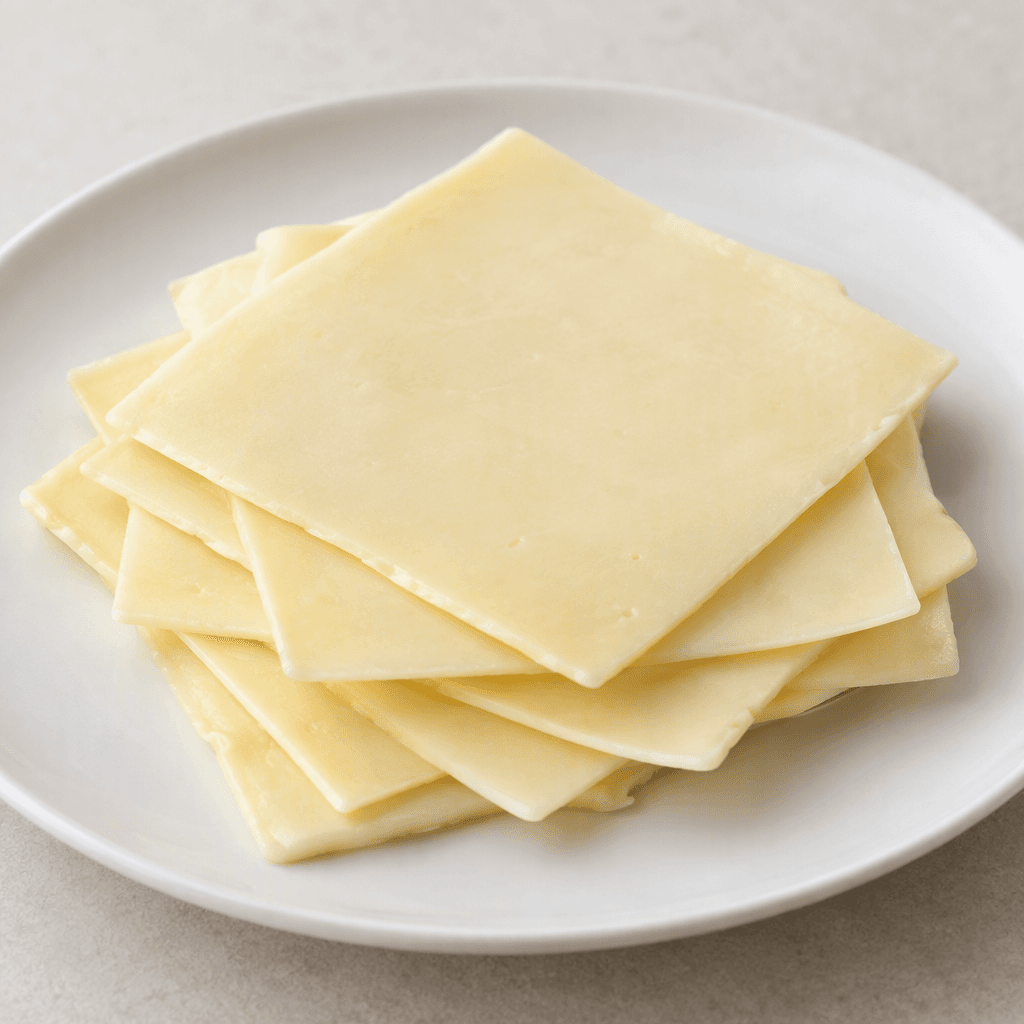
Cheese (Thin Slice) Calories
Thin slice cheese, popular for sandwiches and breakfast.
In season: Spring · Summer · Autumn · Winter
CALORIES
GI
POTASSIUM
FIBER
Quick answer
1 slice (thin) of Cheese (Thin Slice) (20 g) has 70 calories. That works out to 350 calories per 100 g. It contains 0.4 g of carbs, 4.6 g of protein, 5.6 g of fat and 0 g of fiber. Its 144 mg of Calcium covers 14% of the Daily Value. Its glycemic index is 0 (low), so it raises blood sugar slowly.
What is Cheese (Thin Slice)?
Thin-sliced cheese is cheese cut into convenient, even slices, usually for sandwiches, toasties and quick meals. The exact flavour and texture depend on the variety; it is often mildly savoury, smooth and flexible, with a pale ivory or yellow colour.
It is an easy addition to breakfast or lunch: layer it in a sandwich, melt it over toast, or pair it with crackers and fresh vegetables. It provides protein and fat, with very little carbohydrate. For a lighter sandwich, use a single slice and add salad leaves, tomato or other crisp vegetables; wholemeal bread makes a satisfying pairing.
Cheese (Thin Slice) Nutrition Facts
Selected: 100 g
350
KCAL / 100G
Carbs
2g
· 1% DV
Protein
23g
· 46% DV
Fat
28g
· 36% DV
Fiber
0g
· 0% DV
DV is the share of the daily value covered, on a 2,000 kcal reference diet.
Calories come from: Carbs 2% · Protein 26% · Fat 72%
Cheese (Thin Slice) Vitamins & Minerals
Vitamins
B12
1.5µg · 63% DV
Vitamin A
260µg · 29% DV
B2
0.35mg · 27% DV
B5
0.5mg · 10% DV
Minerals
Calcium
720mg · 72% DV
Phosphorus
490mg · 70% DV
Sodium
650mg · 28% DV
Zinc
3mg · 27% DV
How Nutritious Is Cheese (Thin Slice)?
Nutrient density
High
How many vitamins, minerals and how much fiber this food carries per calorie. A high score means a lot of nutrition for few calories.
Satiety score
Medium
An EatBetter score computed from fiber, protein and calorie density. A high score means staying full longer on the same calories.
Both scores are calculated per 100 g and do not change with the selected portion. The satiety score is EatBetter's own calculation, not a clinical measure.
Cheese (Thin Slice) Glycemic Index
GLYCEMIC INDEX
GLYCEMIC LOAD
Accounts for portion size — a more realistic measure than GI alone.
How to Burn Off Cheese (Thin Slice)
To burn the 350 calories in 100 g:
🚶
Walking (5 km/h)
🏃
Running (8 km/h)
🚴
Cycling
🏊
Swimming
Times are calculated with the MET equation for a 70 kg adult. Actual burn varies with your weight, age and pace.
Is Cheese (Thin Slice) Processed?
NOVA 2
Minimally Processed
1. Unprocessed
2. Minimally Processed
3. Processed
4. Ultra-Processed
NOVA classifies foods into 4 groups by industrial processing. NOVA 1 (unprocessed) is the healthiest.
Does Cheese (Thin Slice) Contain Allergens?
Contains these allergens:
Which Diets Is Cheese (Thin Slice) Good For?
Vegan
— Not suitable
Vegetarian
✓ Suitable
Gluten-Free
— Not suitable
Dairy-Free
— Not suitable
Mediterranean
✓ Suitable
Paleo
— Not suitable
Whole30
— Not suitable
DASH
— Not suitable
Keto
✓ Suitable
Low FODMAP
— Not suitable
Cheese (Thin Slice) Fat Profile
SATURATED
18g
MONOUNSATURATED
7g
POLYUNSATURATED
0.3g
Omega 6:3 ratio 2.3:1
Below the ideal 4:1 — a good omega balance.
Compare Cheese (Thin Slice)
Foods Similar to Cheese (Thin Slice)
Frequently Asked Questions About Cheese (Thin Slice)
Can thin-sliced cheese be used in a grilled cheese sandwich?
Yes, thin-sliced cheese works well in a grilled cheese sandwich because it warms and melts quickly. Use moderate heat so the bread browns without scorching before the cheese has softened.
How should thin-sliced cheese be stored after opening?
Keep thin-sliced cheese refrigerated and sealed in its original packaging or an airtight container. Limiting its exposure to air helps prevent it from drying out and absorbing odors from other foods.
Can you freeze thin-sliced cheese?
Yes, you can freeze thin-sliced cheese, though thawing may make it crumbly or slightly damp. Separate slices before freezing if possible, and use thawed cheese in a hot sandwich or cooked dish for a better texture.
How long does thin-sliced cheese last once opened?
The usable life of opened thin-sliced cheese varies by cheese type and package instructions. Keep it refrigerated and sealed, follow the package’s guidance, and discard it if you notice mold, an unusual smell, or a change in color.
Can you eat thin-sliced cheese straight from the package?
Yes, thin-sliced cheese is generally ready to eat without cooking. Keep it refrigerated after opening, and avoid eating it if the package was damaged or the cheese has developed an unusual smell or appearance.
Why do thin-sliced cheese slices stick together?
Thin-sliced cheese can stick together when moisture or warmth softens the surfaces. Keep the pack chilled and sealed; if you are repacking the slices, place small pieces of parchment between them.
What type of thin-sliced cheese melts best?
Young, moist cheeses usually melt more smoothly than very dry or aged cheeses. Since thin-sliced cheese can be made from different varieties, check how it melts in a small amount before using it in a dish.
Can thin-sliced cheese go in a packed lunch?
Yes, thin-sliced cheese can go in a packed lunch, especially in a sandwich. Keep it cold with an insulated lunch bag and a cold pack, since cheese should not sit warm for an extended time.
Does thin-sliced cheese need to be refrigerated?
Yes, thin-sliced cheese should be refrigerated unless its packaging specifically says otherwise. Refrigeration slows spoilage and helps preserve the texture; return opened cheese to the refrigerator promptly after serving.
Can people with lactose intolerance eat thin-sliced cheese?
Some people with lactose intolerance tolerate thin-sliced cheese, but the amount of lactose varies with the cheese type. Aged cheeses tend to contain less lactose than fresh cheeses, so the exact variety matters.
Have another question about Cheese (Thin Slice)?
Ask the AI nutrition coach — calories, portions, alternatives and more, answered in seconds in the app.

Scan calories with your camera
Instant AI nutrition analysis

Nutrition data compiled from USDA FoodData Central and scientific sources.