

Ready & Packaged Foods
All →Vegetables & Legumes
All →Desserts & Confectionery
All →Meat & Protein
All →Grains & Bakery
All →Beverages
All →Milk & Dairy
All →

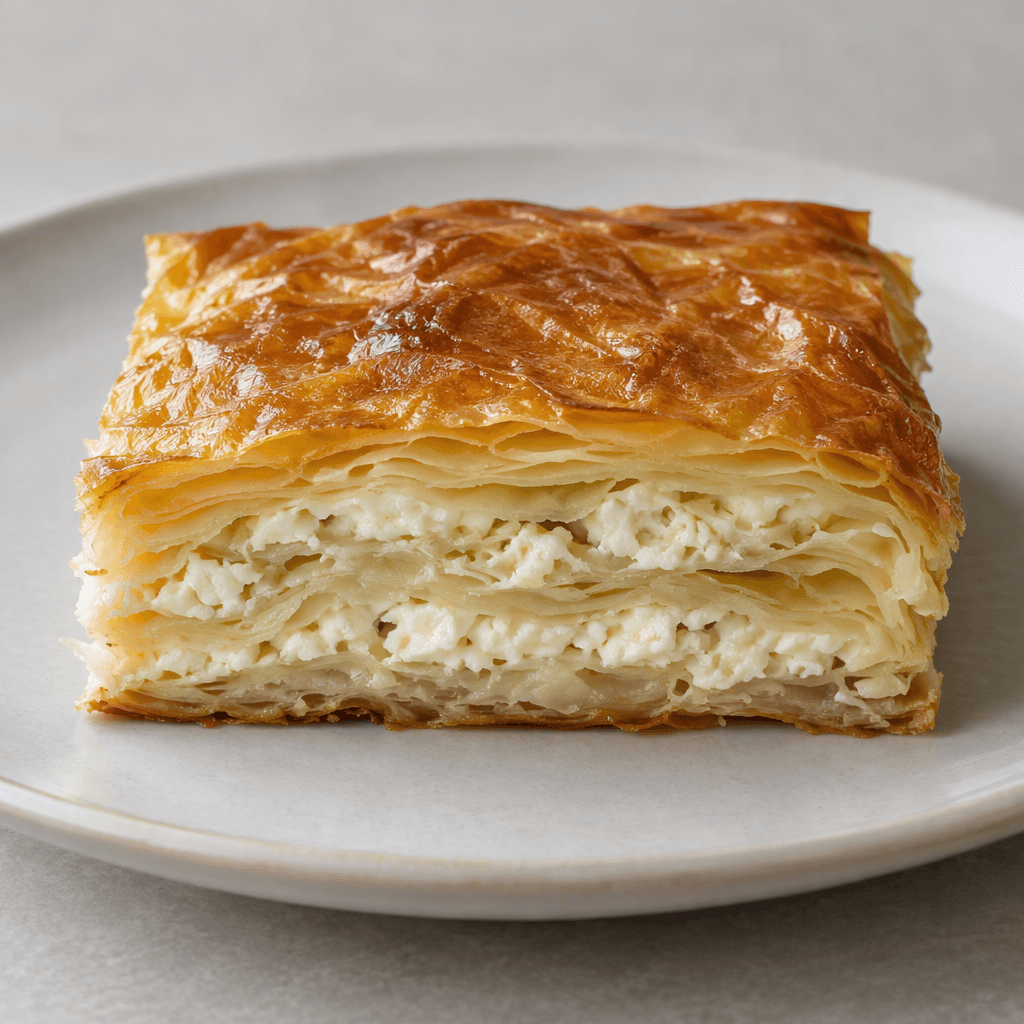
Cheese Su Böreği Calories
Classic Turkish pastry, cheese filling, boiled dough, high energy
In season: Spring · Summer · Autumn · Winter
CALORIES
GI
POTASSIUM
FIBER
Quick answer
1 piece (medium) of Cheese Su Böreği (120 g) has 324 calories. That works out to 270 calories per 100 g. It contains 33.6 g of carbs, 12.6 g of protein, 14.4 g of fat and 1.4 g of fiber. Its 192 mg of Phosphorus covers 27% of the Daily Value. Its glycemic index is 65 (medium), so it raises blood sugar at a moderate pace.
What is Cheese Su Böreği?
Cheese su böreği is a classic Turkish tray pastry made by briefly boiling thin sheets of dough, layering them with crumbled cheese, then baking until the top is golden. Its layers are tender and moist, with a lightly crisp surface and a pleasantly salty, filling centre.
In Turkey it is served at breakfast, with tea or as a light meal; Turkish bakeries and home cooks also make it for sharing. It is substantial, with most of its energy coming from the dough and cheese, while the filling contributes protein. Pair a modest slice with salad or fresh herbs for a lighter plate.
Cheese Su Böreği Nutrition Facts
Selected: 100 g
270
KCAL / 100G
Carbs
28g
· 10% DV
Protein
10.5g
· 21% DV
Fat
12g
· 15% DV
Fiber
1.2g
· 4% DV
DV is the share of the daily value covered, on a 2,000 kcal reference diet.
Calories come from: Carbs 43% · Protein 16% · Fat 41%
Cheese Su Böreği Vitamins & Minerals
Vitamins
B12
0.5µg · 21% DV
Vitamin A
140µg · 16% DV
B2
0.19mg · 15% DV
Biotin
3.5µg · 12% DV
Minerals
Phosphorus
160mg · 23% DV
Calcium
210mg · 21% DV
Sodium
420mg · 18% DV
Selenium
7.5µg · 14% DV
How Nutritious Is Cheese Su Böreği?
Nutrient density
Medium
How many vitamins, minerals and how much fiber this food carries per calorie. A high score means a lot of nutrition for few calories.
Satiety score
Medium
An EatBetter score computed from fiber, protein and calorie density. A high score means staying full longer on the same calories.
Both scores are calculated per 100 g and do not change with the selected portion. The satiety score is EatBetter's own calculation, not a clinical measure.
Cheese Su Böreği Glycemic Index
GLYCEMIC INDEX
GLYCEMIC LOAD
Accounts for portion size — a more realistic measure than GI alone.
How to Burn Off Cheese Su Böreği
To burn the 270 calories in 100 g:
🚶
Walking (5 km/h)
🏃
Running (8 km/h)
🚴
Cycling
🏊
Swimming
Times are calculated with the MET equation for a 70 kg adult. Actual burn varies with your weight, age and pace.
Is Cheese Su Böreği Processed?
NOVA 3
Processed
1. Unprocessed
2. Minimally Processed
3. Processed
4. Ultra-Processed
NOVA classifies foods into 4 groups by industrial processing. NOVA 1 (unprocessed) is the healthiest.
Does Cheese Su Böreği Contain Allergens?
Contains these allergens:
Which Diets Is Cheese Su Böreği Good For?
Vegan
— Not suitable
Vegetarian
— Not suitable
Gluten-Free
— Not suitable
Dairy-Free
— Not suitable
Mediterranean
✓ Suitable
Paleo
— Not suitable
Whole30
— Not suitable
DASH
— Not suitable
Keto
— Not suitable
Low FODMAP
— Not suitable
Cheese Su Böreği Fat Profile
SATURATED
5.8g
MONOUNSATURATED
3.7g
POLYUNSATURATED
1.2g
Omega 6:3 ratio 5.6:1
Above the ideal 4:1 (5.6:1).
Compare Cheese Su Böreği
Foods Similar to Cheese Su Böreği
Frequently Asked Questions About Cheese Su Böreği
What is Cheese Su Böreği?
Cheese Su Böreği is a Turkish layered pastry made with thin sheets of dough that are briefly boiled before being stacked with cheese and baked. The boiling step gives its layers a soft, tender texture unlike the crisp sheets of many other pastries.
Why is the dough boiled for Cheese Su Böreği?
The dough sheets are boiled so they cook through before the pastry is assembled and baked. This distinctive step creates Cheese Su Böreği’s soft, layered bite; leaving the sheets in the water too long can make them fragile and difficult to handle.
What kind of cheese goes in Cheese Su Böreği?
A crumbly, salty white cheese is commonly used in Cheese Su Böreği, often with parsley. If the cheese is very salty, taste it before mixing it into the filling, and avoid adding extra salt until you know how the filling tastes.
How is Cheese Su Böreği different from lasagna?
Cheese Su Böreği uses thin pastry sheets that are briefly boiled, while lasagna is usually assembled with pasta sheets and a sauce-based filling. The cheese filling and soft layers may look similar, but the dough and preparation give the Turkish pastry its own texture.
Can you make Cheese Su Böreği with store-bought yufka?
Yes, store-bought yufka can be used for a home-style Cheese Su Böreği, although recipes vary in whether and how much they boil it. Follow a recipe intended for that type of yufka, since thin fresh dough and packaged sheets may need different handling.
Can Cheese Su Böreği be prepared ahead of time?
Yes, you can assemble Cheese Su Böreği ahead and bake it later, keeping it covered in the refrigerator in the meantime. For the softest layers, avoid leaving the assembled pastry uncooked for an extended period, as the filling can make the dough soggy.
How do you keep Cheese Su Böreği from turning soggy?
To keep Cheese Su Böreği from turning soggy, drain each boiled sheet well and let excess water escape before layering it in the tray. Use a filling that is not watery, and bake the assembled pastry until the center is fully set.
Can you freeze Cheese Su Böreği?
Yes, baked Cheese Su Böreği can be frozen in individual portions once it has cooled. Wrap the pieces airtight and reheat them in the oven after thawing; the layers may be softer than they are when freshly baked.
What do you serve with Cheese Su Böreği?
Cheese Su Böreği is often served with tea as part of breakfast or as a savory snack. For a fuller meal, pair it with a fresh salad, yogurt, or ayran, which balances the pastry’s rich, cheesy layers.
Is Cheese Su Böreği eaten hot or cold?
Cheese Su Böreği is usually served warm, when its cheese filling and soft layers are at their best. It can also be eaten at room temperature, making it convenient for picnics or a packed lunch, but refrigeration leftovers promptly.
Have another question about Cheese Su Böreği?
Ask the AI nutrition coach — calories, portions, alternatives and more, answered in seconds in the app.

Scan calories with your camera
Instant AI nutrition analysis

Nutrition data compiled from USDA FoodData Central and scientific sources.